Helping design and engineering professionals discover, evaluate and specify technologies and processes that shorten the design cycle and enable success.



Digital Engineering April 2026
In the latest issue of Digital Engineering, we take a look at the latest innovations in design for additive manufacturing, including the use of natural language inputs, social media cosplayers, and AI integration. The issue also includes a feature…

January Special Focus Issue: Design for Additive
In this Special Focus Issue of Digital Engineering, learn about the latest advancements in design for additive manufacturing, including new software tools, additive in automotive, custom medical devices, and more.
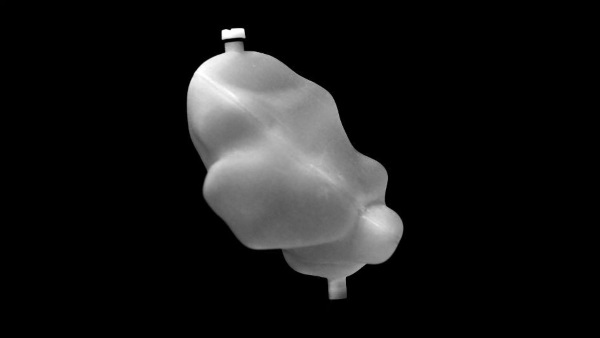
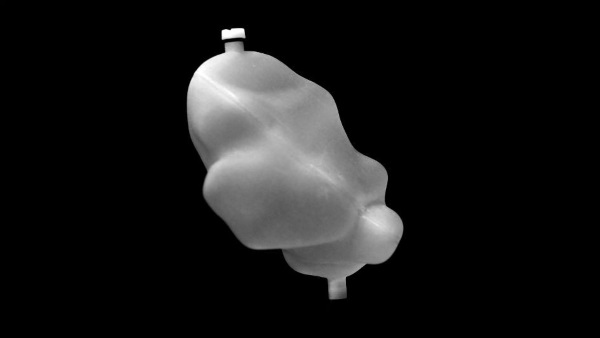
Originally, researchers at the Institute of Cancer Research in London built hand-made models of organs to model radiotherapy treatments. 3D printing has made those tests much more reliable and precise.
The printed tumors and organs, generated with CT scans, can be filled with liquid that allows physicians to see the flow of radiopharmaceuticals, the radioactive drugs that are used to kill cancer cells. Using the models, doctors can more accurately determine the right dosage to use to kill the cancer cells without damaging the surrounding tissues.
According to the researchers, these tumor "phantoms," as they are referred to, were made from liver, spleen and kidney scans using a Stratasys printer.
"Each organ was converted to a shell and filling holes and leg supports were added using computer aided design software and prepared for printing," the researchers wrote. "Additional fixtures were added to the liver to allow lesion inserts to be fixed within the structure. Phantoms were printed from an ultraviolet curable photopolymer using polyjet technology on an Objet EDEN 500V 3D printer. Results: The final print material is a clear solid acrylic plastic which is watertight, rigid, and sufficiently durable to withstand multiple assembly and scanning protocols."
"The big challenge we faced was to produce a model that was both anatomically accurate and allowed us to monitor the dose of radiation it received," said Dr. Jonathan Gear, Clinical Scientist at The Institute of Cancer Research. "We found that the printed replicas could give us information we couldn’t get from 2D scans, you will always get more information from a 3D model than a flat image."
Tests at the Institute and at the Royal Marsden NHS Foundation Trust found that the models could help accurately calculate the required dosage of the radiopharmaceuticals.
Glenn Flux, head of radioisotope physics at the facility, and his colleagues published a paper on the process in Medical Physics over the summer. The organ geometry of the models showed close correspondence to anatomical references. You can read the abstract here.
Source: Reuters


Brian Albright is the editorial director of Digital Engineering.
Contact him at [email protected].

Join over 90,000 engineering professionals who get fresh engineering news as soon as it is published.






About Us · Contact Us · Editorial Team · Advertising · Privacy Policy · Subscriber Services · © 2026 Digital Engineering 24/7 · Peerless Media