Helping design and engineering professionals discover, evaluate and specify technologies and processes that shorten the design cycle and enable success.



Digital Engineering April 2026
In the latest issue of Digital Engineering, we take a look at the latest innovations in design for additive manufacturing, including the use of natural language inputs, social media cosplayers, and AI integration. The issue also includes a feature…

January Special Focus Issue: Design for Additive
In this Special Focus Issue of Digital Engineering, learn about the latest advancements in design for additive manufacturing, including new software tools, additive in automotive, custom medical devices, and more.
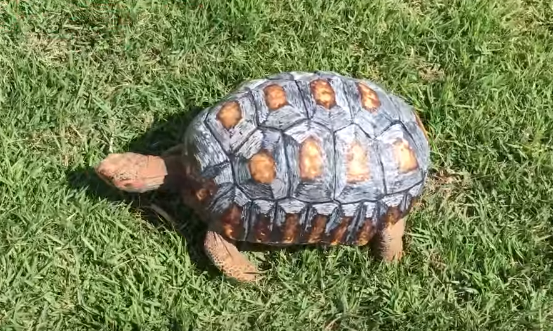
AM’s flexibility has made it a big hit with the medical industry, offering researchers new tools to combat old problems. The same technology used to develop replacement vertebrae for humans can also be used to benefit animals. Freddy the tortoise is the latest animal to gain a new lease on life thanks to 3D printing.
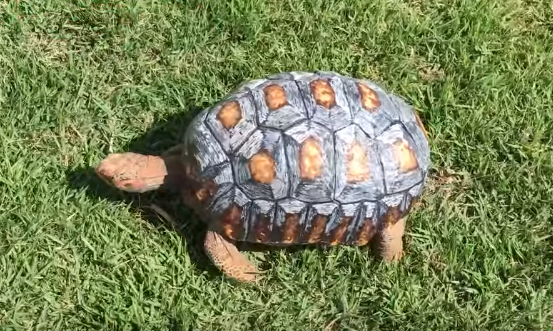 Freddy the tortoise enjoying her new 3D printed shell. Screencap via YouTube.
Freddy was unlucky enough to have been caught in a forest fire. Although she survived, she lost nearly 85% of her shell. Freddy was discovered by Brazilian veterinarian Rodrigo Rabello, who, upon seeing her condition, named her Freddy after the nightmare monster in A Nightmare on Elm Street.
Rather than simply putting the ailing Freddy to sleep, the Rabello brought Freddy to a Sao Paulo-based animal rescue group named Animal Avengers to see if they could help. After examining Freddy, the team decided to see if they could replace Freddy’s shell using 3D printing.
The team reached out to the local community for assistance, and found CAD expert Cicero Moraes. Using the shell of a different tortoise for reference, Moraes, who later joined Animal Avengers, was able to create the digital design of a new shell for Freddy.
"It took about 40 photos [to build a model and reconstruct the shell]," Moraes told the Brazilian outlet, Fantastico. "We took a healthy animal, took the same 40 photos, reconstructed that animal in 3D and put it into the computer."
The shell was printed in four parts using a corn-based PLA material. Once printing was completed, the parts were assembled and attached to Freddy.
Although the new shell performed admirably, it was an unnatural white color. This problem was remedied by artist Yuri Caldera, who painted the shell to resemble its natural colors using non-toxic paints. The end result is enough to make any tortoise proud and the team is certain that Freddy will make a complete recovery.
Below you’ll find a video about Freddy.
Sources: IFL Science, Science Alert


John Newman is a Digital Engineering contributor who focuses on 3D printing. Contact him via [email protected] and read his posts on Rapid Ready Technology.
Follow DE
Join over 90,000 engineering professionals who get fresh engineering news as soon as it is published.






About Us · Contact Us · Editorial Team · Advertising · Privacy Policy · Subscriber Services · © 2026 Digital Engineering 24/7 · Peerless Media