Helping design and engineering professionals discover, evaluate and specify technologies and processes that shorten the design cycle and enable success.


Alert!
Digital Engineering ceased publication on July 1, 2026. This website remains available as an archive of engineering content.
For inquiries or information, please email [email protected].


Digital Engineering April 2026
In the latest issue of Digital Engineering, we take a look at the latest innovations in design for additive manufacturing, including the use of natural language inputs, social media cosplayers, and AI integration. The issue also includes a feature…

January Special Focus Issue: Design for Additive
In this Special Focus Issue of Digital Engineering, learn about the latest advancements in design for additive manufacturing, including new software tools, additive in automotive, custom medical devices, and more.
The lawsuit came about last year when shareholders made claims that the company was knowingly selling faulty products — specifically its SmartExtruder — within the marketplace. The product, the plantiffs alleged, kept getting clogged and causing poor print quality. In addition to taking the case to court, the company also released the SmartExtruder+ earlier this year.
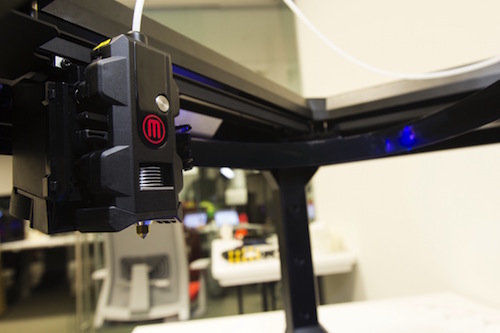 The MakerBot Smart Extruder+ features sensors to keep users apprised about print status as well as to improve print performance over time. Image courtesy of MakerBot.
The Smart Extruder+ boasts improvements in several key areas: reduced filament jams, better homing routines, reduced clogging and improved connectivity. To address the clogging issues at the heart of the customer complaints, MakerBot engineers extended the PTFE non-stick surface tube used to feed filament into the nozzle, made software improvements to retract the filament less at different speeds, and enhanced the thermal management system, according to Michael Pappas, lead mechanical engineer on the project.
To create a stand-out test program, MakerBot leaned heavily on the expertise of its parent company Stratasys. The result was the largest testing initiative MakerBot has ever conducted, with two separate groups of extruders, built on two different days, tested at both MakerBot headquarters in New York and Stratasys’ facilities in Eden Prairie, MN.
For a full court transcript of the case, visit Adafruit.


Jess Lulka is a former associate editor for Digital Engineering. Contact her via [email protected].
Follow DE






About Us · Contact Us · Editorial Team · Advertising · Privacy Policy · Subscriber Services · © 2026 Digital Engineering 24/7 · Peerless Media