Helping design and engineering professionals discover, evaluate and specify technologies and processes that shorten the design cycle and enable success.



Cut Retrieval-Augmented Generation (RAG) Hallucinations by 50%
Most teams hit the same wall with enterprise AI: LLMs that hallucinate, pipelines that don’t scale, and infrastructure that’s harder to design than the models themselves.

What Is Intelligent BOM Management? A Guide to Smarter Product Development
Learn how intelligent Bill of Materials (BOM) management helps teams collaborate, reduce errors, and bring innovative products to market faster with cloud-based PLM tools.
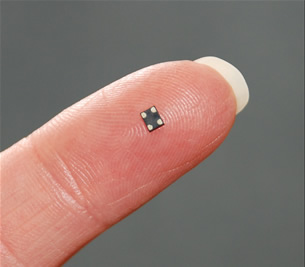 The shorter lead-times afforded by today’s MEMS programmable oscillator technology aids manufacturers in ways beyond the lower cost of the component. |
Silicon resonator technology enables faster delivery at reduced cost, lowering the economic risk of ushering in new designs, says Ecliptek (Costa Mesa, CA), supplier of frequency control products to the electronics industry since 1987, and one of the first to embrace the silicon-based MEMS programmable clock oscillator market.
Ecliptek’s MEMS programmable clock oscillators contain a MEMS resonator, an oscillator stage, frequency-temperature compensation, a low noise phase-locked loop, and a tri-state output buffer stage. These MEMS oscillators derive their cost-effectiveness from the economies of scale that silicon product enjoys, as apposed to traditional quartz oscillator devices. This cost advantage holds up even in light of higher frequencies and supply voltages, as Ecliptek MEMS oscillators are said to maintain a consistency in price from 1MHz to 125MHz, or in 1.8V, 2.5V, or 3.3V configurations.
The ability to rapidly deliver the specified frequency is due to the quick programming that MEMS oscillator technology enables, says the company. Given the reduced cost, vendors can afford to stock hundreds of thousands of blank units, which can be programmed and shipped on very short notice.
The fact that MEMS clock oscillators rely on cost-effective silicon-resonator technology, speeds introduction of new products without added expense, says the release, as today's production lead-time is less than 14 days for delivering programmable MEMS clock oscillators. In the interest of rolling products out more quickly, buyers must acquire components rapidly — and clock oscillators are required in most electronic applications including digital cameras, laptops, portable media players, computer peripherals, along with equipment in industries such as communications, medical devices, office automation, and industrial applications.
For more information, contact Ecliptek.
Sources: Press materials received from the company and additional information gleaned from the company's website.


DE's editors contribute news and new product announcements to Digital Engineering. Press releases may be sent to them via [email protected].
Follow DE
Join over 90,000 engineering professionals who get fresh engineering news as soon as it is published.






About Us · Contact Us · Editorial Team · Advertising · Privacy Policy · Subscriber Services · © 2026 Digital Engineering 24/7 · Peerless Media