Helping design and engineering professionals discover, evaluate and specify technologies and processes that shorten the design cycle and enable success.



Digital Engineering April 2026
In the latest issue of Digital Engineering, we take a look at the latest innovations in design for additive manufacturing, including the use of natural language inputs, social media cosplayers, and AI integration. The issue also includes a feature…

January Special Focus Issue: Design for Additive
In this Special Focus Issue of Digital Engineering, learn about the latest advancements in design for additive manufacturing, including new software tools, additive in automotive, custom medical devices, and more.
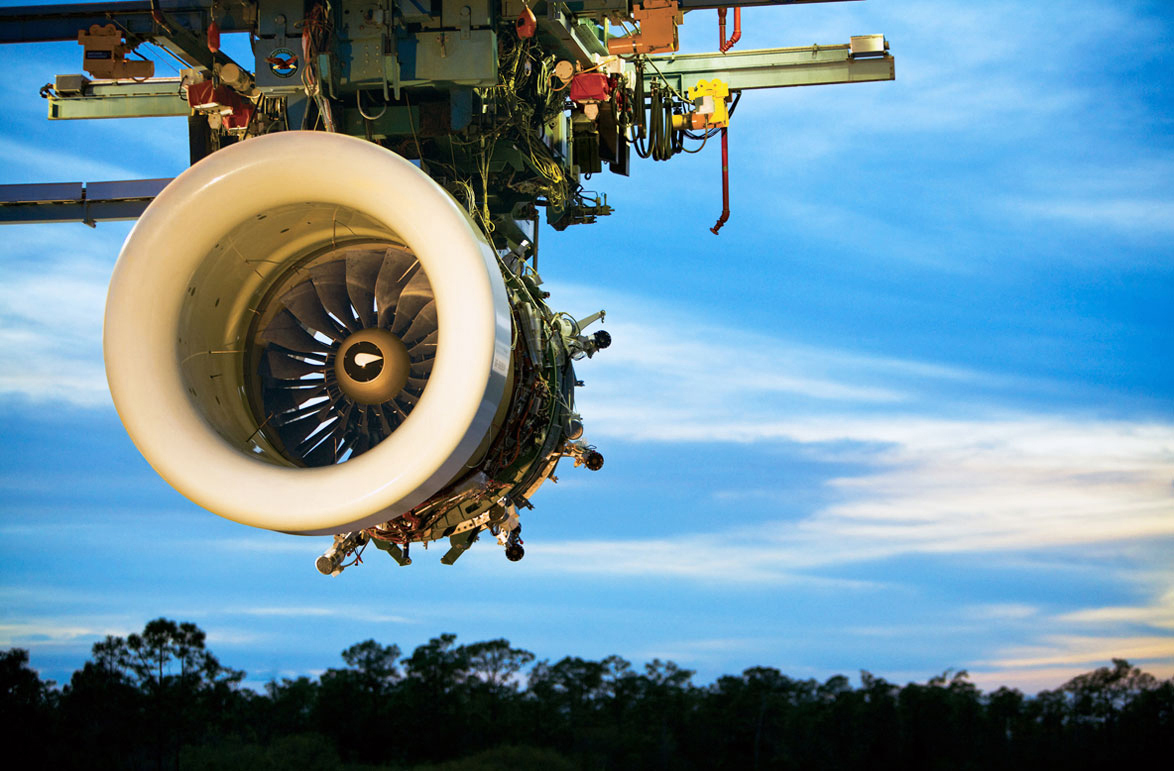
The newest company to find success with AM in aerospace is Munich-based MTU Aero Engines, which produces parts for Pratt & Whitney. MTU has announced the use of selective laser melting to build borescope bosses for the PurePower PW1100G-JM engine, the Pratt & Whitney engine to power the A320neo.
“With this move, MTU has reaffirmed its leadership in delivering innovation; for we are using one of the most advanced technologies there is to produce parts for one of the most advanced engines in the world, the geared turbofan,” explains MTU COO Rainer Martens.
The bosses form part of the turbine case and allow the blading to be inspected at specified intervals for wear and damage using a scope. In the past, these parts were made by milling or casting. AM allows for the parts to be built with a reduction in both weight and waste, and to much tighter specs than those previously possible.
The PurePower PW1100G-JM engine is meant to be the quietest, greenest engine yet produced. According to Pratt & Whitney the engine reduces noise by up to 75% and carbon emissions by more than 3,000 metric tonnes. Used in conjunction with Pratt & Whitney’s TALON X combustor, the engine also reduces NOx exhaust gases 50% below CAEP/6.
MTU has been experimenting with AM over the last 10 years, beginning by producing simple shapes and slowly working toward the sort of complex designs that can only be produced using 3D printing.
“We didn’t start with complex components right away, but began with relatively simple engine parts, such as borescope bosses,” said Martens. “We kept moving forward step by step, gathering more and more experience in the process. This approach is now paying off, for we are among the first to actually use additive manufacturing processes to make parts that go into production engines. Working on the PW1100G-JM engine for the A320neo, we’ve learned how the technology works to support production, and can now adopt the process for other components and engine types as well, the basic structures being the same.”
Below you’ll find a video that demonstrates the noise difference between an older jet engine, and the new PurePower PW1100G-JM engine.
Sources: MTU, Pratt & Whitney


John Newman is a Digital Engineering contributor who focuses on 3D printing. Contact him via [email protected] and read his posts on Rapid Ready Technology.
Follow DE
Join over 90,000 engineering professionals who get fresh engineering news as soon as it is published.






About Us · Contact Us · Editorial Team · Advertising · Privacy Policy · Subscriber Services · © 2026 Digital Engineering 24/7 · Peerless Media