Helping design and engineering professionals discover, evaluate and specify technologies and processes that shorten the design cycle and enable success.



Cut Retrieval-Augmented Generation (RAG) Hallucinations by 50%
Most teams hit the same wall with enterprise AI: LLMs that hallucinate, pipelines that don’t scale, and infrastructure that’s harder to design than the models themselves.

What Is Intelligent BOM Management? A Guide to Smarter Product Development
Learn how intelligent Bill of Materials (BOM) management helps teams collaborate, reduce errors, and bring innovative products to market faster with cloud-based PLM tools.
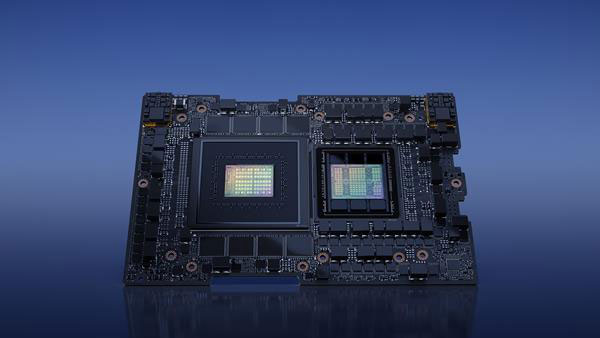
At SIGGRAPH, NVIDIA reveals the next-generation NVIDIA GH200 Grace Hopper platform, based on a new Grace Hopper Superchip with a HBM3e processor, built for accelerated computing and generative AI.
Created to handle complex generative AI workloads, spanning large language models, recommender systems and vector databases, the new platform will be available in various configurations.
The dual configuration comprises a single server with 144 Arm Neoverse cores, eight petaflops of AI performance and 282GB of the latest HBM3e memory technology.
“To meet surging demand for generative AI, data centers require accelerated computing platforms with specialized needs,” says Jensen Huang, founder and CEO of NVIDIA. “The new GH200 Grace Hopper Superchip platform delivers this with exceptional memory technology and bandwidth to improve throughput, the ability to connect GPUs to aggregate performance without compromise, and a server design that can be easily deployed across the entire data center.”
The new platform uses the Grace Hopper Superchip, which can be connected with additional Superchips by NVIDIA NVLink, allowing them to work together to deploy the giant models used for generative AI. This high-speed, coherent technology gives the GPU full access to the CPU memory, providing a combined 1.2TB of fast memory when in dual configuration.
HBM3e memory delivers a total of 10TB/sec of combined bandwidth, allowing the new platform to run models larger than the previous version, while improving performance with faster memory bandwidth, the company reports.
The Grace Hopper Superchip platform with HBM3e is fully compatible with the NVIDIA MGX server specification unveiled at COMPUTEX earlier this year. With MGX, any system manufacturer can quickly and cost-effectively add Grace Hopper into over 100 server variations.
System manufacturers are expected to deliver systems based on the platform in Q2 of calendar year 2024.
Watch Huang’s SIGGRAPH keynote address on demand to learn more about Grace Hopper.


Since its founding in 1993, NVIDIA (NASDAQ: NVDA) has been a pioneer in accelerated computing. The company’s invention of the GPU in 1999 sparked the growth of the PC gaming market, redefined computer graphics, ignited the era of modern AI and…
Cut Retrieval-Augmented Generation (RAG) Hallucinations by 50%
Most teams hit the same wall with enterprise AI: LLMs that hallucinate, pipelines that don’t scale, and infrastructure that’s harder to design than the models themselves.

DE's editors contribute news and new product announcements to Digital Engineering. Press releases may be sent to them via [email protected].
Follow DE
Join over 90,000 engineering professionals who get fresh engineering news as soon as it is published.






About Us · Contact Us · Editorial Team · Advertising · Privacy Policy · Subscriber Services · © 2026 Digital Engineering 24/7 · Peerless Media