Helping design and engineering professionals discover, evaluate and specify technologies and processes that shorten the design cycle and enable success.


Alert!
Digital Engineering ceased publication on July 1, 2026. This website remains available as an archive of engineering content.
For inquiries or information, please email [email protected].

May 2026 Special Focus: Artificial Intelligence in Design and Simulation
In this Special Focus Issue, learn about the latest developments in the integration of artificial intelligence into engineering workflows.

April 2026 Special Focus Issue: Generative Design
In this Special Focus Issue, Digital Engineering takes a look at how generative design solutions can be used across different types of design problems and with a variety of manufacturing approaches to accelerate design space exploration, and…
Whether it involves prototyping, launching a new product to market, or buttoning up prototypes for full-scale production, product development teams are grappling with a common obstacle: Time pressure to get things done faster than ever before.
That’s according to a new Protolabs survey, which examines emerging trends around product development in 2024. The survey, which canvassed more than 700 product developers, engineers, and designers across industries on the frontlines of innovation, zeroed in on the need for speed as one of the greatest challenges organizations face as they try to move products throughout each phase of the lifecycle, from design through production.
Even more so than cost and quality challenges, the urgency of getting product to market is weighing on respondents. While more than half (53%) said they are developing products faster than ever before, 65% expressed a need to accelerate development cycles even further to stay ahead of the competition. Time-related constraints were mentioned far more than any other challenge influencing product development during the prototyping stage. In fact, 82% of respondents confirmed they are constantly on the lookout for new tools and creative solutions to speed up product development.
“As a digital manufacturer, we have seen firsthand the pressures of reduced timelines from prototyping to production as companies prioritize staying on pace with evolving consumer demands,” says Sara Morrissette, Protolabs director of consumer and market research.
Even with the pandemic period in the rearview mirror, lingering market and economic forces are still a major influence on product development practices. Materials shortages, supply chain disruptions, reduced resources and staffers, and limited in-house production capacity continue to persist and as a result, are still impacting each stage of product development over the last year.
Nearly 70% of respondents reported that material shortages had a significant effect on meeting prototyping goals while nearly three-quarters (74%) called out supply chain disruptions as a barrier to ongoing production. Looking forward, there appears to be some light at the end of the tunnel: Only a third predict materials shortages will have a similar impact over the next five years, and only 44% expect supply disruptions to continue to be a factor. The declining trend was prevalent across all development stages for both issues.
"We are seeing customers take the steps in their own supply chain to avoid these challenges, like onshoring or nearshoring, for greater speed and agility to mitigate future risks," Morrissette notes.
At the same time, two of the biggest factors affecting product development efforts are shaped by market and economic trends and are mostly outside of respondents’ control. More than three quarters (78%) expect customer demands to have a major impact on what and how they are developing products while 65% are still grappling with skills shortages and other workforce challenges. These hurdles come at time when consumers have high expectations, including rapid iteration cycles and on-going modernization for the products that are buying.
Despite all the hoopla over AI, respondents were more realistic about its impact. Only 35% expect AI to increase the speed of product development—which remains the key challenge of this year. In fact, more than 60% of product developers expect tight deadlines and the pressure to speed up time-to-market for product introductions will continue to play a major role in meeting prototyping-stage goals over the next five years.
Read the full survey results here.


Proto Labs is the world's fastest source for custom prototype and low-volume parts. Our 3D printing, CNC machining and injection molding services utilize proprietary computing technology and automated systems to produce quality parts in a…
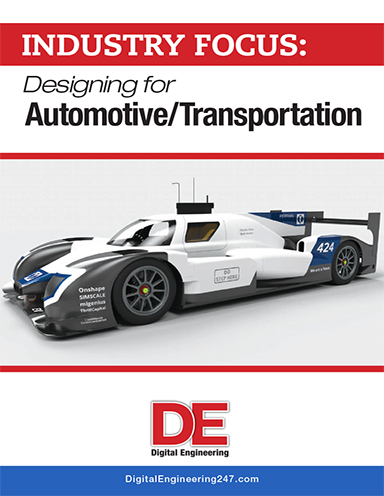
Designing for Automotive/Transportation
The automotive industry is past the point of talking about the disruption coming from demand for electric vehicle powertrains or the potential of autonomous vehicles, and well on its way to responding to those disruptions thanks to advanced engineering technologies. Download this special digital edition.

Beth Stackpole is a contributing editor to Digital Engineering. Send e-mail about this article to [email protected].
Follow DE
Join over 90,000 engineering professionals who get fresh engineering news as soon as it is published.






About Us · Contact Us · Editorial Team · Advertising · Privacy Policy · Subscriber Services · © 2026 Digital Engineering 24/7 · Peerless Media