Helping design and engineering professionals discover, evaluate and specify technologies and processes that shorten the design cycle and enable success.


Alert!
Digital Engineering ceased publication on July 1, 2026. This website remains available as an archive of engineering content.
For inquiries or information, please email [email protected].
Sponsored
 Developing optimized, efficient designs is the goal of any engineer--especially when weight is a critical factor. While optimization has traditionally been the domain of technical specialists, Collier Research Corporation has developed an advanced, yet easy-to-use technology that fully bridges the roles played by general designers and expert analysts.
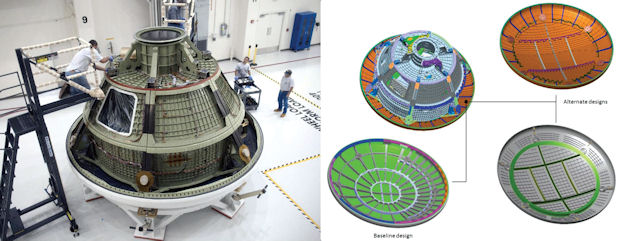
Version 7 of HyperSizer® software was fine-tuned during a recent project aimed at reducing the weight of the heat shield of NASA’s Orion Multipurpose Crew Vehicle. Ideal for aircraft wing and fuselage design as well as spacecraft, wind turbine blades and ship hulls, V7 offers powerful, user-friendly, composite and metal structural analysis and optimization that can be used during both early concept and late design, pre-production stages. HyperSizer, the first-ever software commercialized out of NASA, produces optimizations with typical weight savings of between 20 and 40 percent.
Building on reconfigured core computing technology established in HyperSizer 6.4, Version 7 self-configures for different loading scenarios, requiring less input from engineers. In doing so, V7 provides a more flexible and open environment for third-party software, serving as an independent and neutral framework for industry-accepted CAD, FEA and composites technologies. This role is pivotal for diverse engineering environments that rely on different toolsets and suppliers.
The Orion project made significant use of the streamlined process capabilities of V7, as well as new attributes developed specifically for analysis of the heat shield related to dynamic loading and non-linear material response.
V7 allowed the design team to quickly and easily compare different combinations of solutions, as well as the variables that influence the design. Within 10 weeks, they were able to study approximately 40 different variations of the heat shield configuration, designed in both composites and metal. These analyses informed discussions that led to a reduction of the final weight of the baseline design by 23 percent, eliminating hundreds of pounds of unnecessary weight.
For more information visit: www.hypersizer.com






About Us · Contact Us · Editorial Team · Advertising · Privacy Policy · Subscriber Services · © 2026 Digital Engineering 24/7 · Peerless Media