Helping design and engineering professionals discover, evaluate and specify technologies and processes that shorten the design cycle and enable success.



May 2026 Special Focus: Artificial Intelligence in Design and Simulation
In this Special Focus Issue, learn about the latest developments in the integration of artificial intelligence into engineering workflows.

Design & Simulation Software Guide 2025
In this Special Issue, Digital Engineering presents its second annual guide to design and simulation software vendors.
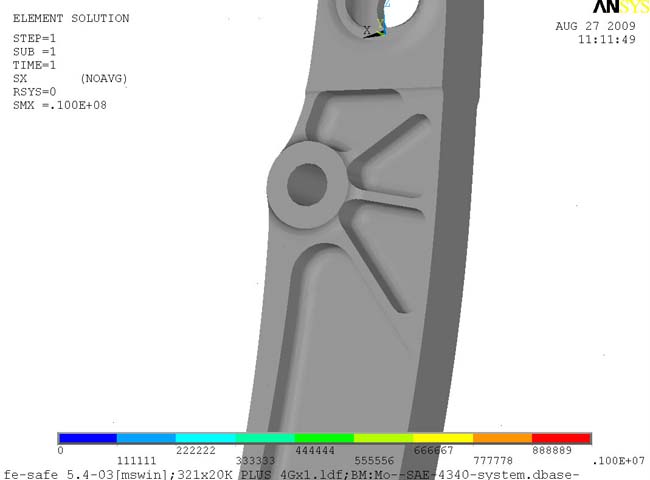
ANSYS, Inc. announced that race car engineering specialists Pratt & Miller used a combination of software from ANSYS and its partner Safe Technology Limited to redesign a cracked brake pedal face. The team used ANSYS engineering simulation products and fe-safe fatigue analysis technology to explore design alternatives and identify a solution that strengthened the part without excessive weight or compromising on race performance.
 Caption: Image courtesy of ANSYS, Inc. |
The open architecture of ANSYS technology combined with the fatigue analysis capabilities of fe-safe software to enable Pratt & Miller to identify an optimal redesign that met fatigue life targets.
In auto racing, mechanics often modify the car’s brake pedal face to comply with driver preference. Moving the pedal off center introduces twisting—a situation that induces stresses and can lead to material fatigue. Pratt & Miller Engineering discovered that one of its race cars prematurely showed small cracks on the brake pedal face starting near the pivot pin, a result of custom-positioning the pedal face further and further off center.
“This critical component clearly needed to be redesigned. Simply over-engineering a part really is not an option in motorsports with weight such a vital consideration; we have to run very close to the limit on our parts because weight costs speed, lap times and ultimately the race. Simulation was key to the solution in this case," says Gary Latham, design office manager, Pratt & Miller Engineering.
For the re-design, Pratt & Miller’s goal was to increase the component’s fatigue life without compromising on race performance. The team parameterized the pedal’s rib thickness and fillet size in a CAD package and compared the performance of various design alternatives in the ANSYS Workbench environment. Fatigue analysis with fe-safe showed where the component needed to be strengthened. The fe-safe software also determined how much the stresses must be changed and how much material must be added—and where—to achieve the target design life of more than 1 million cycles. The new design is now in production and back on the race track.
For more information, visit ANSYS and Safe Technology Limited.
Sources: Press materials received from the company and additional information gleaned from the company's website.


DE's editors contribute news and new product announcements to Digital Engineering. Press releases may be sent to them via [email protected].
Follow DE
Join over 90,000 engineering professionals who get fresh engineering news as soon as it is published.






About Us · Contact Us · Editorial Team · Advertising · Privacy Policy · Subscriber Services · © 2026 Digital Engineering 24/7 · Peerless Media