Helping design and engineering professionals discover, evaluate and specify technologies and processes that shorten the design cycle and enable success.



Digital Engineering April 2026
In the latest issue of Digital Engineering, we take a look at the latest innovations in design for additive manufacturing, including the use of natural language inputs, social media cosplayers, and AI integration. The issue also includes a feature…

January Special Focus Issue: Design for Additive
In this Special Focus Issue of Digital Engineering, learn about the latest advancements in design for additive manufacturing, including new software tools, additive in automotive, custom medical devices, and more.
The team at Northwestern created the prosthesis using a 3D printer. Mice that had previously had their ovaries removed were able to use the implant to bear live young. The technology could potentially be used to restore fertility in women who have been treated for cancer or other conditions.
The researchers, who work in the Woodruff Lab and the Shah Tissue Engineering and Additive Manufacturing Lab at the Feinberg School of Medicine, presented their findings at ENDO 2016, the Endocrine Society’s annual meeting, in April.
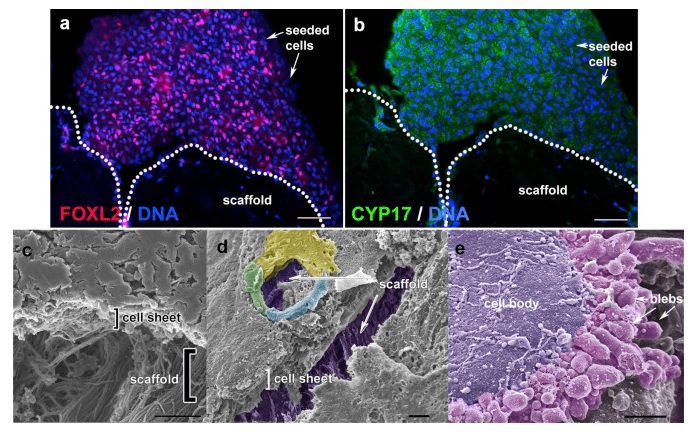
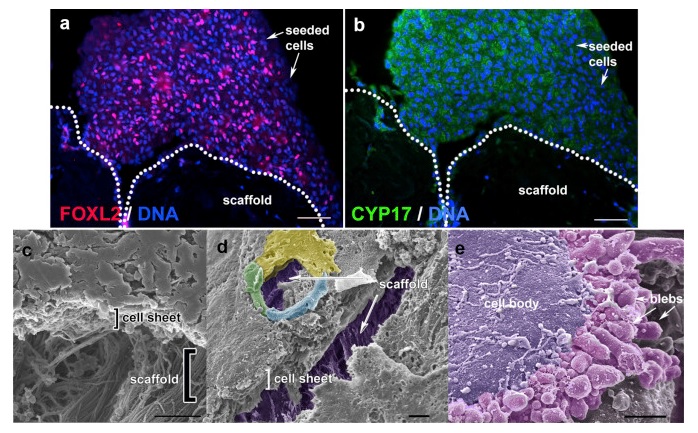
The 3D-printed gelatin scaffold supports hormone-producing cells and immature egg cells (oocytes). The scaffold includes a criss-crossing strut design that allows the cells to anchor at multiple points. The scaffolds were then seeded with ovarian follicles (which contain an oocyte and supportive cells) to make the prosthetic.
The researchers used an EnvisionTEC 3D bioplotter to print the scaffolds.
The mice had their ovaries replaced with the structures. The test animals were able to ovulate, give birth and nurse their offspring. The structure also supported blood vessel growth without any external stimulation.
The implant also restored the female hormone cycle in the mice, which means that the procedure could potentially improve hormone cycling in women with reduced ovarian function.
"We developed this implant with downstream human applications in mind, as it is made through a scalable 3D printing method, using a material already used in humans," said lead study author Monica Laronda. "We hope to one day restore fertility and hormone function in women who suffer from the side effects of cancer treatments or who were born with reduced ovarian function."
The research team will work with the Ann and Robert H. Lurie Children’s Hospital of Chicago to further explore how the technology can work with humans. One of the primary applications could be pediatric cancer patients.
“We already isolate and preserve ovarian tissue in pediatric patients at Lurie Children’s who are going to undergo treatment that would destroy these cells,” Monica Laronda told The Daily Northwestern. “We’re hoping that we’ll have those methods ready for them once they’re old enough and before they lose all their sex hormone function.”
Source: EurekAlert!


Brian Albright is the editorial director of Digital Engineering.
Contact him at [email protected].

Join over 90,000 engineering professionals who get fresh engineering news as soon as it is published.






About Us · Contact Us · Editorial Team · Advertising · Privacy Policy · Subscriber Services · © 2026 Digital Engineering 24/7 · Peerless Media