Helping design and engineering professionals discover, evaluate and specify technologies and processes that shorten the design cycle and enable success.


Alert!
Digital Engineering ceased publication on July 1, 2026. This website remains available as an archive of engineering content.
For inquiries or information, please email [email protected].

Digital Engineering April 2026
In the latest issue of Digital Engineering, we take a look at the latest innovations in design for additive manufacturing, including the use of natural language inputs, social media cosplayers, and AI integration. The issue also includes a feature…

January Special Focus Issue: Design for Additive
In this Special Focus Issue of Digital Engineering, learn about the latest advancements in design for additive manufacturing, including new software tools, additive in automotive, custom medical devices, and more.
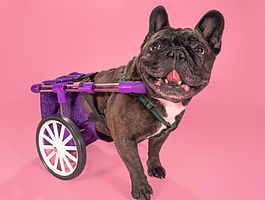
The Computer Aided Pets (CAP) Project is the brainchild of Jim Song, who modeled the group on e-NABLE, which has linked makers with children who are missing hands and arms.
The volunteers at the CAP Project design custom assistive devices using CAD programs. They are matched with people who have pets with those needs based on their location. According to the group’s website:
That way it will be much more convenient for the volunteer to print and build the assistive device. We know that our furry friends cannot speak and thus most likely the first device will need to be modified.
 Although the group is new, designers have already donated a number of different prosthetic designs. Among those designs is the FiGo, a wheelchair originally designed for a French Bulldog that an be used for dogs that are missing their rear legs. It includes 3D-printed joint pieces, along with skate and roller blade bearings, and other parts. A forelimb prosthesis was also created that can be printed in nylon, as well as two designs for a front leg wheelchair.
Another designer created a prosthetic leg for a stork that had necrosis and was losing its feet. There’s a similar design that can be used for a legless eagle.
The group paired its first volunteers and recipients in early September, and launched its website this month as well. For designers interested in joining the group, donating designs, or launching a local chapter, the CAP Project has a Google+ community. You can also find more information about getting involved here.
Currently, the CAP project has chapters in California and North Carolina, as well as in Tokyo, Beijing, Romania and Brazil.
Source: The CAP Project


Brian Albright is the editorial director of Digital Engineering.
Contact him at [email protected].






About Us · Contact Us · Editorial Team · Advertising · Privacy Policy · Subscriber Services · © 2026 Digital Engineering 24/7 · Peerless Media