Helping design and engineering professionals discover, evaluate and specify technologies and processes that shorten the design cycle and enable success.



Digital Engineering April 2026
In the latest issue of Digital Engineering, we take a look at the latest innovations in design for additive manufacturing, including the use of natural language inputs, social media cosplayers, and AI integration. The issue also includes a feature…

January Special Focus Issue: Design for Additive
In this Special Focus Issue of Digital Engineering, learn about the latest advancements in design for additive manufacturing, including new software tools, additive in automotive, custom medical devices, and more.
Prototype procurement was once a simple, though inefficient, affair. The product designer would sketch up an idea, bring it to a local machine shop and wait a few weeks for the part to arrive. If the project was on a tight timeline, the designer could pay an expedite fee and possibly get the prototype in a few days, assuming the supplier wasn’t too busy with other work. Each successive design iteration followed the same time-consuming, costly path, leading to development cycles best measured in months or sometimes years.
Thankfully, those days are long gone; or should be, at least. Designers and engineers now have access to dozens of online manufacturing services that can not only deliver prototype and end-use parts in a day or two, but support production needs during ramp-up and beyond. What’s more, many of the stereolithography-only service bureaus that started popping up during the mid-90s have morphed into more traditional—albeit online—manufacturing houses, while also offering 3D printing in a variety of metals and polymers. Now, the problem is deciding which technology and materials are best for your project, and which service bureau to use.
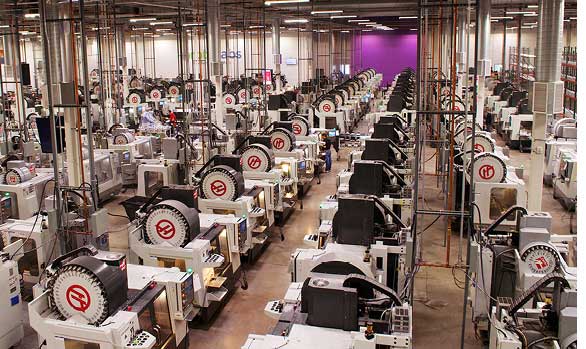
Protolabs is one possibility. The brainchild of founder Larry Lukis, this Minneapolis-based company first opened its doors in 1999 as a quick-turn injection molding provider, but soon expanded into computer numerically controlled (CNC)-machined metal and plastic parts. Through a series of acquisitions, Protolabs now offers 3D printing, overmolding and sheet metal fabrication services, all processed through the company’s automated quoting engine, and supported by a staff of knowledgeable customer service representatives.
Though they’re not alone by a long shot. Xometry, Gaithersburg, MD, for example, boasts quick-turn capabilities similar to those of Protolabs, but augments its in-house capabilities with a network of qualified machine shops, fabricators and 3D printing firms. Further, its website acts as a supply portal for product designers in need of tooling and custom-cut raw material.
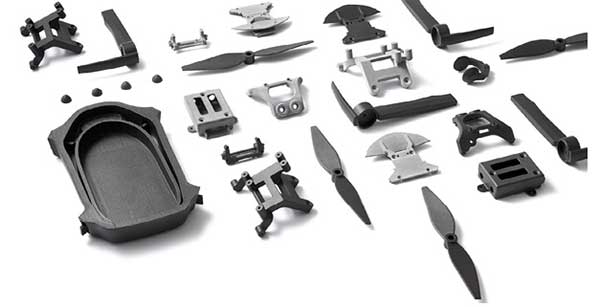
There’s also 3D Hubs and Shapeways. Both have factories in the Netherlands, offices in the U.S. and offer a range of 3D printing services. Where New York-based Shapeways is focused solely on additive manufacturing; however, Amsterdam’s 3D Hubs also offers machining, sheet metal and injection molding capabilities, as well as an instant quoting engine with design for manufacturing feedback.
Yet another company in the mix is Stratasys Direct Manufacturing, which is the contract manufacturing arm of 3D printing pioneer Stratasys. Headquartered in Los Angeles, Stratasys Direct has been in business for over 30 years, going beyond its fused deposition modeling roots by offering machining and urethane casting services, as well as a host of additive technologies such as stereolithography (SLA), selective laser sintering (SLS), direct metal laser sintering (DMLS) and the newest arrivals to the 3D printing landscape, Multi Jet Fusion (MJF) and PolyJet.
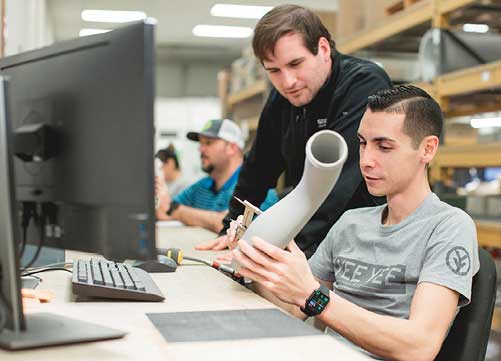
This partial list of additive acronyms raises an important point, one that might leave many in the design department scratching their heads. Where designers could only once choose SLA-printed prototypes in black, natural or white, today they are presented with a bewildering volume of 3D printing options.
Aside from those just listed, there’s Carbon’s digital light synthesis (DLS), binder jetting from ExOne (and others), bound powder extrusion (BPE) from Markforged and bound metal deposition (BMD) from Desktop Metal.
The point is that (A) there’s no shortage of 3D printing technologies, (B) additive manufacturing is changing (and generally improving) every day, and (C) because the 3D printing technology choice for prototyping can affect and possibly limit downstream manufacturing options, it’s essential to have at least a layman’s grasp on the whole industry.
The good news is you don’t need to spend days reading magazine articles like this, as enjoyable as that might be; each of the listed online manufacturers has a wealth of technical advice on its website, including engineering guides, design tips and on-demand webinars.
Beyond those resources, it’s easy enough to get a manufacturing expert on the phone or engage them in an online chat. And when you’re ready to give it a go, upload your file, review the quote along with any attached design for manufacturability advice and click order. Within the next day or two up to a week, your parts will arrive. It’s easy.
Perhaps what’s best about this new breed of service bureau is choice. A designer can quickly try on different manufacturing technologies on for size, compare parts produced via binder jet or DMLS, for example, with those that have been machined.
The same goes for materials. They can order one part in nylon, one made from Delrin and one of polyether ether ketone (PEEK), then see how each performs. Ditto for steel, aluminum and any of a dozen or so other alloys. And when all the components are ready for assembly, it’s easy to order a prototype electrical cabinet made of sheet metal to hold them all.
Once the product is functional and ready for the next phase, there’s often no need to find another vendor. As mentioned, most online manufacturers offer low-volume production and beyond. This makes it simple enough to segue from a 3D printed prototype to a 100-piece run of injection-molded or urethane-cast widgets, or transition from printed metal parts to machined or fabricated metal parts.
This also eliminates risk. One of the challenges in this brave new manufacturing world is the chance of pigeonholing yourself into a design that was very 3D-printable but utterly non-machinable. A similar argument can be made about the 3D printing to injection molding path, where the ability to evaluate parts produced in a quick-turn machined or 3D-printed mold might avoid having to redesign an expensive production tool months down the road. And if you need jigs, fixtures, dies and other tooling? A sizable percentage of each can be produced via 3D printing, quick-turn machined or fabricated, or in some cases eliminated.
Another benefit: all of the secondary processes available on these manufacturing sites. Dozens of finishing services such as painting, plating, part marking and bead blasting are available. Overmolding can turn a hard metal instrument into one with an ergonomic grip, while insert molding can equip a plastic part with metal threads and bearing surfaces. Some providers offer liquid silicone rubber molding, while others list heat treatment, assembly and military-grade coatings. If ever there was a good use for the term “one-stop-shop,” this is it.
This isn’t meant to be a tutorial on these services. For that, turn to the experts. Greg Paulsen, director of application engineering at Xometry, describes the company as a storefront to help designers and other service bureaus and machine shops determine the most cost-effective manufacturing process.
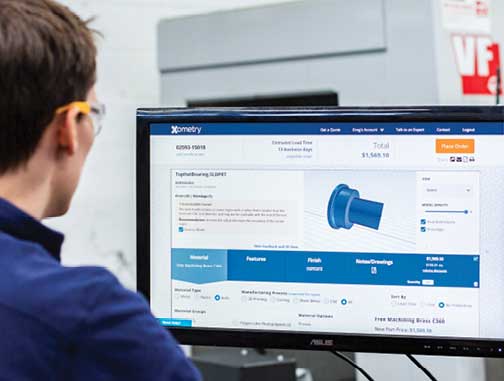
Stratasys Direct’s solutions marketing and communications manager, Lewis Simms, agreed, adding that the Stratasys Direct team frequently provides engineering expertise and design services, as well as overflow support, to a range of manufacturers, delivering everything from prototypes to “full serialized production.”
Matt Boyle, vice president of architecture at Shapeways, said that service bureaus should be considered as partners in product development, to suggest alternatives to traditional designs, materials and manufacturing processes.
And Bram de Zwart, 3D Hubs’ CEO and co-founder, noted that because his provider network is continually expanding and taking on new capabilities, they’re able to provide options that would otherwise be unavailable to shops with their own in-house manufacturing.
Rob Bodor, vice-president and general manager of the Americas at Protolabs, defined online manufacturing services as market disruptors: companies that are willing to shun the status quo in favor of faster, more agile business models. What’s more, these disruptors enable additional market disruption, as their customers are now able to bring products to market more quickly and efficiently than ever.
Bodor might be right, but you’ll never know unless you create an account, upload a file and give online manufacturing a try. It sure beats the alternative.


Every day, our customers find simpler, smarter approaches to stubborn design problemsand greater confidence to confront towering human and technological challenges. Less hindered by the usual constraints, they can imagine, design, iterate and…
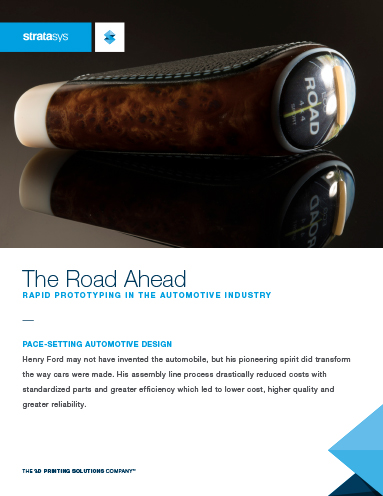
Rapid Prototyping in The Automotive Industry
Henry Ford may not have invented the automobile, but his pioneering spirit did transform the way cars were made. His assembly line process drastically reduced costs with standardized parts and greater efficiency which led to lower cost, higher quality and greater reliability.

Kip Hanson writes about all things manufacturing. You can reach him at [email protected].
Follow DE
Join over 90,000 engineering professionals who get fresh engineering news as soon as it is published.






About Us · Contact Us · Editorial Team · Advertising · Privacy Policy · Subscriber Services · © 2026 Digital Engineering 24/7 · Peerless Media