Helping design and engineering professionals discover, evaluate and specify technologies and processes that shorten the design cycle and enable success.



Digital Engineering April 2026
In the latest issue of Digital Engineering, we take a look at the latest innovations in design for additive manufacturing, including the use of natural language inputs, social media cosplayers, and AI integration. The issue also includes a feature…

January Special Focus Issue: Design for Additive
In this Special Focus Issue of Digital Engineering, learn about the latest advancements in design for additive manufacturing, including new software tools, additive in automotive, custom medical devices, and more.
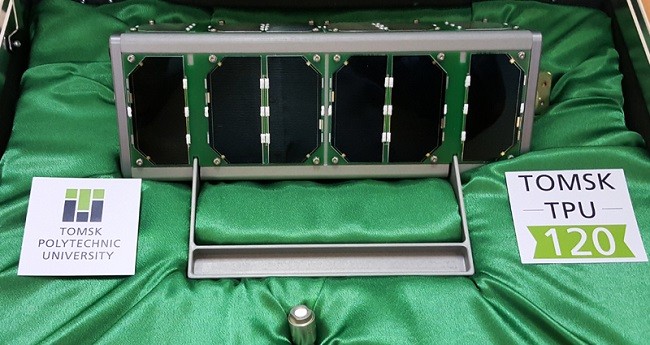
Later this month, Russia will launch another first: the first 3D printed satellite. The CubeSat nanosatellite will be sent to the International Space Station. According to the Tomsk Polytechnic University (TPU), the probe has been handed off to the Space Rocket Corporation Energiya for delivery to the Baikonur space launch center.
On March 31, a Progress MS-2 rocket is scheduled to take the satellite to the ISS, where it will be launched into a 400-kilometer orbit during a spacewalk.
The CubeSat is a 300mm by 100mm by 100mm cube, which will orbit the planet for six months.
The satellite’s external housing was 3D printed. It also contains plastic parts and a new zirconium-ceramic battery. Sensors on the device will measure the temperature of the internal electronics. That data will be analyzed to determine if the materials can be used in future space probes.
The satellite was designed and assembled at Tomsk Polytechnic’s scientific and education center. Materials used to construct the device were developed by scientists at TPU and the Institute of Strength Physics and Materials Science.
Source: Space Daily


Brian Albright is the editorial director of Digital Engineering.
Contact him at [email protected].

Join over 90,000 engineering professionals who get fresh engineering news as soon as it is published.






About Us · Contact Us · Editorial Team · Advertising · Privacy Policy · Subscriber Services · © 2026 Digital Engineering 24/7 · Peerless Media