Helping design and engineering professionals discover, evaluate and specify technologies and processes that shorten the design cycle and enable success.



Digital Engineering April 2026
In the latest issue of Digital Engineering, we take a look at the latest innovations in design for additive manufacturing, including the use of natural language inputs, social media cosplayers, and AI integration. The issue also includes a feature…

January Special Focus Issue: Design for Additive
In this Special Focus Issue of Digital Engineering, learn about the latest advancements in design for additive manufacturing, including new software tools, additive in automotive, custom medical devices, and more.
S2C Inc. (San Jose, CA), a provider of FPGA-based ESL solutions, recently announced the release of its third-generation rapid system-on-chip (SoC) prototyping tool, the Dual Virtex-5 TAI Logic Module.
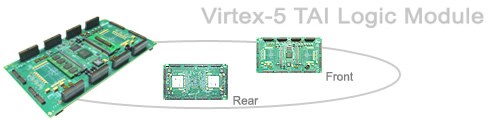
Equipped with two Xilinx LX series Virtex-5 FPGAs, the Dual Virtex-5 TAI Logic Module supplies up to 6.6 million ASIC gates of capacity. Foremost among new features is the ability to run TAI Logic Module’s key functions from PC via an on-board USB interface. Users can generate clocks, download to FPGA, and self-test hardware through the TAI Player runtime software shipped with the TAI Logic Module. Additional new features include on-board DDR2 DIMM sockets supporting up to 4GB of memory, three on-board programmable clock generators running from 0.5 to 200MHz, and equal length IO for optimal performance with user target systems.
The new Virtex-5 series TAI Logic Module maintains an identical architecture with the Virtex-4 generation TAI Logic Module, allowing existing customers to re-use their daughter boards. S2C also provides numerous off-the-shelf accessory modules to accelerate customers’ construction of FPGA prototypes for their applications.
“Aside from a stable prototyping environment, our customers have indicated ease-of-use as a crucial element in their selection of FPGA tools, so we’ve worked hard to improve the level of integration between our hardware and software offerings,” noted Mon-Ren Chene, CTO of S2C. “Our TAI Player software has been upgraded and fully supports the Virtex-5 TAI Logic Module to give designers greater control over the design flow process, from synthesis partitioning and RTL-level probe setup to FPGA place-and-route.”
The Virtex-5 series of prototyping modules can be stacked for additional capacity and is fully backward compatible with the earlier generation Virtex-4 TAI Logic Modules.
S2C provides comprehensive SoC solutions, including advanced SoC prototyping and design services, silicon IP, and tools that enable FPGA-based ESL design. S2C was founded in 2003 by a team with extensive experience in ASIC emulation, FPGA prototyping, and SoC validation technologies. For more details, visit S2C Inc. at www.s2cinc.com.
Sources: Press materials received from the company and additional information gleaned from the company’s website.


DE's editors contribute news and new product announcements to Digital Engineering. Press releases may be sent to them via [email protected].
Follow DE
Join over 90,000 engineering professionals who get fresh engineering news as soon as it is published.






About Us · Contact Us · Editorial Team · Advertising · Privacy Policy · Subscriber Services · © 2026 Digital Engineering 24/7 · Peerless Media