Helping design and engineering professionals discover, evaluate and specify technologies and processes that shorten the design cycle and enable success.



May 2026 Special Focus: Artificial Intelligence in Design and Simulation
In this Special Focus Issue, learn about the latest developments in the integration of artificial intelligence into engineering workflows.

April 2026 Special Focus Issue: Generative Design
In this Special Focus Issue, Digital Engineering takes a look at how generative design solutions can be used across different types of design problems and with a variety of manufacturing approaches to accelerate design space exploration, and…
Most movie goers were simply entertained with the design spectacle, but Elon Musk, founder of SpaceX and Tesla Motors, thought the technology used by Stark might not be all that far out of reach. By combining a Leap motion controller with the Oculus Rift VR headset, Musk and SpaceX developed a basic interactive and design program that uses gesture control in a 3D environment.
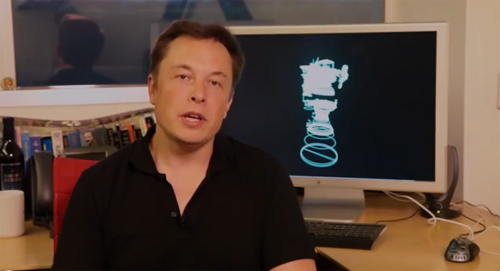
If Musk’s name sounds familiar, he’s been in the news recently with an idea for superfast mass transit he calls the Hyperloop. Unlike the Hyperloop, which Mush says he has no interest in developing himself, gesture-based design has moved forward quickly. According to Musk, it only took a couple weeks after SpaceX began experimenting with Leap and a standard computer display to move to virtual design.
In the video presentation of the idea, Musk shows how the various technologies can interact to make design more of a hands-on experience. Instead of requiring years of CAD experience to complete a design, the idea is to allow users to shape or interact with an object using their hands. The finished object is then translated from digital design to finished project using a 3D printer.
Anyone with design experience that watches the video will probably notice the whole process seems kind of basic. While Leap has an accuracy of up to 0.01 mm when crafting details, the program seems to lack the fine control one would expect from CAD. That might seem like a quibble for a new design process, but it will have to be overcome if this sort of 3D design hopes to become industry standard.
Something else that looks to be missing, at least from my perspective, is some form of haptic feedback. In order to really shape details in what is essentially virtual clay, users will require some sort of sense of touch. Adding touch to the mix will mean bringing another peripheral to the design process, raising the costs of design beyond that of the old, boring keyboard and mouse combo.
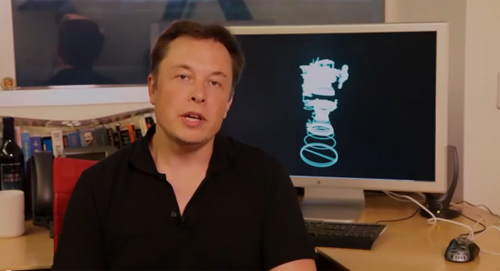
Below you’ll find a video from Musk and SpaceX displaying what may, eventually, be the future of design.
Source: SpaceX


John Newman is a Digital Engineering contributor who focuses on 3D printing. Contact him via [email protected] and read his posts on Rapid Ready Technology.
Follow DE
Join over 90,000 engineering professionals who get fresh engineering news as soon as it is published.






About Us · Contact Us · Editorial Team · Advertising · Privacy Policy · Subscriber Services · © 2026 Digital Engineering 24/7 · Peerless Media