Helping design and engineering professionals discover, evaluate and specify technologies and processes that shorten the design cycle and enable success.



Digital Engineering April 2026
In the latest issue of Digital Engineering, we take a look at the latest innovations in design for additive manufacturing, including the use of natural language inputs, social media cosplayers, and AI integration. The issue also includes a feature…

January Special Focus Issue: Design for Additive
In this Special Focus Issue of Digital Engineering, learn about the latest advancements in design for additive manufacturing, including new software tools, additive in automotive, custom medical devices, and more.
Stratasys and Optomec have combined resources to create a way to incorporate printed electronics into additive manufacturing (AM). This hybrid approach builds an object that isn’t required to have holes for wires or slots for chips. It is pure form follows function.
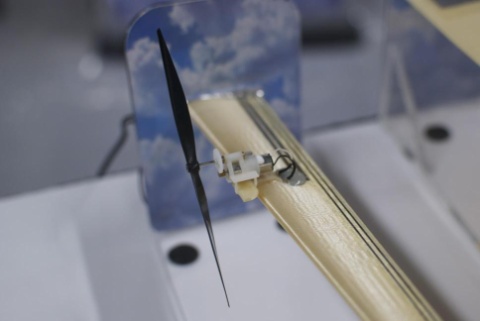
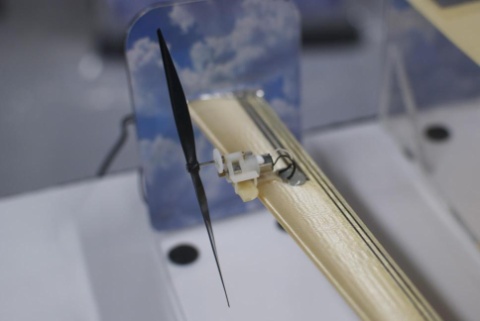
The first prototype created with the new process is what the companies are calling a "smart wing" for an unmanned aerial vehicle (UAV). The wing has functional electronics built into the design, a process that could also be used in the medical device, consumer electronics and automotive industries. The all-in-one approach this brings can reduce the overall weight of parts, as well as enhance them with ingrained technology.
Bringing together 3D printing and printed electronic circuitry will be a game changer for design and manufacturing. It has the potential to completely streamline production by requiring fewer materials and steps to bring a product to market. –Jeff DeGrange, vice president of direct digital manufacturing at Stratasys
The hybrid process used an Optomec Aerosol Jet system to print a conformal sensor, antenna and circuitry directly onto the wing of a UAV model that was built by Stratasys. Electrical and sensor designs were provided by Aurora Flight Sciences.
“The ability to fabricate functional electronics into complex-shaped structures using additive manufacturing can allow UAVs to be built more quickly, with more customization, potentially closer to the field where they’re needed,” added David Kordonowy, Aurora Flight Sciences’ aerostructures research group. “All these benefits can lead to efficient, cost-effective fielded vehicles.”
Below you’ll find a short video about the hybrid process.
Source: Stratasys


John Newman is a Digital Engineering contributor who focuses on 3D printing. Contact him via [email protected] and read his posts on Rapid Ready Technology.
Follow DE
Join over 90,000 engineering professionals who get fresh engineering news as soon as it is published.






About Us · Contact Us · Editorial Team · Advertising · Privacy Policy · Subscriber Services · © 2026 Digital Engineering 24/7 · Peerless Media