Helping design and engineering professionals discover, evaluate and specify technologies and processes that shorten the design cycle and enable success.


Alert!
Digital Engineering ceased publication on July 1, 2026. This website remains available as an archive of engineering content.
For inquiries or information, please email [email protected].

Cut Retrieval-Augmented Generation (RAG) Hallucinations by 50%
Most teams hit the same wall with enterprise AI: LLMs that hallucinate, pipelines that don’t scale, and infrastructure that’s harder to design than the models themselves.

What Is Intelligent BOM Management? A Guide to Smarter Product Development
Learn how intelligent Bill of Materials (BOM) management helps teams collaborate, reduce errors, and bring innovative products to market faster with cloud-based PLM tools.
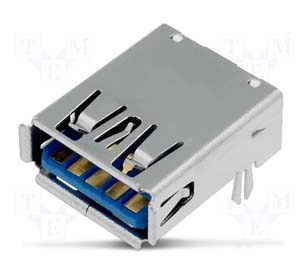 |
Mouser Electronics, Inc. has announced the availability of USB 3.0 SuperSpeed connectors from Amphenol. The USB 3.0 connectors are fully compliant with the USB 2.0 and 3.0 specification. The company says they provide a 10 times performance increase over Hi-Speed USB capabilities, while maintaining backwards compatibility with USB 2.0 devices.
Mouser’s stock of Amphenol’s USB 3.0 includes Type A, Type B, and Micro-B connectors that provide full metal shielding for EMI, RFI, and ESD protection. Amphenol’s USB 3.0 connectors can be used to improve the performance of external hard drives, high-res webcams, video surveillance, and Blu-ray drives.
For more information, visit Mouser Electronics.
Sources: Press materials received from the company and additional information gleaned from the company's website.


DE's editors contribute news and new product announcements to Digital Engineering. Press releases may be sent to them via [email protected].
Follow DE






About Us · Contact Us · Editorial Team · Advertising · Privacy Policy · Subscriber Services · © 2026 Digital Engineering 24/7 · Peerless Media