Helping design and engineering professionals discover, evaluate and specify technologies and processes that shorten the design cycle and enable success.



May 2026 Special Focus: Artificial Intelligence in Design and Simulation
In this Special Focus Issue, learn about the latest developments in the integration of artificial intelligence into engineering workflows.

April 2026 Special Focus Issue: Generative Design
In this Special Focus Issue, Digital Engineering takes a look at how generative design solutions can be used across different types of design problems and with a variety of manufacturing approaches to accelerate design space exploration, and…
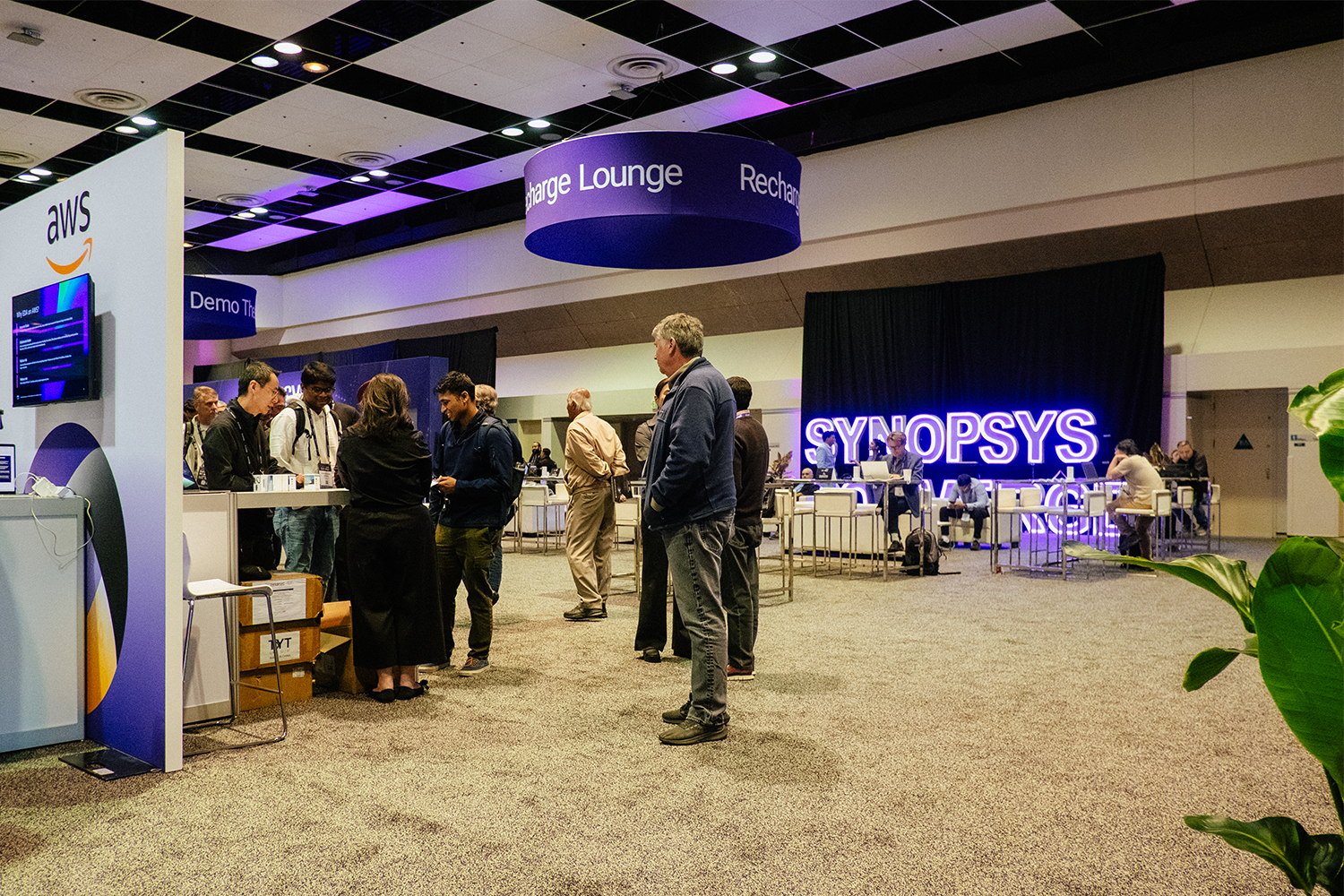
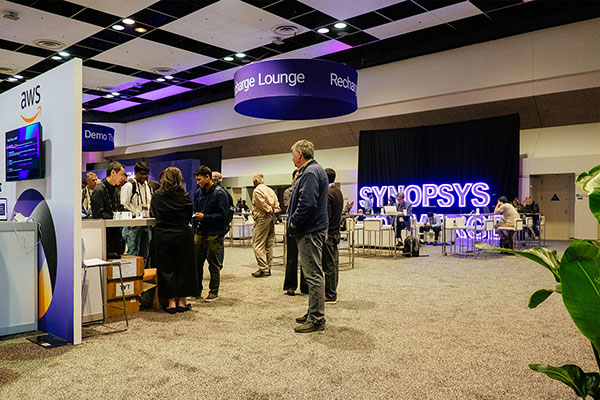
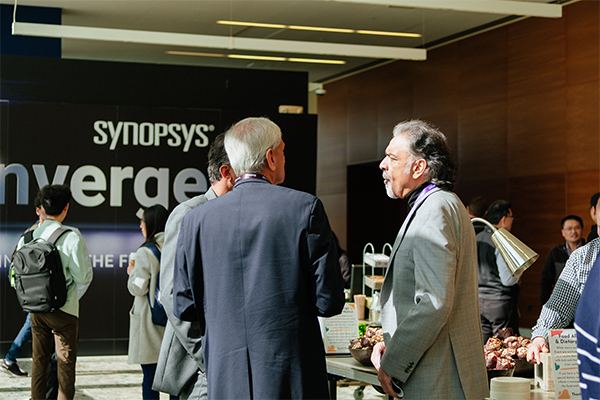
This week, Synopsys hosted the inaugural Synopsys Converge conference in the heart of Silicon Valley, drawing chip designers and systems engineers to the Santa Clara Convention Center. The event was a consolidation of the SNUG (Synopsys User Group) Silicon Valley, what used to be called Ansys Simulation World, and a by-invitation-only executive forum. Converge marks "a silicon-powered, AI-enabled, and software-defined future" for Synopsys, according to Ann Minooka, chief marketing officer at Synopsys.
In July 2025, Synopsys completed its acquisition of Ansys, expanding Synopsys's portfolio to cover silicon design, semiconductor intellectual property, FEA, CFD, electronics, materials intelligence, embedded software, and more. Converge was the ideal platform for Synopsys to reveal its post-acquisition strategy for Ansys products.
In his keynote, Sassine Ghazi, President and CEO of Synopsys, said, "We have some products where Synopsys technology is the host that integrates Ansys technology. And some where Ansys is the host, integrating Synopsys technology. We have proven the integration in working with a number of beta customers."
Ghazi announced the launch of Synopsys Multiphysics Fusion technology, signifying the merging of Synopsys and Ansys technologies. It represents the incorporation of Ansys golden multiphysics engines into Synopsys' EDA portfolio, to enable electromagnetics, thermal, and mechanical simulation for chip design.
"By integrating co-design of software and hardware, electronics and physics, by harnessing digital twins to design, test, and refine products before physical production, and using AI to enhance human capabilities, customers' R&D teams can accelerate time to market of their intelligent systems," he said.
Executives from AMD, Intel, and Microsoft CEO Satya Nadella appeared in prerecorded video chats in Ghazi's keynote. But NVIDIA CEO Jensen Huang, headquartered in Santa Clara, made a cameo appearance in person. "Welcome to GTC!" he quipped, prompting laughter in the audience, many of whom might also be attending the NVIDIA-hosted GPU Technology Conference next week.
In December 2025, Synopsys announced a partnership with NVIDIA. As part of the partnership, Synopsys planned to use NVIDIA CUDA-X libraries and AI-Physics technologies, to accelerate its portfolio of compute-intensive applications.
"Before you get to the simulation solver, you have to go through the meshing process. Take CFD in Ansys Fluent, for example. We're seeing 50+ times speedup just by implementing GPU acceleration on the same computation," noted Ghazi during his onsite media Q&A. Explaining Synopsys' partnership with NVIDIA, he added, "What NVIDIA Omniverse provides is the visualization of simulation. But its physics is not in any way the same in scale, capacity, and fidelity as Ansys solvers."
At Synopsys Converge, Ghazi also launched Ansys 2026 R1, the first product release since the acquisition. The release incorporates generative AI and agentic capabilities. For example, Ansys GeomAI introduces a generative AI‑driven approach to conceptual design exploration, and Mesh Agent, a new feature in Ansys Mechanical software, helps engineers debug and resolve meshing failures during pre-processing. The roles of Ansys SimAI and Ansys Copilot are also expanding.
"This is Year One of the new Synopsys," said Ghazi. "We are in the Renaissance of a new way of engineering."
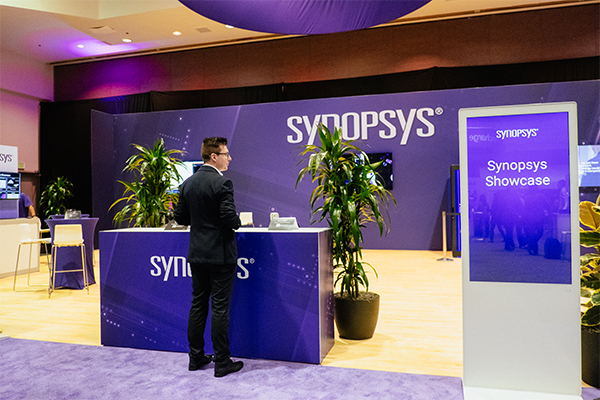


Synopsys, Inc. (Nasdaq: SNPS) is the Silicon to Software™ partner for innovative companies developing the electronic products and software applications we rely on every day. As the world's 15th largest software company, Synopsys has a long…

Kenneth Wong is Digital Engineering's resident blogger and senior editor. Email him at [email protected] or share your thoughts or suggestions at digitaleng.news/facebook.
Follow DE
Join over 90,000 engineering professionals who get fresh engineering news as soon as it is published.






About Us · Contact Us · Editorial Team · Advertising · Privacy Policy · Subscriber Services · © 2026 Digital Engineering 24/7 · Peerless Media