Helping design and engineering professionals discover, evaluate and specify technologies and processes that shorten the design cycle and enable success.


Alert!
Digital Engineering ceased publication on July 1, 2026. This website remains available as an archive of engineering content.
For inquiries or information, please email [email protected].

May 2026 Special Focus: Artificial Intelligence in Design and Simulation
In this Special Focus Issue, learn about the latest developments in the integration of artificial intelligence into engineering workflows.

April 2026 Special Focus Issue: Generative Design
In this Special Focus Issue, Digital Engineering takes a look at how generative design solutions can be used across different types of design problems and with a variety of manufacturing approaches to accelerate design space exploration, and…
The new NAG Library for SMP Multicore from Numerical Algorithms Group is designed enable engineers to better use the processing power of multicore computer systems and migrate existing applications to multi processor architectures.
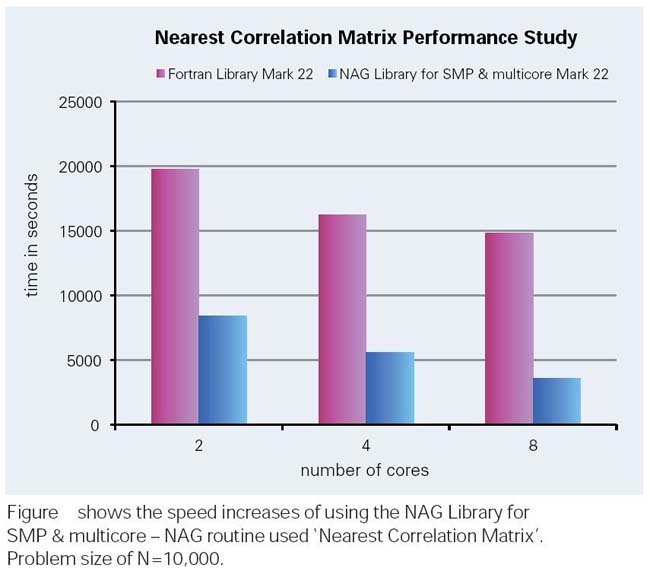 |
The NAG Library for SMP and Multicore contains more than 1,600 routines, including more than 100 that are new for the latest release, according to NAG.
“Most current processors are multicore, and can provide benefits when programmed with parallel techniques,” says David Cassell, NAG product marketing manager. “In fact, if you do not use routines tuned for multicore architectures applications are now likely to execute more slowly. The NAG library for SMP and Multicore also has been designed to make it easy to move those applications that currently call serial routines into the parallel world, by the use of common calls and common documentation. This means users can quickly gain the benefits of parallel performance.”
For more information, visit NAG.
Sources: Press materials received from the company and additional information gleaned from the company's website.


DE's editors contribute news and new product announcements to Digital Engineering. Press releases may be sent to them via [email protected].
Follow DE






About Us · Contact Us · Editorial Team · Advertising · Privacy Policy · Subscriber Services · © 2026 Digital Engineering 24/7 · Peerless Media