Helping design and engineering professionals discover, evaluate and specify technologies and processes that shorten the design cycle and enable success.



Digital Engineering April 2026
In the latest issue of Digital Engineering, we take a look at the latest innovations in design for additive manufacturing, including the use of natural language inputs, social media cosplayers, and AI integration. The issue also includes a feature…

January Special Focus Issue: Design for Additive
In this Special Focus Issue of Digital Engineering, learn about the latest advancements in design for additive manufacturing, including new software tools, additive in automotive, custom medical devices, and more.
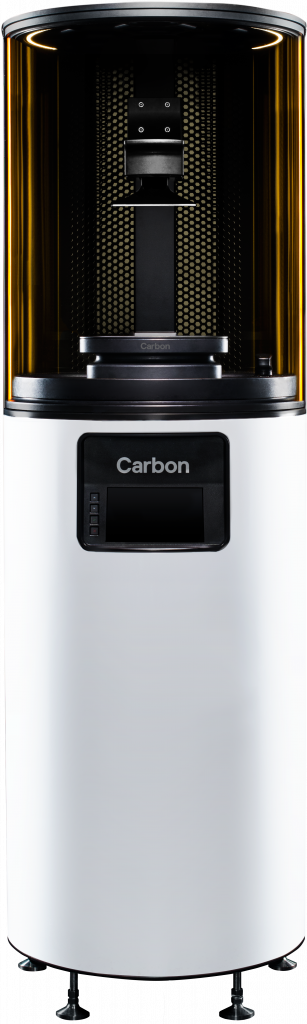 Carbon 3D Printer, using Digital Light Synthesis (DLS) technology powered by the Continuous Liquid Interface Production (CLIP) process. (Image courtesy Carbon)
Recently, engineers at TOMAR Electronics of Gilbert, AZ, ran into just such a situation. The almost 50-year-old, ISO9001, family-owned company designs and manufactures specialty LED light-bars, sirens, strobe beacons and related equipment for emergency vehicles and industrial applications.
To make a new sales display unit with various configurations of custom lighting installations, the TOMAR staff invoked a flexible, modular design. This concept included panel slots for multiple rocker-style electrical switches that are populated in different quantities per specific model configuration. For versions using fewer than the maximum number of switches, empty slots would simply be covered with fitted plugs. However, when the switch manufacturer was asked about providing such plugs (with an outline the same as the switch), their only solution was to use dummy switches that are identical but simply aren’t wired up.
To senior mechanical engineer Tomasz Taubert, this “solution” was just primed to confuse the potential TOMAR customer. Those who were viewing a demonstration (or trying it out themselves) would ask, "Why isn’t this switch working? Is it broken? Which switches do work?" A better solution was needed.
Traditional approaches to working with photopolymers have struggled to produce non-brittle parts. The Carbon process embeds a second, heat-activated chemistry in its materials that results in parts with engineering-grade mechanical properties. For example, the company’s proprietary FPU (flexible polyurethane) material behaves similarly to injection-molded polypropylene, exhibiting moderate stiffness and good elongation, while its RPU (rigid polyurethane) is stiff, tough and comparable to classic acrylonitrile butadiene styrene (ABS).
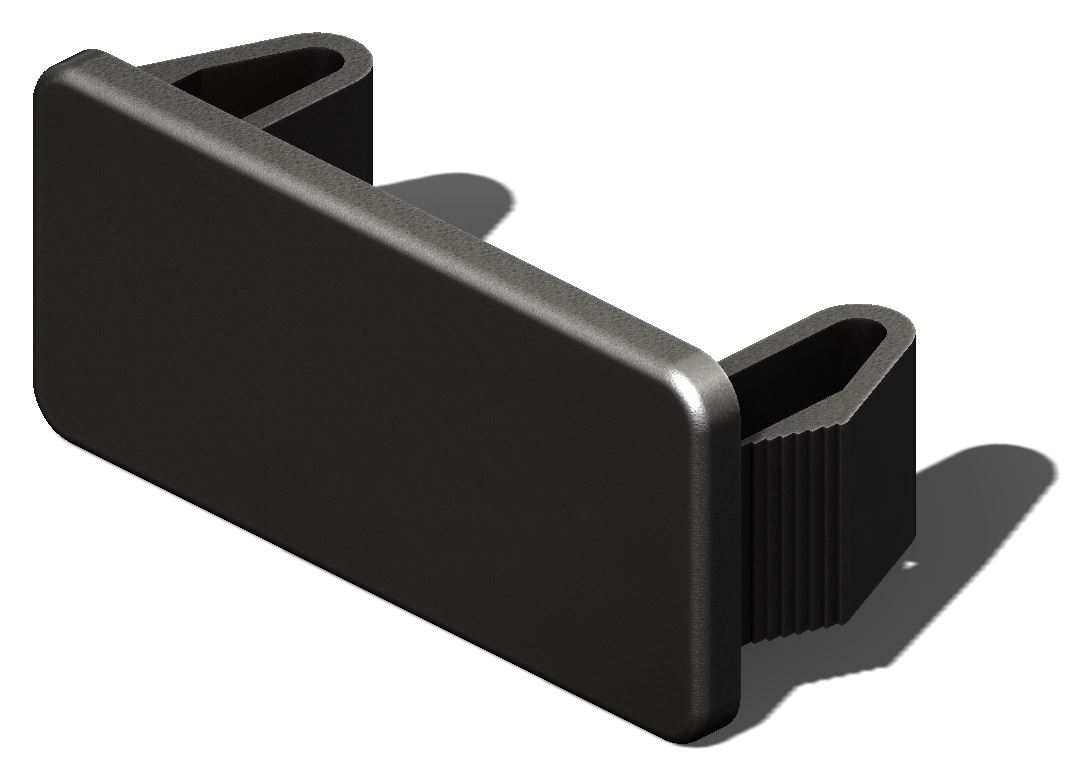
Having previously obtained some generic samples directly from Carbon, Taubert had a good sense of the solution offered by the CLIP process. He designed a rectangular plug, on the order of 1.3 x 0.6 x 0.5 in., and investigated service bureaus that could take on the job.
Ladd McCluskey, president and founder of Primary Manufacturing, notes: “We are a unique company, and we believe this technology can stand alone in the manufacturing world. The Carbon machines are great, but the resins are amazing. The properties of the plastics are as good as, and in most cases better than, injection molding — and the lead times are a few weeks at most.”
Having sent out for part quotes at several manufacturers offering DLS parts, Tomasz was impressed with Primary Manufacturing’s focus and belief in the technology, and placed an order for 96 parts from RPU 61. The parts arrived on time, and displayed the hallmark of the DLS technology: a great surface finish fresh out of the machine, with no layering lines. And once the plug was put in place, it was clear that the simple part was both strong and flexible: installing easily, filling the empty slot perfectly, and avoiding all confusion for the TOMAR customer.
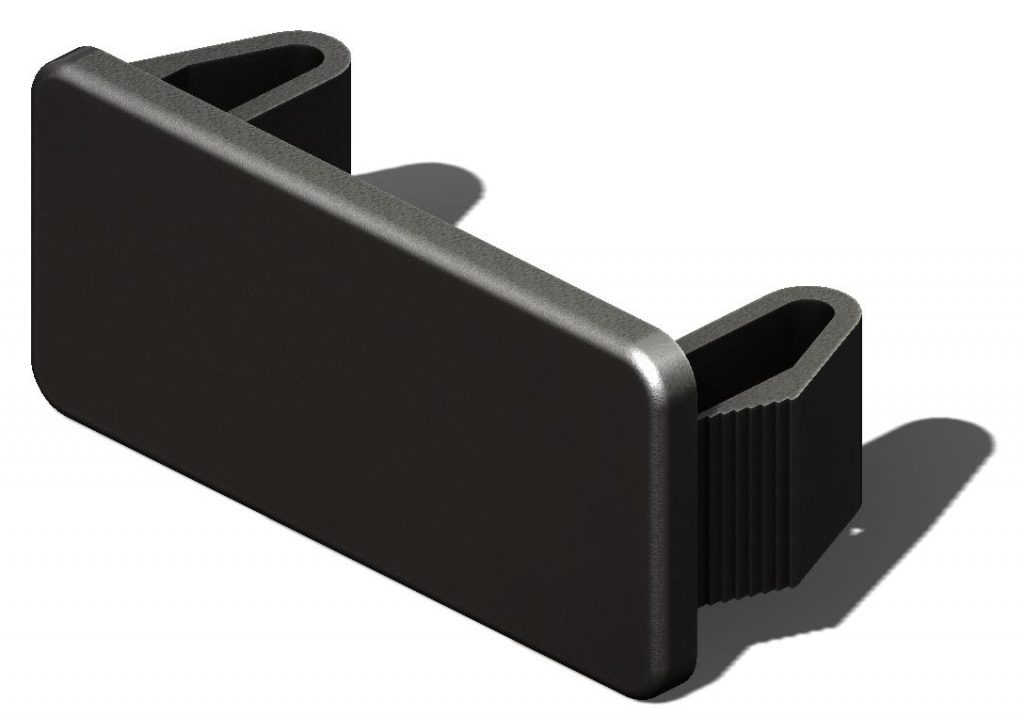 CAD model of proposed plug, to be 3D-printed. (Image courtesy TOMAR Electronics)
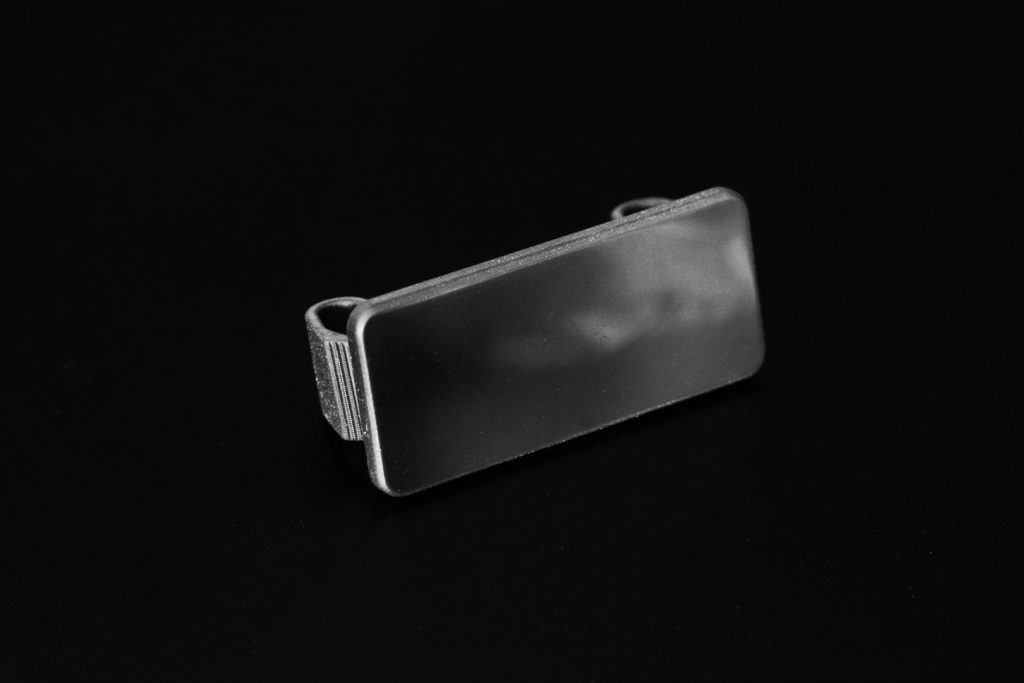 Plug as produced with Carbon Digital Light Synthesis (DLS) technology powered by the Continuous Liquid Interface Production (CLIP) process. (Image courtesy TOMAR Electronics)
While not as glamorous or high quantity a usage as the recent joint production announcement by Adidas and Carbon, this application demonstrates one of the unique values of AM technology in general and the effectiveness of Carbon’s technology in particular: without DLS, Taubert says, he might simply be forced to use a more expensive and less elegant solution.
This example is also a small sign of big things to come, when 3D printing will offer a common solution for everyday problems.
“You might laugh, but it felt like an historical moment when I was specifying on the drawing, a 3D print material for production parts," Taubert says.


Pamela Waterman worked as Digital Engineering's contributing editor for two decades. Contact her via DE-Editors@ digitaleng.news.
Follow DE
Join over 90,000 engineering professionals who get fresh engineering news as soon as it is published.






About Us · Contact Us · Editorial Team · Advertising · Privacy Policy · Subscriber Services · © 2026 Digital Engineering 24/7 · Peerless Media