Helping design and engineering professionals discover, evaluate and specify technologies and processes that shorten the design cycle and enable success.


Sponsored

Cut Retrieval-Augmented Generation (RAG) Hallucinations by 50%
Most teams hit the same wall with enterprise AI: LLMs that hallucinate, pipelines that don’t scale, and infrastructure that’s harder to design than the models themselves.

What Is Intelligent BOM Management? A Guide to Smarter Product Development
Learn how intelligent Bill of Materials (BOM) management helps teams collaborate, reduce errors, and bring innovative products to market faster with cloud-based PLM tools.

 Dear DE Reader:
The Muses work in mysterious ways. Take Luke Rhinehart. Apparently he got his muse for “The Dice Man” from some students. He noticed their surprise after he threw out a line to the effect that freedom lay in tossing dice to make a decision. Charlie Brumfield's muse tapped him shopping.
The blog post “Using Tormach Machines for Gaming Industry Production” rolls out Brumfield's tale in words and video. It's fun and informative. Brumfield is quite the pip, and the entire gig could leave you thinking that you can do that something you've been musing about.
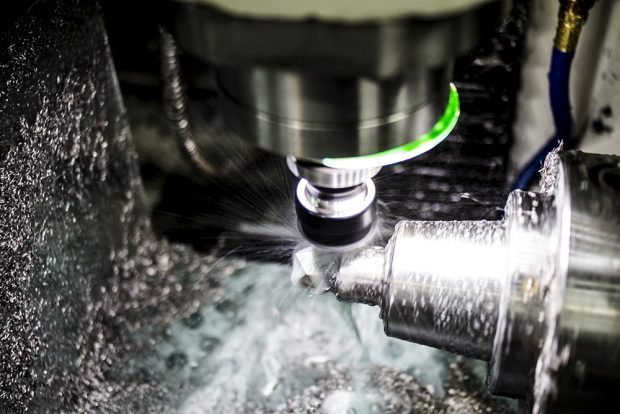 Artisan Dice combines modern Tormach machines to mill metals and old-world handcrafting techniques to make dice for gamers with discerning tastes. Image courtesy of Tormach Inc.
The backdrop is that Brumfield played Dungeons and Dragons the traditional way back in college. Polyhedral dice and all that. When he couldn't find fudge dice for playing Dresden Files, he decided to make his own. That inspired him to start up Artisan Dice to craft dice for “discerning game players.” Aside: At the end of this blog post, there's a link to Artisan Dice. Really neat stuff.
Anyway, Brumfield had no machining chops. He knew how to market things, but not how to make them. He was a web guy. He ran a sporting goods store. Took photographs.
That proved no impediment. He set up shop in his garage and began to learn the trade. He raised the dough on Kickstarter to buy a PCNC 1100 and a PCNC 770 personal CNC (computer numerical control) mill from Tormach to start production work.That decision worked out well, according to Brumfield. For one, the mills are affordable, even fully tricked out with every option. They also have a small footprint, so they fit into what looks like a fairly tight space. But they're also ruggedly forgiving. A lot of end mills were busted while getting the hang of speeds and feeds when milling titanium, but the machine was never damaged. They now offer dice with nearly 250 material options.
Artisan Dice has evolved into a full-fledged production shop running machines that are often billed as for the weekend maker. How did that happen? “Using Tormach Machines for Gaming Industry Production” shows you how a guy with a notion and no experience made it happen with the right machinery and a lot of gumption.
This presentation should amuse you. While you read and watch Brumfield's adventure at the far side of today's Check it Out link, you might like to listen for your muse as well.
Thanks, Pal. – Lockwood
Anthony J. Lockwood
Editor at Large, DE


Anthony J. Lockwood is Digital Engineering's founding editor. He is now retired. Contact him via [email protected].
Follow DE
Join over 90,000 engineering professionals who get fresh engineering news as soon as it is published.






About Us · Contact Us · Editorial Team · Advertising · Privacy Policy · Subscriber Services · © 2026 Digital Engineering 24/7 · Peerless Media