Helping design and engineering professionals discover, evaluate and specify technologies and processes that shorten the design cycle and enable success.



May 2026 Special Focus: Artificial Intelligence in Design and Simulation
In this Special Focus Issue, learn about the latest developments in the integration of artificial intelligence into engineering workflows.

Design & Simulation Software Guide 2025
In this Special Issue, Digital Engineering presents its second annual guide to design and simulation software vendors.
 |
Dassault Systèmes has launched Abaqus 6.10, a unified finite element analysis (FEA) and multiphysics product suite for simulation from SIMULIA.
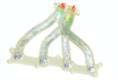
The new release delivers more than 100 enhancements for modeling, performance, usability, visualization, multiphysics, and core mechanics, according to the company. Abaqus 6.10 introduces a new multiphysics capability for performing computational fluid dynamics (CFD) simulation. This enables users to perform coupled physics simulations with Abaqus/Standard and Abaqus/Explicit, such as fluid-structure interaction between human tissue, a medical device, and fluid flow; thermal analysis of electronic systems undergoing convection cooling; or transient thermal analysis of engine exhaust systems.
 |
“In order to simulate performance of engine components in a closer-to-reality environment, we are pleased that Abaqus 6.10 provides the computational fluid dynamic capabilities for fluid-structure interaction which will enable us to perform accurate fluid and solid co-simulations,” says Dr. Fred Yang, technical leader of bearing analysis from Federal-Mogul Powertrain Sealing and Bearings Group USA. “The new solution certainly gives us significant enhancements to explore multiphysics interaction in our designs and optimize our products to reduce engine power loss and lower overall material costs.”
The release also reinforces SIMULIA’s commitment to providing an open multiphysics platform through improvements to its direct co-simulation coupling interface. This capability allows SIMULIA partners and customers to couple their applications directly with Abaqus for multiphysics simulation.
Abaqus 6.10 also features enhancements to its extended finite element method (XFEM) that the company says improves the process for modeling fracture of composite materials. It also provides performance improvements for parallel processing of simulations that use XFEM, or the implicit dynamic procedure.
For more information, visit SIMULIA.
Read more on the multiphysics capability on Abaqus 6.10.
Learn about Abaqus/Standard 6.10 here.
Or download the about Abaqus/Standard 6.10 data sheet.
Learn about Abaqus/Explicit 6.10 here.
Or download the about Abaqus/Explicit 6.10 data sheet.
See why DE Editor's selected Abaqus 6.10 as their Pick of the Week.


DE's editors contribute news and new product announcements to Digital Engineering. Press releases may be sent to them via [email protected].
Follow DE
Join over 90,000 engineering professionals who get fresh engineering news as soon as it is published.






About Us · Contact Us · Editorial Team · Advertising · Privacy Policy · Subscriber Services · © 2026 Digital Engineering 24/7 · Peerless Media