Helping design and engineering professionals discover, evaluate and specify technologies and processes that shorten the design cycle and enable success.


Sponsored
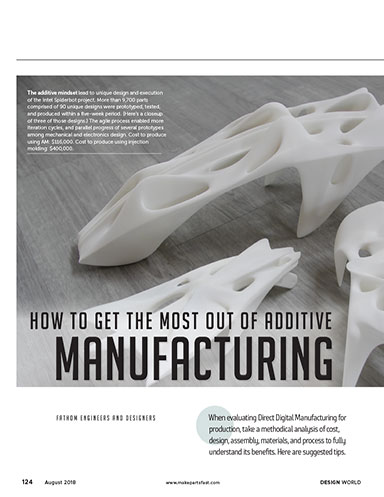
While additive manufacturing (AM) has mostly been used as a prototyping tool, in the past five years it has matured as a means of enhancing multiple stages of the product development process, including the production of end-use parts—a process termed Direct Digital Manufacturing (DDM).
A recent report published by Gartner predicts that, “By 2020, nearly 65% of discrete manufactures that expect to use 3D printers will be using them to produce components of the products they sell or service” (2016, Pete Basiliere, Research Vice President).
It has been difficult to recognize AM’s production manufacturing viability, as many have not yet shed the perception that AM is just a tool for prototyping. Thus, design engineers may be uncertain about how to use AM technologies and whether the available materials will meet their design needs.
Fortunately, the industry has made strides to produce machines and develop materials that are productionoriented. As a result, DDM is coming of age. The adoption of DDM leads to innovative product designs, shattering long-held manufacturing barriers, and making product development both less risky and more efficient.

The FATHOM team is driven by advanced technologies that enhance and accelerate today's product development and production processes—we're changing the way products are being designed and manufactured by helping designers and engineers…
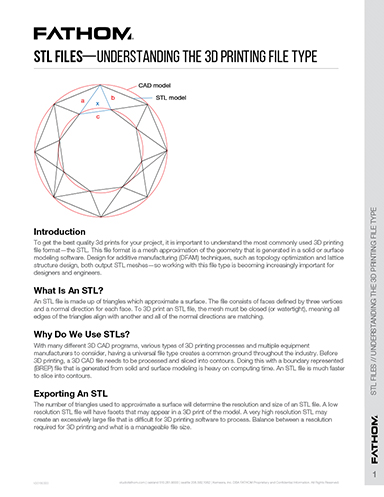
STL Guidelines To Get The Best 3D Printed Parts
Created by FATHOM's Application Engineering Team, this 4-page STL guideline for 3D printing and additive manufacturing will help you get the best quality parts for your project. The easy-to-read PDF includes sections on why STL files are used, export best practices, difficulties you should expect to encounter, and much more.




About Us · Contact Us · Editorial Team · Advertising · Privacy Policy · Subscriber Services · © 2026 Digital Engineering 24/7 · Peerless Media