Helping design and engineering professionals discover, evaluate and specify technologies and processes that shorten the design cycle and enable success.


Sponsored
Design engineers have seen their workflows evolve to include more rapid design iterations, more frequent use of simulation, more complex modeling, and more rapid visualization and rendering. As a result, there has been demand for more powerful engineering workstations and compute resources, and the AMD “Zen” core architecture has been a key component in enabling these workflows.
Digital Engineering spoke to Chris Hall, Director of Software Performance Engineering at AMD about the development of the “Zen” core architecture, and how the latest AMD CPUs, like the recently announced AMD Ryzen™ Threadripper™ PRO 5000 WX-Series processors, continue to move the goalposts on CPU efficiency and performance.

AMD, or Advanced Micro Devices, has driven innovation in high-performance computing, graphics and visualization technologies. They develop high-performance computing and visualization products to solve some of the world’s toughest and most…
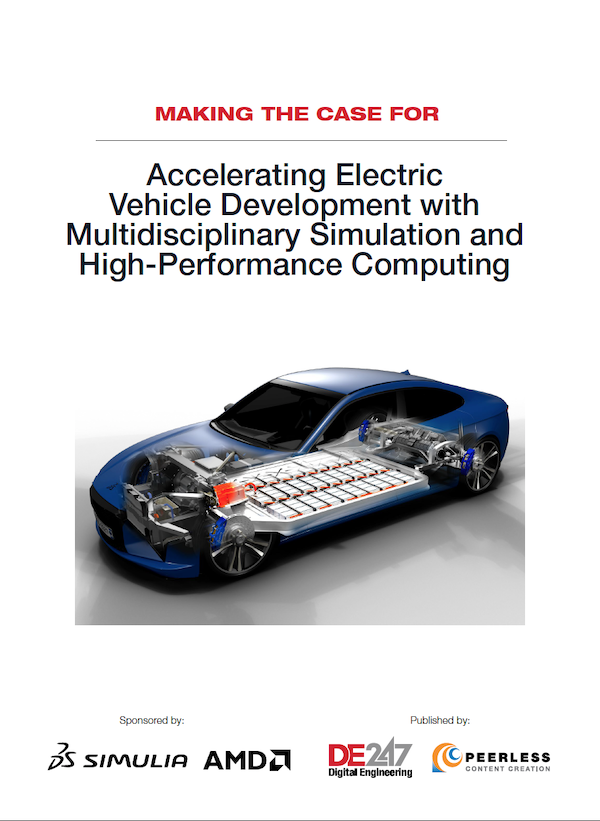
Accelerating Electric Vehicle Development with Multidisciplinary Simulation and High-Performance Computing
In this new Making the Case guide, learn how a unified approach to design and multidisciplinary simulation from Dassault Systèmes, combined with high-performance computing powered by AMD EPYC™ processors, can accelerate EV design.




About Us · Contact Us · Editorial Team · Advertising · Privacy Policy · Subscriber Services · © 2026 Digital Engineering 24/7 · Peerless Media