Helping design and engineering professionals discover, evaluate and specify technologies and processes that shorten the design cycle and enable success.



Digital Engineering April 2026
In the latest issue of Digital Engineering, we take a look at the latest innovations in design for additive manufacturing, including the use of natural language inputs, social media cosplayers, and AI integration. The issue also includes a feature…

January Special Focus Issue: Design for Additive
In this Special Focus Issue of Digital Engineering, learn about the latest advancements in design for additive manufacturing, including new software tools, additive in automotive, custom medical devices, and more.
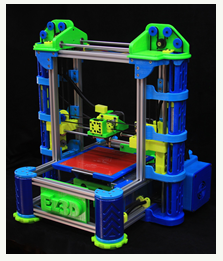
So, when I look at a new 3D printer, regardless of whether it’s a hobbyist model or not, I’m looking for something at least slightly innovative. A RepRap printer that glows in the dark is not innovative, it’s gimmicky (I hope I made that up). The EZ3D printer fulfills my desire for innovation by paying attention to details intended to make the 3D printing process more user friendly.
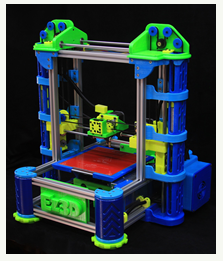
As far as specs go, the EZ3D printer doesn’t offer anything new. It has a build envelope of 8 x 8 x 9 in. (200 x 200 x 220 mm), which is decent for a home AM system, but not really outstanding. It uses 1.75 mm ABS filament and has a max resolution of around .1 mm. All of that is fine, but, at this point in the 3D printer craze, nothing to get excited about.
More interesting by far are the changes to the standard formula made by designer Jake Wood and his father Jerry Wood. The father-son team used personal experience with 3D printers to fix what they perceive as common errors in design. From the Kickstarter page:
“One day, we decided to give 3D printing a try. We thought it'd be cool. Unfortunately, what we found was a steep learning curve, unreliable printers, and an array of software that is too segmented for the average user to understand.”
“We have two words for the 3D printing industry: user experience. After building and tinkering with not one, not two, but three 3D printer models, and still not finding one with an adequate user experience, we set off to make our own.”
The first change they made was to design a more reliable mechanism for traversing the Z-axis. In place of using, as they describe it, a “screw-like mechanism,” the team built a counterweight pulley system that is intended to allow for smoother builds, particularly along the edges of a print. The Woods also implemented a cooling system for the filament to reduce jams near the extruder head.
Those mechanical improvements are interesting, but what I was most impressed with was the proprietary software designed to run the printer. The program can form a queue of prints to be built, it tracks past builds and offers a library to organize your files. It also includes a system designed to rescue builds that will fail. The last feature starts a virtual build from the top down (rather than the bottom up) and can be paused where a build started to have issues. This gives users a chance to save a build by resuming the print from the point where problems began.
I will say I’m not fond of the rainbow color scheme of the standard EZ3D printer. The machine looks more like an oversized toy than anything, but that might just be nitpicking. At around $1,500, the price is a little higher than I’d like, but it might actually be worth it if the software turns out as well as the Woods are claiming it will.
Below you’ll find a couple videos about the EZ3D. The first demonstrates the pulley system at work, and the second is a test print of the ever-popular Yoda bust.
Source: Kickstarter


John Newman is a Digital Engineering contributor who focuses on 3D printing. Contact him via [email protected] and read his posts on Rapid Ready Technology.
Follow DE
Join over 90,000 engineering professionals who get fresh engineering news as soon as it is published.






About Us · Contact Us · Editorial Team · Advertising · Privacy Policy · Subscriber Services · © 2026 Digital Engineering 24/7 · Peerless Media