Helping design and engineering professionals discover, evaluate and specify technologies and processes that shorten the design cycle and enable success.



Digital Engineering April 2026
In the latest issue of Digital Engineering, we take a look at the latest innovations in design for additive manufacturing, including the use of natural language inputs, social media cosplayers, and AI integration. The issue also includes a feature…

January Special Focus Issue: Design for Additive
In this Special Focus Issue of Digital Engineering, learn about the latest advancements in design for additive manufacturing, including new software tools, additive in automotive, custom medical devices, and more.
You can, for example, download 3D print files to create a holster that you can use to attach your smartphone to a bicycle. But these designs are typically configured for specific types of phones (and bikes), which can make it difficult to find exactly what you need. You could create your own design, but that requires a certain amount of engineering expertise.
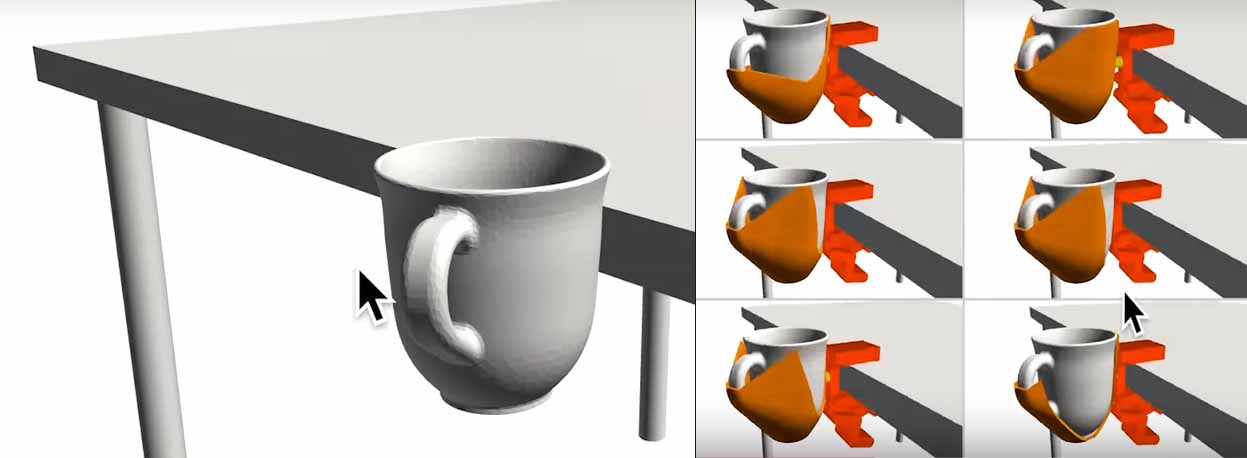
The folks at Disney Research (the R&D arm of the Walt Disney Company) have come up with a software solution called AutoConnect that allows anyone to create connectors to join just about any two objects. Novice users can essentially load two models into the program, and it quickly generates multiple iterative connector designs that they can then print.
Users choose the objects they want to join together (a phone and a car dashboard, or a holder that allows you to hang a coffee mug off the edge of a table), graphically position the two items in the desired alignment, provide size and weight information, and then choose from several possible designs that are automatically generated.
"The promise of 3D printing is that people can personally create customized objects, but it's often a difficult promise to fulfill because 3D objects can be so hard to design," said Jessica Hodgins, vice president of Disney Research. "That's particularly true for connectors, so we think AutoConnect could become an important and valuable tool as the 3D printing revolution continues to grow."
The researchers developed an array of mechanical holders that can be adjusted in size and strength. Users can download models of the items they want to connect, or use 3D scans. Users can also indicate if there should be openings so that one object (say, a phone) can be easily slipped out of the holder.
You can see a much more detailed explanation in the video below. You can also download the research paper here.

Brian Albright is the editorial director of Digital Engineering.
Contact him at [email protected].

Join over 90,000 engineering professionals who get fresh engineering news as soon as it is published.






About Us · Contact Us · Editorial Team · Advertising · Privacy Policy · Subscriber Services · © 2026 Digital Engineering 24/7 · Peerless Media