Helping design and engineering professionals discover, evaluate and specify technologies and processes that shorten the design cycle and enable success.


Alert!
Digital Engineering ceased publication on July 1, 2026. This website remains available as an archive of engineering content.
For inquiries or information, please email [email protected].


Digital Engineering April 2026
In the latest issue of Digital Engineering, we take a look at the latest innovations in design for additive manufacturing, including the use of natural language inputs, social media cosplayers, and AI integration. The issue also includes a feature…

January Special Focus Issue: Design for Additive
In this Special Focus Issue of Digital Engineering, learn about the latest advancements in design for additive manufacturing, including new software tools, additive in automotive, custom medical devices, and more.
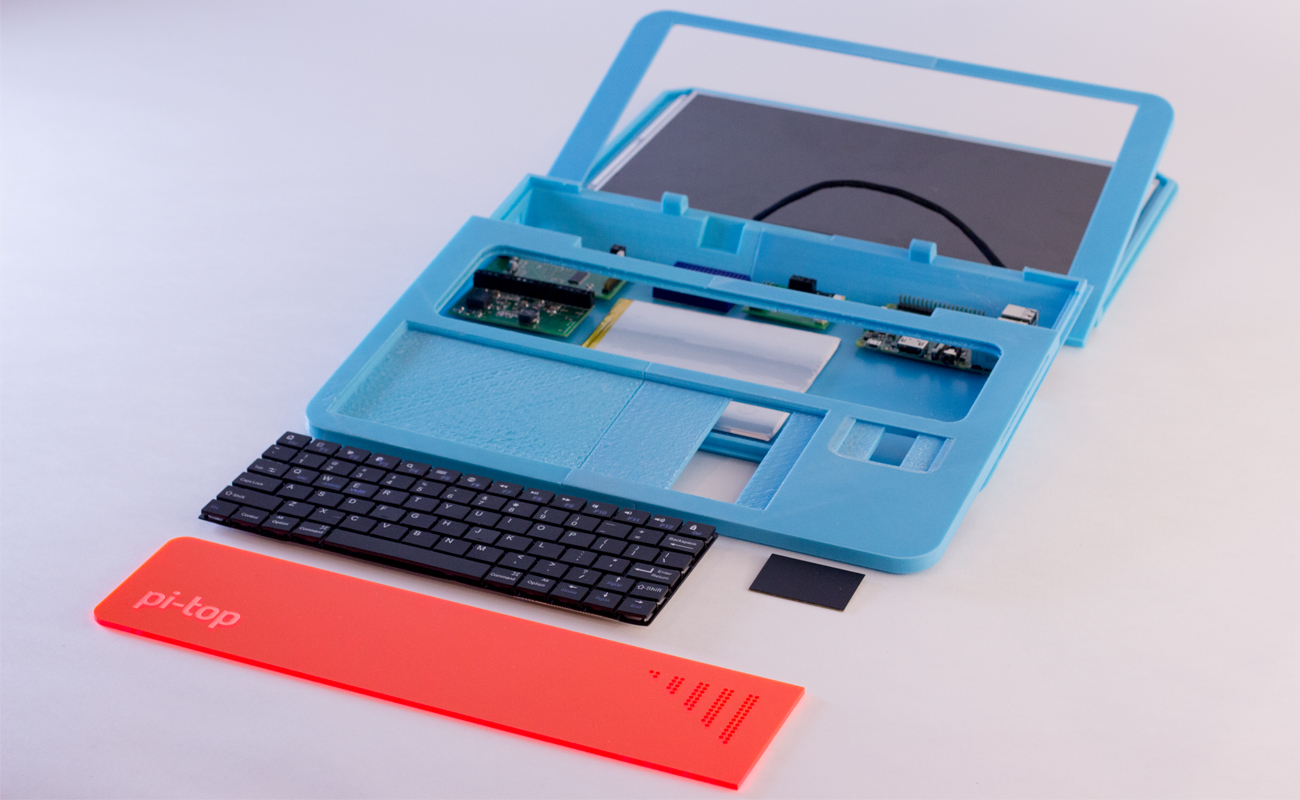 The Pi-top developers also offer add-on boards for the Raspberry Pi that provide sensor input, robotics functionality, and additional LCD screen connectivity.
The kit, which launched in May 2015, was created by Oxford University engineering graduate Ryan Dunwoody and Jesse Lozano, a law graduate and self-taught programmer.
If the device is damaged, it can easily be repaired at home. Its creators also say that it provides a way for students to better understand how the technology in their computer works by giving them a role in constructing it from the ground up. It can also help users learn to leverage 3D printing to create other products.
The company grew out of the Entrepreneur First program, which provides a stipend and seed money to engineering graduates that want to start their own companies.
You can provide funding to Pi-Top on Indiegogo, although the early bird Pi-Top kits are already sold out (you can still order one without a Raspberry Pi if you already have a Model B+ on hand, and other bundles are available). So far, the company has exceeded its initial $80,000 fundraising goal, and as of this writing had booked $157,798 in contributions.
Source: Pi-Top


Brian Albright is the editorial director of Digital Engineering.
Contact him at [email protected].

Join over 90,000 engineering professionals who get fresh engineering news as soon as it is published.






About Us · Contact Us · Editorial Team · Advertising · Privacy Policy · Subscriber Services · © 2026 Digital Engineering 24/7 · Peerless Media