Helping design and engineering professionals discover, evaluate and specify technologies and processes that shorten the design cycle and enable success.


Alert!
Digital Engineering ceased publication on July 1, 2026. This website remains available as an archive of engineering content.
For inquiries or information, please email [email protected].


Digital Engineering April 2026
In the latest issue of Digital Engineering, we take a look at the latest innovations in design for additive manufacturing, including the use of natural language inputs, social media cosplayers, and AI integration. The issue also includes a feature…

January Special Focus Issue: Design for Additive
In this Special Focus Issue of Digital Engineering, learn about the latest advancements in design for additive manufacturing, including new software tools, additive in automotive, custom medical devices, and more.
One vital piece of technology that will help companies fulfill their 3D printed smartphone dreams is the humble battery. In this case, the battery would also need to be built through AM, simply for proof of concept if nothing else. A company named Graphene 3D Lab may have solved that particular problem, having filed for a provisional patent for, “… materials and methods of 3D printable batteries.”
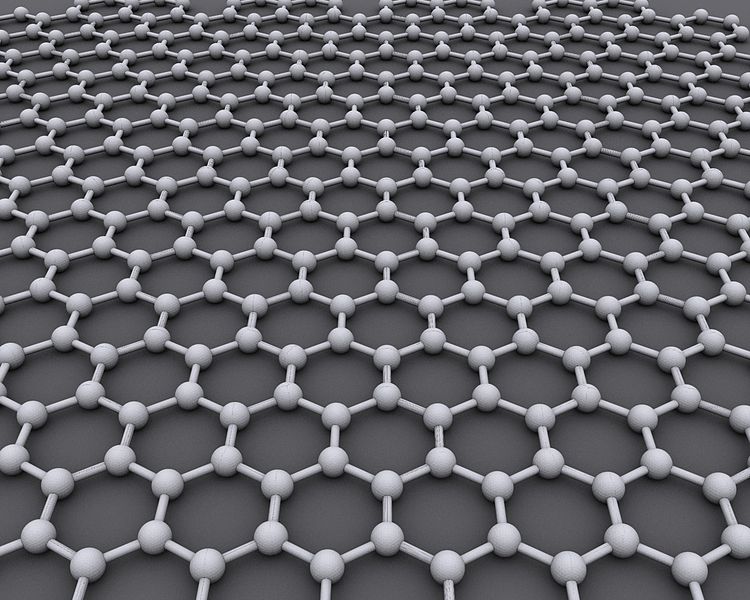 The honeycomb structure of graphene. Courtesy of AlexanderAlUS.
“A 3D printed battery can be incorporated into a 3D printed object during the building process,” said Daniel Stolyarov, CEO of Graphene 3D. “In addition, 3D printed batteries have several advantages over traditional batteries. Their shape, size and specifications can be freely adjusted to fit the particular design of the device. Our batteries are based on graphene and can potentially outperform conventional batteries. Graphene 3D plans to perform live demonstrations of our 3D printed batteries.”
While Stolyarov didn’t specifically mention 3D printed phones, you can bet the filing has attracted attention from the players involved. The big question is, assuming the technique works, is if it can be adapted to producing rechargeable batteries.
It’s also worth noting that graphene is something of a wonder material. Designers, scientists and researchers all around the world have been finding new ways to use the stuff for the better part of a decade. It is true that graphene is capable of producing incredible results, but it’s equally true that the stuff isn’t cheap.
3D printed batteries must be inexpensive to produce to make them viable. If the company is using graphene to produce the batteries, it will need to work in large orders to make the technology financially viable. That means either signing a deal with multiple companies, or becoming part of a larger company, such as Apple. It wouldn’t be incredibly surprising to see some other company make an acquisition-type move on Graphene 3D Lab.
Below you’ll find a video about graphene.
Source: Graphene 3D Lab


John Newman is a Digital Engineering contributor who focuses on 3D printing. Contact him via [email protected] and read his posts on Rapid Ready Technology.
Follow DE






About Us · Contact Us · Editorial Team · Advertising · Privacy Policy · Subscriber Services · © 2026 Digital Engineering 24/7 · Peerless Media