Helping design and engineering professionals discover, evaluate and specify technologies and processes that shorten the design cycle and enable success.


Alert!
Digital Engineering ceased publication on July 1, 2026. This website remains available as an archive of engineering content.
For inquiries or information, please email [email protected].


Digital Engineering April 2026
In the latest issue of Digital Engineering, we take a look at the latest innovations in design for additive manufacturing, including the use of natural language inputs, social media cosplayers, and AI integration. The issue also includes a feature…

January Special Focus Issue: Design for Additive
In this Special Focus Issue of Digital Engineering, learn about the latest advancements in design for additive manufacturing, including new software tools, additive in automotive, custom medical devices, and more.
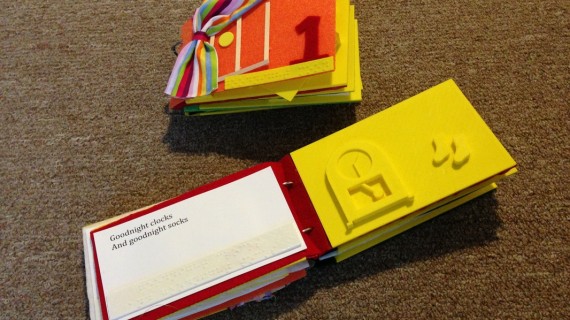 Goodnight Moon was the first 3D printed children's book from the Tactile Picture Books Project. Image: Tactile Picture Books Project
3D printing continues to prove its utility in developing and producing all manner of helpful objects. Yesterday, my colleague John Newman wrote about MIT Media Lab's use of additive manufacturing to create a wearable text-reading device to help blind people read books that aren't printed in braille. Now, researchers at the University of Colorado are using 3D printing to create 3D versions of picture books for visually impaired children.
The Tactile Picture Books Project, launched by the university's Department of Computer Science, produces copies of the books by converting pictures into raised illustrations that the children can touch while the books are read aloud. The project was developed in partnership with the Anchor Center, a Denver-based group that supports and educates vision-impaired children.
Children typically don't start reading braille until age 6, so the program allows them to read books like Goodnight Moon with their families at younger ages.
The research team developed computer algorithms to convert the pictures into 3D pages, and according to Tom Yeh, the assistant professor who directed the project, the team hopes to develop a way for parents to take a photo of a page and then send it to a 3D printer.
"I realized we could do something meaningful by interpreting pictures from these children's books using mathematical diagrams," he said. "This project is much more difficult than I envisioned, but it also is much more rewarding. The 3D technology already was there, we had techniques we developed for image processing, you put them together and you have the means to print out 3D images from children's books. The goal is to have parents, teachers and supporters of visually impaired children learn how to use software and 3D printers to make books of their own. Since each child generally has his or her unique visual impairment issues, the idea is to customize each book for each child."
In addition to Goodnight Moon, the group has printed tactile copies of The Very Hungry Caterpillar and The Cat in the Hat.


Brian Albright is the editorial director of Digital Engineering.
Contact him at [email protected].






About Us · Contact Us · Editorial Team · Advertising · Privacy Policy · Subscriber Services · © 2026 Digital Engineering 24/7 · Peerless Media