Helping design and engineering professionals discover, evaluate and specify technologies and processes that shorten the design cycle and enable success.


Alert!
Digital Engineering ceased publication on July 1, 2026. This website remains available as an archive of engineering content.
For inquiries or information, please email [email protected].

Digital Engineering April 2026
In the latest issue of Digital Engineering, we take a look at the latest innovations in design for additive manufacturing, including the use of natural language inputs, social media cosplayers, and AI integration. The issue also includes a feature…

January Special Focus Issue: Design for Additive
In this Special Focus Issue of Digital Engineering, learn about the latest advancements in design for additive manufacturing, including new software tools, additive in automotive, custom medical devices, and more.
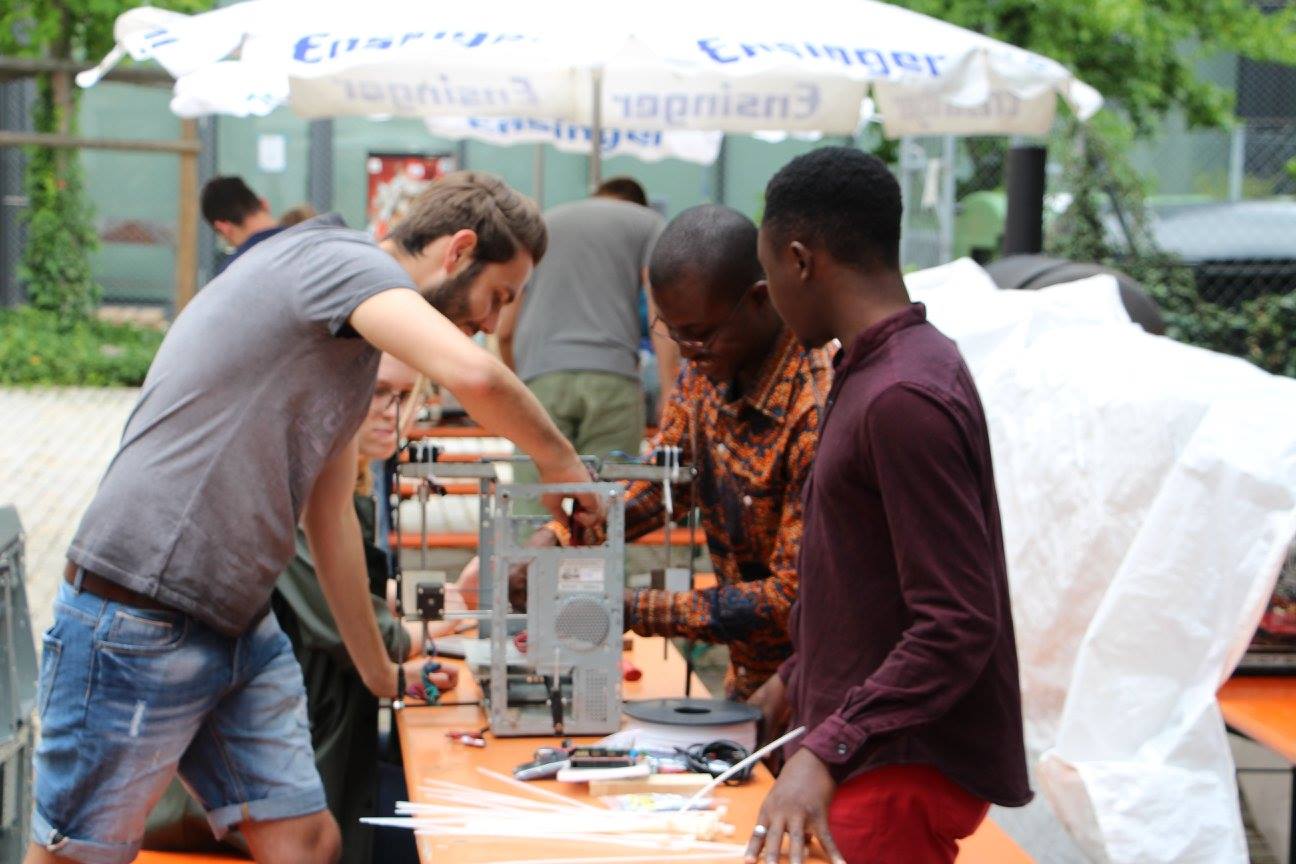
 Image courtesy of Woelab.
Recycling efforts are increasing on the continent, and one laboratory in Lomé, the capital of the West African nation of Togo, has created a 3D printer built from e-waste.
WoeLab is a community technology hub and network of local inventors and entrepreneurs. Staff there built the 3D printer using parts from old printers, computers and scanners. Founder and architect Sénamé Koffi Agbodjinou was inspired to build the printer after purchasing an off-the-shelf model for the lab.
The printer is based on the RepRap 3D printer from the University of Bath.
The first model was finished in 2013, and they have since built 20 more. The group hopes to place a 3D printer at every school within 1Km of the lab.
"What we are concerned with is to try to create in the young people a confidence in themselves in their capacity to realize projects," Agbodjinou told CNN.
Other organizations have also turned to e-waste to enable 3D printing. Students at the Buni Hub mini-fabrication lab in Tanzania also built a printer from e-waste. (The students also reverse-engineered a drone using scrap parts.)
Agbodjinou and his counterparts hope to increase recycling of electronic waste (less than one-sixth is currently recycled or reused) while also creating new ways for residents to generate income and improve technology access.
Grassroots programs like this will have their work cut out for them. Global e-waste is expected to reach 49.8 million tons in 2018.
There are other signs of improvement on the continent. South Africa, for instance, has enforced e-waste handling regulations. The East Africa Communications Organization is working to harmonize e-waste policies for its six member countries, and Rwanda has launched an e-waste recycling initiatives that includes the opening of an advanced recycling facility in Bugesera.
Source: CNN


Brian Albright is the editorial director of Digital Engineering.
Contact him at [email protected].






About Us · Contact Us · Editorial Team · Advertising · Privacy Policy · Subscriber Services · © 2026 Digital Engineering 24/7 · Peerless Media