Helping design and engineering professionals discover, evaluate and specify technologies and processes that shorten the design cycle and enable success.



Digital Engineering April 2026
In the latest issue of Digital Engineering, we take a look at the latest innovations in design for additive manufacturing, including the use of natural language inputs, social media cosplayers, and AI integration. The issue also includes a feature…

January Special Focus Issue: Design for Additive
In this Special Focus Issue of Digital Engineering, learn about the latest advancements in design for additive manufacturing, including new software tools, additive in automotive, custom medical devices, and more.
As most people that follow AM know, if there is one thing the technology does well it is complexity. It is this facet of AM that allows it to aid people with all kinds of handicaps, including the blind. Tactile sensation is obviously very important for the way the blind interact with their environment and 3D printing can build complex objects designed for a tactile experience to aid the blind in learning more about the world around them.
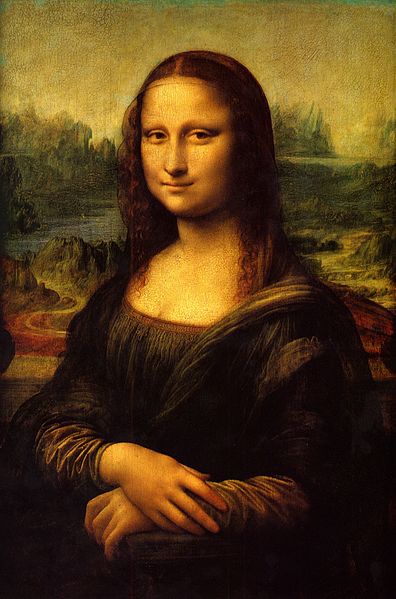 3D printing may help the blind experience paintings such as the Mona Lisa. Courtesy of the Musée du Louvre.
Our first example is from a contest for cultural entrepreneurship at Harvard University. The Midas Touch project, a finalist in the contest, intends to use AM to help the blind experience art, and more specifically art with a visual medium, such as paintings. Midas Touch wants to reproduce paintings in 3D, giving a blind audience a chance to interact with a painting.
Imagine a classic, such as the Mona Lisa, reproduced using AM. The shape of the subject’s face could be felt to determine features, and the genius of the background composition could be rendered in such a way to provide context for studies of the painting. Colors could prove more difficult, as many of blind people (i.e. those born with the handicap) don’t really have any concept of what makes blue different from red. Still, the students responsible for the project are trying to conceive of ways to make the palette of a painting accessible to the blind.
Another example comes from Sehwerk, a German organization dedicated to assisting the blind. In order to more easily communicate concepts such as what a building looks like, Sehwerk has turned to AM. Buildings are shrunk down to a scale more useful for tactile interaction using CAD software. The model is then printed out and given to blind individuals to explore. Each feature of a building can then be explained more easily as a blind person touches it.
It seems to me that this particular use of AM has a lot of potential for future endeavors. The specialized nature of products created for the blind meshes well with the ability of AM to produce one-off objects at a lower cost than other manufacturing methods. As 3D printing becomes ever more accurate, the range of products that can be created specifically for the blind will only increase.
Below you’ll find a couple of videos about 3D printing and the blind. The first is from Sehwerk (you can probably skip the second half of the video), and the second showcases a Rubik’s Cube designed for blind users.
Sources: VentureBeat, Harvard Gazette, Sehwerk via YouTube


John Newman is a Digital Engineering contributor who focuses on 3D printing. Contact him via [email protected] and read his posts on Rapid Ready Technology.
Follow DE
Join over 90,000 engineering professionals who get fresh engineering news as soon as it is published.






About Us · Contact Us · Editorial Team · Advertising · Privacy Policy · Subscriber Services · © 2026 Digital Engineering 24/7 · Peerless Media