Helping design and engineering professionals discover, evaluate and specify technologies and processes that shorten the design cycle and enable success.


Alert!
Digital Engineering ceased publication on July 1, 2026. This website remains available as an archive of engineering content.
For inquiries or information, please email [email protected].

Digital Engineering April 2026
In the latest issue of Digital Engineering, we take a look at the latest innovations in design for additive manufacturing, including the use of natural language inputs, social media cosplayers, and AI integration. The issue also includes a feature…

January Special Focus Issue: Design for Additive
In this Special Focus Issue of Digital Engineering, learn about the latest advancements in design for additive manufacturing, including new software tools, additive in automotive, custom medical devices, and more.
We’ve gotten increasingly comfortable with the notion of 3D printing production-grade parts for automobiles and airplanes, and the technology is frequently tapped to create bespoke products—whether a fashion item or a custom-fit prosthesis. More recently, 3D printing played a huge role in addressing pandemic-induced shortages of Personal Protective Equipment (PPE), including masks, swabs, and face shields.
Now, 3D printing is taking root in the building industry as a way to help customers understand design layouts, to create custom job site pieces, and even as a construction method as contractors and buyers seek more sustainable materials and building options. 3D printing’s emergence in the construction and homebuilding industry appears poised for growth: A Markets and Markets report projects the concrete 3D printing market to be valued at $56.4 million by 2021.
A notable example of where this trend is heading is a 3D printed, zero net energy neighborhood being planned in Rancho Mirage, CA. According to a recent report on CNN, the Palari Group said it plans to build 15 eco-friendly 3D printed homes on a five-acre spot; each single-story home will be 1,450 square feet and be made from a fire resistant stone composite material. The developer is working with Mighty Buildings on the project, using 3D printed modular panels that fit together like “lego blocks.”
Forte Specialty Contractors, a Las Vegas construction firm, is also bullish on 3D printing’s role in residential and commercial building projects. Scott Acton, CEO and founder, says the firm isn’t ready to build actual homes using the technology, however, it is tapping 3D printing in myriad other ways, for providing mockups of renovation and building designs and for creating custom theme park pieces.
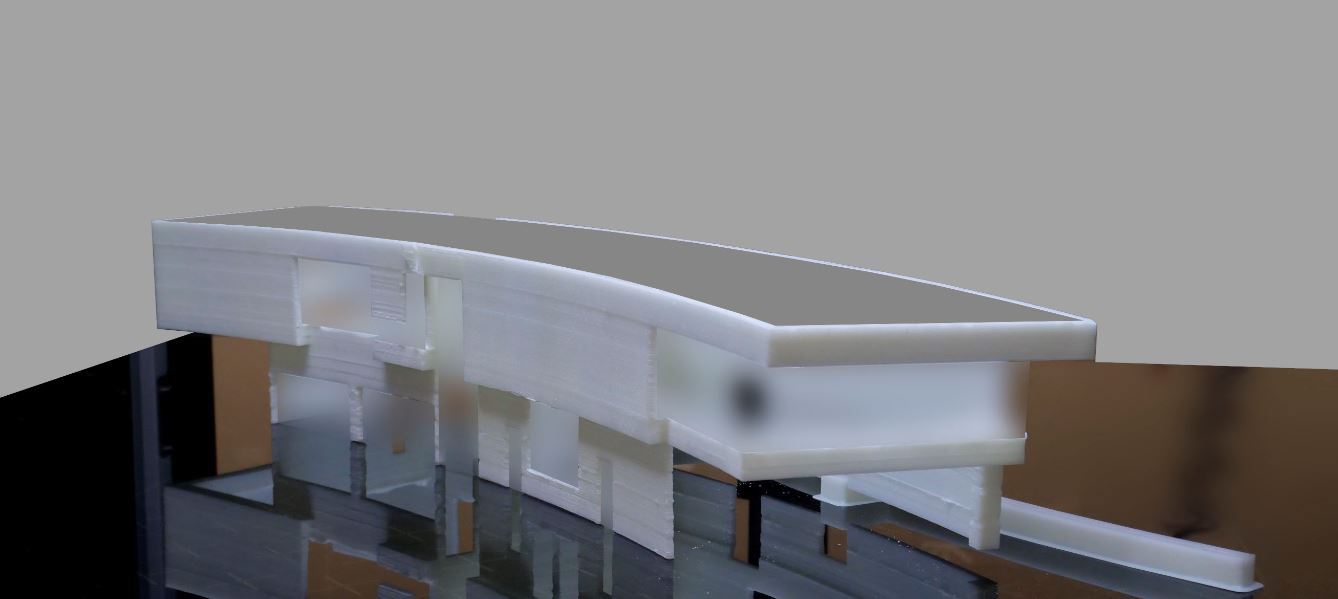
Using the large-scale Massivit 1800 Pro 3D printer, the firm is outputting scale models of its new homes to help clients better understand design elements and to avoid misunderstandings that can lead to costly and time-consuming change orders. By building a large-scale model of a building or renovated room design, Forte can help clients understand things like what doors open which way and even how furniture would look in a room.
“It’s a great communications tool for us and removes assumptions,” Acton says. “3D printing provides a way to communicate spatially and affordably to do redesigns in a controlled environment and not have a lot of change orders in the field. It’s a way for us to mitigate risk on design and layout by doing things virtually.”
The Massivit 1800 3D printer can produce pieces up to 5’9”, high using a proprietary additive manufacturing gel technology that instantly cures to produce lightweight, hollow objects. One of the biggest use cases for the printer is producing super-size signage, displays, and specialty pieces—the latter, an application also used by Forte for its hospitality, restaurant, and entertainment clients. The build area is 57 inches wide, 44 inches in depth, and 70 inches high.
In fact, it’s the sheer size of the Massivit build plate that makes the technology particularly appealing to Forte Specialty Contractors. “Everything we do is really massive so the build plate size is important to do larger pieces,” Acton says.
To learn more about the Massivit 3D printing technology used in Forte’s building construction application, check out this link.


Beth Stackpole is a contributing editor to Digital Engineering. Send e-mail about this article to [email protected].
Follow DE






About Us · Contact Us · Editorial Team · Advertising · Privacy Policy · Subscriber Services · © 2026 Digital Engineering 24/7 · Peerless Media