Helping design and engineering professionals discover, evaluate and specify technologies and processes that shorten the design cycle and enable success.


Alert!
Digital Engineering ceased publication on July 1, 2026. This website remains available as an archive of engineering content.
For inquiries or information, please email [email protected].

Digital Engineering April 2026
In the latest issue of Digital Engineering, we take a look at the latest innovations in design for additive manufacturing, including the use of natural language inputs, social media cosplayers, and AI integration. The issue also includes a feature…

January Special Focus Issue: Design for Additive
In this Special Focus Issue of Digital Engineering, learn about the latest advancements in design for additive manufacturing, including new software tools, additive in automotive, custom medical devices, and more.
AddiFab plans to highlight its blend of additive manufacturing and injection molding at RAPID + TCT in Detroit in May.
“Injection molding—with a much richer legacy and R&D budgets dwarfing those of the AM industry—is churning out hundreds of specialized grades for every generic grade that is being converted to additive. And the materials converted to AM lose out on performance, compared with their injection-molded twins. But the race for materials is about to be thoroughly changed by AddiFab,” says Lasse Staal, CEO and co-founder of the Danish start-up.
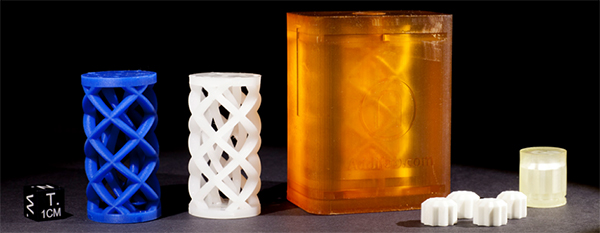
For four years, AddiFab has been working on freeform injection molding (FIM)—a blend of AM and injection molding. At the RAPID + TCT show, AddiFab and Mitsubishi Chemical will be co-exhibiting the FIM technology paired with Mitsubishi Chemical’s range of injection moldable materials.
AddiFab has been doing testing on specific grades of Tefabloc, one of Mitsubishi Chemical’s high-performance TPE materials, to demonstrate compatibility with Freeform Injection Molding. “Tefabloc is probably the easiest-to-mold elastomer we have ever worked with,” says Jon Jessen, AddiFab co-founder and chief innovation officer. “The material parameters were extremely easy to dial in, and we were quickly able to overmold, as well as demonstrate the geometric complexity that is possible with Freeform Injection Molding.”
AddiFab has now focused on KyronMax, a group of reinforced polymers with strength-to-weight ratio produced by Mitsubishi Chemical Advanced Materials. “KyronMax engineering plastics are among the most competitive materials in the Mitsubishi Chemical portfolio for metal replacement in structural applications,” says Gerbec. “With Freeform Injection Molding, we can achieve outstanding material properties on an additive platform while using our current feedstocks. We are currently testing KyronMAX’s high-performance property retention when used with FIM technology, and the first results are very promising.”
Sources: Press materials received from the company and additional information gleaned from the company’s website.


DE's editors contribute news and new product announcements to Digital Engineering. Press releases may be sent to them via [email protected].
Follow DE






About Us · Contact Us · Editorial Team · Advertising · Privacy Policy · Subscriber Services · © 2026 Digital Engineering 24/7 · Peerless Media