Helping design and engineering professionals discover, evaluate and specify technologies and processes that shorten the design cycle and enable success.


Alert!
Digital Engineering ceased publication on July 1, 2026. This website remains available as an archive of engineering content.
For inquiries or information, please email [email protected].

Digital Engineering April 2026
In the latest issue of Digital Engineering, we take a look at the latest innovations in design for additive manufacturing, including the use of natural language inputs, social media cosplayers, and AI integration. The issue also includes a feature…

January Special Focus Issue: Design for Additive
In this Special Focus Issue of Digital Engineering, learn about the latest advancements in design for additive manufacturing, including new software tools, additive in automotive, custom medical devices, and more.
Scientists at MIT want to simplify construction by, paradoxically, increasing the number of parts required to build something. Kenneth Cheung and Neil Gershenfeld have developed a system of identical interlocking composite parts that can be assembled to build just about anything.
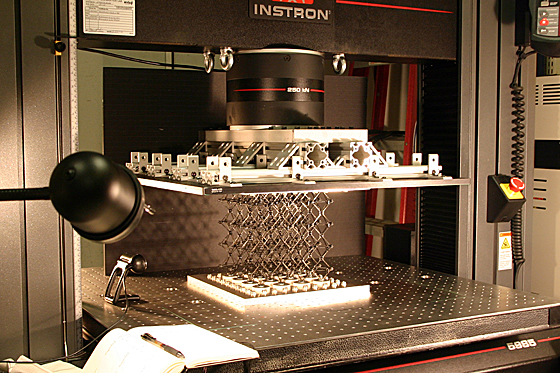
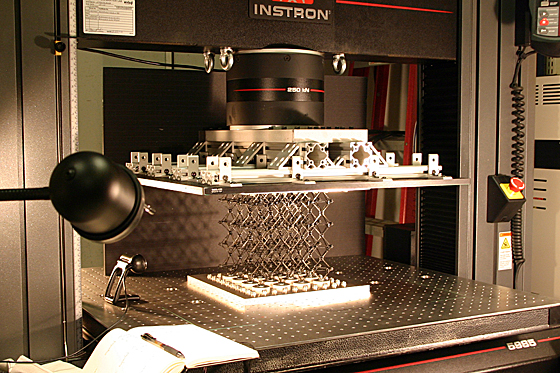
The duo’s idea combines the fields of fiber composites, cellular materials, and additive manufacturing (AM). Each fiber composite part is built on a 3D printer to the exact same specifications. From there, the parts can be snapped together and assembled like LEGO to build everything from spacecraft to levees.
As the parts go together, they form a composite lattice that is stronger than conventional constructions. Even better, because the lattice isn’t a solid mass, parts built using the process are lighter than standard components. According to the research team, the parts are stronger as well, as result of the lattice spreading out damage. In the case of damage, sections of the lattice can be replaced or repaired, rather than scrapping the damaged part.
Cheung and Gershenfeld have begun to design a robot to put together their composite pieces, further simplifying the construction process. The MIT team has published a paper in Science about their construction plan titled “Reversibly Assembled Cellular Composite Materials.”
Below you’ll find a video about the MIT Media Lab.
Source: MIT


John Newman is a Digital Engineering contributor who focuses on 3D printing. Contact him via [email protected] and read his posts on Rapid Ready Technology.
Follow DE






About Us · Contact Us · Editorial Team · Advertising · Privacy Policy · Subscriber Services · © 2026 Digital Engineering 24/7 · Peerless Media