Helping design and engineering professionals discover, evaluate and specify technologies and processes that shorten the design cycle and enable success.


Alert!
Digital Engineering ceased publication on July 1, 2026. This website remains available as an archive of engineering content.
For inquiries or information, please email [email protected].
Sponsored

Digital Engineering April 2026
In the latest issue of Digital Engineering, we take a look at the latest innovations in design for additive manufacturing, including the use of natural language inputs, social media cosplayers, and AI integration. The issue also includes a feature…

January Special Focus Issue: Design for Additive
In this Special Focus Issue of Digital Engineering, learn about the latest advancements in design for additive manufacturing, including new software tools, additive in automotive, custom medical devices, and more.
Over the past several years, additive manufacturing (AM) has undergone a significant evolution. Previously, AM was primarily used to create prototypes, tooling or “one-off” replacement parts without much thought to the reliability or durability of the parts.
That is rapidly changing as the industry moves more toward the creation of structurally critical printed parts. Major manufacturers in aerospace, automotive and other industries are creating end-use printed parts for a wide variety of applications. A key question, though, is how to best ensure that those parts are certified to meet or exceed the reliability of their conventionally-manufactured older/obsolete legacy parts?
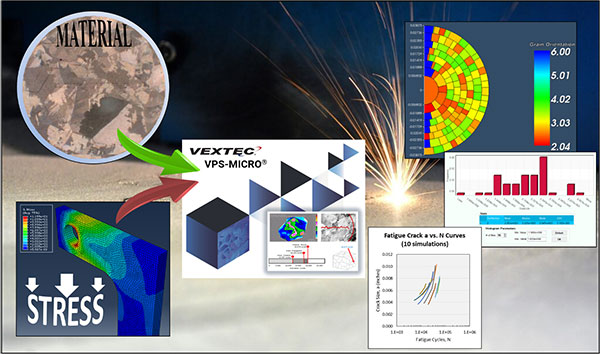
In this environment, computational modeling of AM fatigue performance is critical, and VEXTEC’s VPS-MICRO® software can help meet this challenge. For manufacturers to successfully deploy AM for production parts, they need an accurate picture of the reliability and repeatability of printing those parts. Fatigue analysis is a must when certifying that these parts can match the performance of traditionally manufactured parts.
Key end users of the technology recognize the importance of this type of modeling. For example, VEXTEC is working with the U.S. Air Force to develop AM qualification and certification methods with VPS-MICRO as a core element.
Check out the recently revamped VEXTEC website for more information.


DE's editors contribute news and new product announcements to Digital Engineering. Press releases may be sent to them via [email protected].
Follow DE






About Us · Contact Us · Editorial Team · Advertising · Privacy Policy · Subscriber Services · © 2026 Digital Engineering 24/7 · Peerless Media