Helping design and engineering professionals discover, evaluate and specify technologies and processes that shorten the design cycle and enable success.


Alert!
Digital Engineering ceased publication on July 1, 2026. This website remains available as an archive of engineering content.
For inquiries or information, please email [email protected].
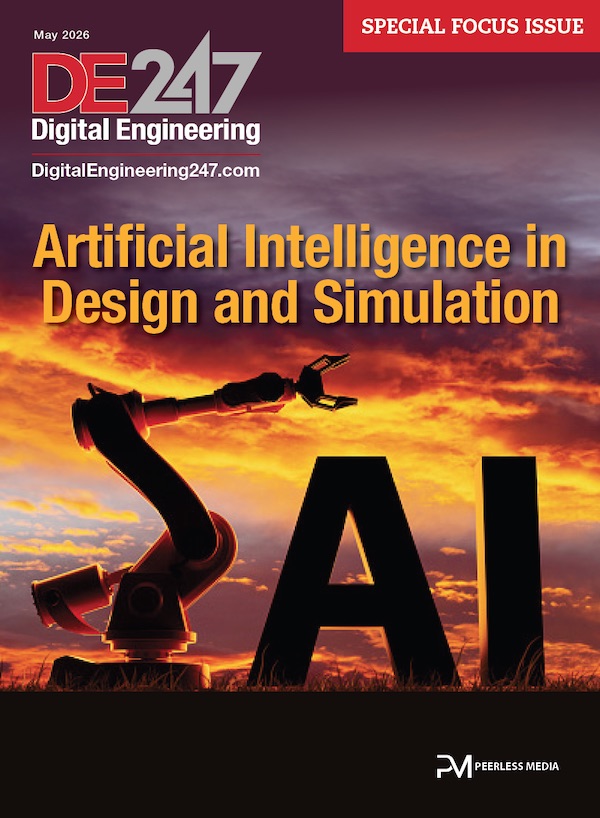
May 2026 Special Focus: Artificial Intelligence in Design and Simulation
In this Special Focus Issue, learn about the latest developments in the integration of artificial intelligence into engineering workflows.

Design & Simulation Software Guide 2025
In this Special Issue, Digital Engineering presents its second annual guide to design and simulation software vendors.
The partnership was started in 2013 when establishing a data transfer process between company simulation codes, passing electromagnetic loss distributions and component temperature distributions. This new agreement builds on this process and will allow a tighter coupling to be achieved, the company states.
"We are very pleased to be partnering with CD-adapco and to introduce co-simulation methods between these best-in-class technologies," said Takashi Yamada, manager, Electromagnetic Engineering Group at JSOL. "We hope that together we can provide smooth and reliable multi-physics/multi-disciplinary simulations with STAR-CCM+ and JMAG for that will benefit our joint customers."
The first release of a program developed by both companies is expected to release in 2015.
For more information, visit CD-adapco and JSOL.
Sources: Press materials received from the company and additional information gleaned from the company’s website.


DE's editors contribute news and new product announcements to Digital Engineering. Press releases may be sent to them via [email protected].
Follow DE






About Us · Contact Us · Editorial Team · Advertising · Privacy Policy · Subscriber Services · © 2026 Digital Engineering 24/7 · Peerless Media