Helping design and engineering professionals discover, evaluate and specify technologies and processes that shorten the design cycle and enable success.


Alert!
Digital Engineering ceased publication on July 1, 2026. This website remains available as an archive of engineering content.
For inquiries or information, please email [email protected].

Digital Engineering April 2026
In the latest issue of Digital Engineering, we take a look at the latest innovations in design for additive manufacturing, including the use of natural language inputs, social media cosplayers, and AI integration. The issue also includes a feature…

January Special Focus Issue: Design for Additive
In this Special Focus Issue of Digital Engineering, learn about the latest advancements in design for additive manufacturing, including new software tools, additive in automotive, custom medical devices, and more.
A high-performance putter should be lightweight with just the right amount of loft.
The COBRA KING Supersport-35 hits that scorecard and ensures a consistent and accurate roll with every putt thanks to a 3D printing-driven design process that leverages HP’s Metal Jet 3D printing metal technology.
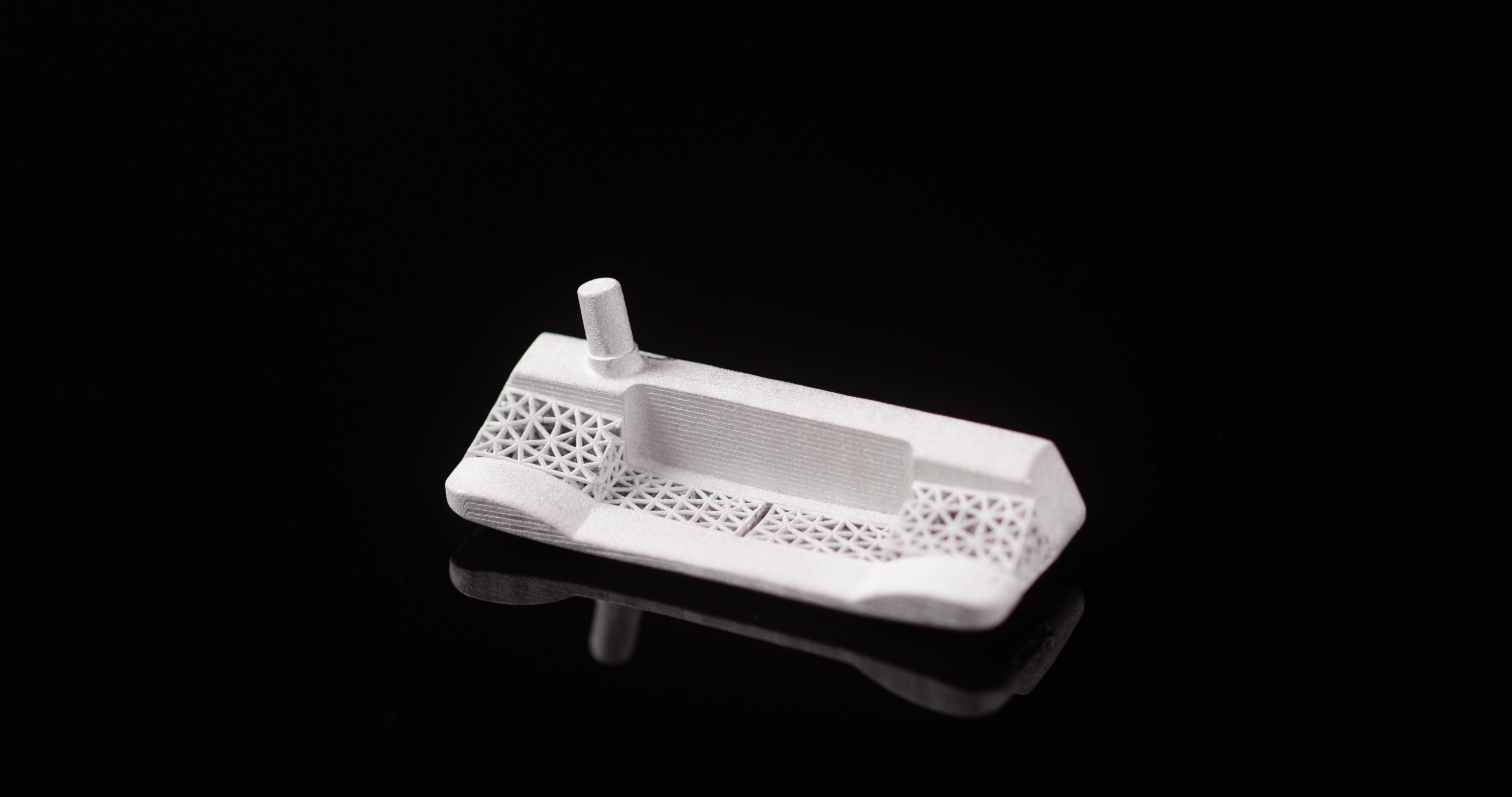
Born from a multi-year collaboration between COBRA, HP, and Parmatech, which does custom metal injection molding work, the KING Supersport-35 putter has a complex, fully integrated internal lattice structure that could only be fabricated using 3D printing, officials said. The partners began their collaboration in 2019, and by early 2020 had created new workflows and tapped the HP Metal Jet 3D printing technology to create 35 different design iterations over the course of eight months, according to Uday Yadati, global head of HP Metal Jet.
As the sport of golf evolves, companies like COBRA are seeking to push the envelope and create innovative equipment that allows golfers at all levels to elevate their game. Using the HP Metal Jet technology, the team of partners was able to create a structure that had never been seen before, creating more precise performance for users, Yadati says. It was also the first mass produced 3D printed putter head.
“From firsthand experience using the putter, Bryson DeChambeau [a COBRA ambassador] has advocated that the design of the KING Supersport-35 enables him to have a more consistent starting line, better launch, and better control of the speed, making it an all-in-one-putter,” he explains.
COBRA turned to HP and Parmatech because the HP Metal Jet technology was specifically aimed at producing cost-effective, high throughput parts, which was well suited to the engineering team’s requirements, notes Mike Yagley, vice president of innovation and AI at COBRA Golf. The entire putter body is printed using 316 stainless steel and sintered at a high temperature to bind the metal and form the final head part. The unique lattice structure inside the body optimizes the distribution of weight within the putter head to create the highest MOI without the need for additional fixed weights. The last step of the production process involves use of CNC machines to ensure precise shaping and detail as well as adding finishing touches for cosmetic design.
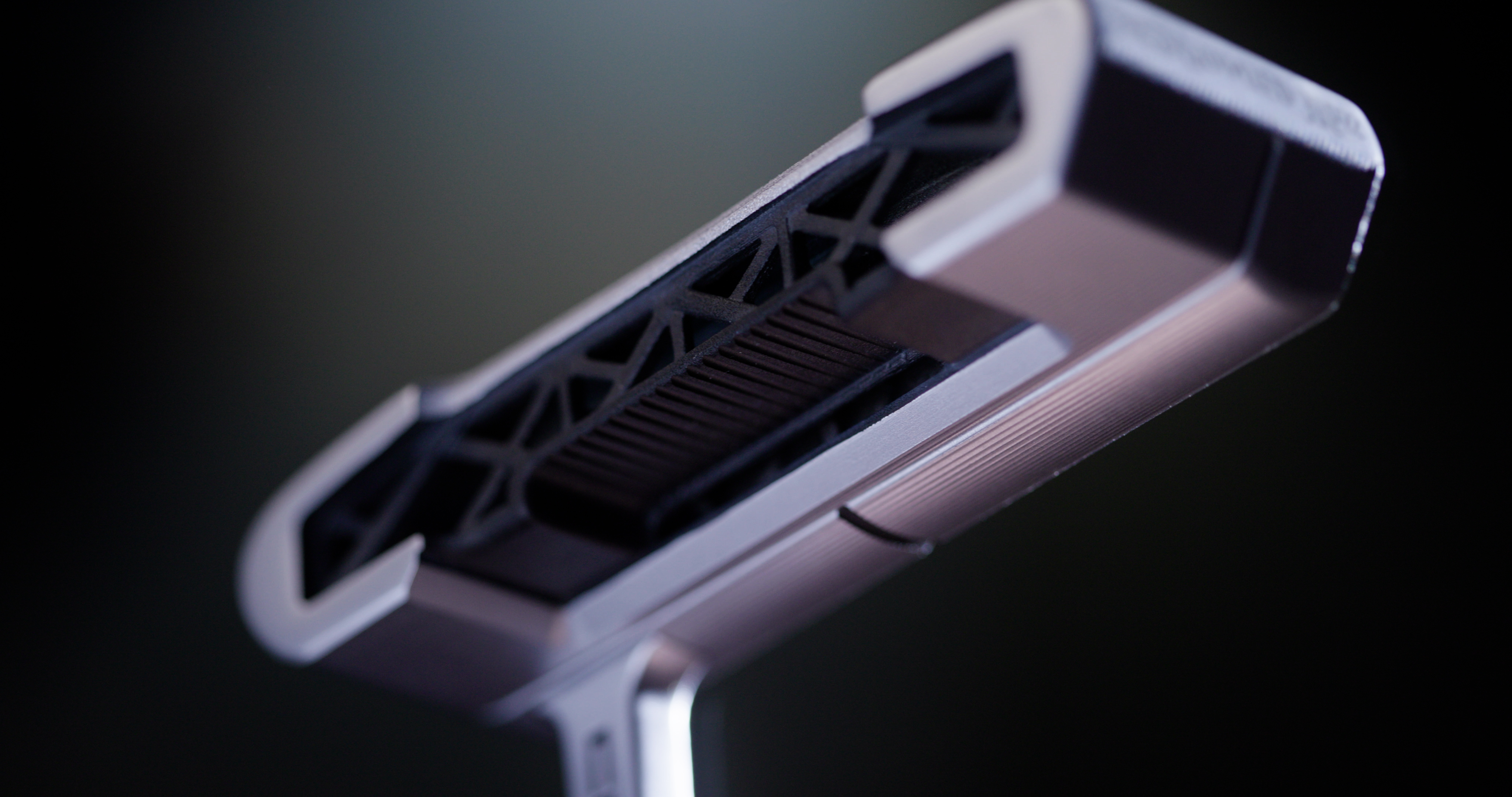 The KING Supersport-35 putter features a fully 3D printed metal body with an intricate lattice structure. Image Courtesy of COBRA Golf.
“There are high-performance golf club constructions that not possible to make with conventional casting, forging, or machining processes,” Yagley explains. “3D printing is the only way to fabricate some of the concepts we believe will deliver high performance and/or superior feel.”
The HP Metal Jet technology also ensured the team could iterate and develop the putter in an accelerated design cycle—Yagley estimates in about one-fifth of time it would take with traditional casting technologies, which require substantial cost and time investments in tooling modifications for each iteration. “The quick turnaround time can be utilized in several different ways—proving out complex constructions, getting products to market faster, bringing more versions, hence more variety for consumers,” Yagley says. “Ultimately, we’re able to deliver custom products to consumers through a 3D printing technology that lends itself to different configurations being printed and processed in the same batch.”
To learn more about how Cobra Golf leveraged HP Metal Jet technology, check out this video.


Beth Stackpole is a contributing editor to Digital Engineering. Send e-mail about this article to [email protected].
Follow DE






About Us · Contact Us · Editorial Team · Advertising · Privacy Policy · Subscriber Services · © 2026 Digital Engineering 24/7 · Peerless Media