Helping design and engineering professionals discover, evaluate and specify technologies and processes that shorten the design cycle and enable success.



Digital Engineering April 2026
In the latest issue of Digital Engineering, we take a look at the latest innovations in design for additive manufacturing, including the use of natural language inputs, social media cosplayers, and AI integration. The issue also includes a feature…

January Special Focus Issue: Design for Additive
In this Special Focus Issue of Digital Engineering, learn about the latest advancements in design for additive manufacturing, including new software tools, additive in automotive, custom medical devices, and more.
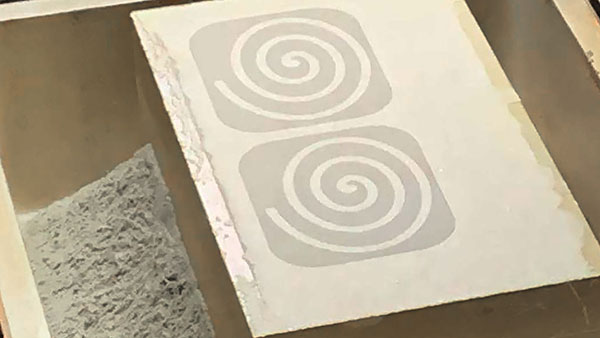
Coherent Corp. has developed an additive manufacturing process capable of producing advanced ceramic components for high-performance thermal management applications, including for next-generation semiconductor capital equipment.
Coherent has developed materials and technologies that enable ceramic components produced with its additive manufacturing process to match those produced with its existing molding process in their mechanical and thermal properties. Ceramic components manufactured with the new additive manufacturing process can now be precision-machined using the most advanced laser-based techniques, including those available at Coherent.
“Ceramic additive manufacturing enables components that are lighter and with entirely new geometries, which are required for next-generation semiconductor capital equipment designs. Until now, these components were lower in quality and precision compared with molded ceramic components. With this new breakthrough, our customers will benefit from the best of both worlds,” says Steve Rummel, senior VP, Engineered Materials and Laser Optics Business Unit. “We’re moving quickly to establish a new ceramic additive manufacturing line in Temecula, CA. We’ve also defined with our customers a strategic roadmap to broaden our additive manufacturing capabilities, beyond ceramics, to a wider range of materials, including metals.”
Ceramic components produced with the additive manufacturing process from Coherent can achieve an elastic modulus of 365 GPa and a flexural strength of 290 MPa. They are made for a range of semiconductor equipment, including in photolithography, deposition, and etching. They are also made for advanced packaging components with integrated cooling channels, for high-performance computer processors such as CPUs and GPUs.
Sources: Press materials received from the company and additional information gleaned from the company’s website.


DE's editors contribute news and new product announcements to Digital Engineering. Press releases may be sent to them via [email protected].
Follow DE
Join over 90,000 engineering professionals who get fresh engineering news as soon as it is published.






About Us · Contact Us · Editorial Team · Advertising · Privacy Policy · Subscriber Services · © 2026 Digital Engineering 24/7 · Peerless Media