Helping design and engineering professionals discover, evaluate and specify technologies and processes that shorten the design cycle and enable success.


Sponsored
Artificial Intelligence for Design and Engineering Workflows
In this white paper, learn how artificial intelligence and machine learning can improve design and simulation.

Technology Focus: Designing for Optimization & Simulation
Simulation is pervasive, with people from different departments and backgrounds discovering new ways to put it to use, in all of its varied forms.
 In the first demonstration of the cluster boosting concept, Intel®, Dell EMC, Jülich Supercomputing Centre (JSC), and ParTec will develop and deploy a next-generation modular supercomputing system. The partners will expand upon their experience with the EU-funded Dynamical Exascale Entry Platform (DEEP) and DEEP-ER (Extended Reach) projects to augment JSC’s JURECA cluster with a highly scalable component based on the Intel® Scalable Systems Framework (Intel® SSF).
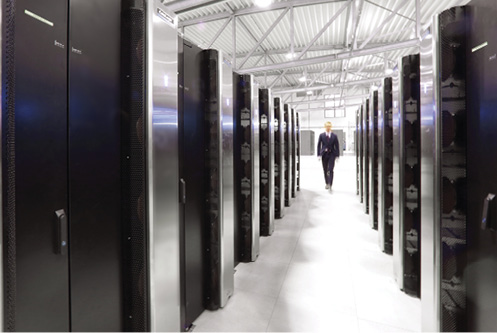
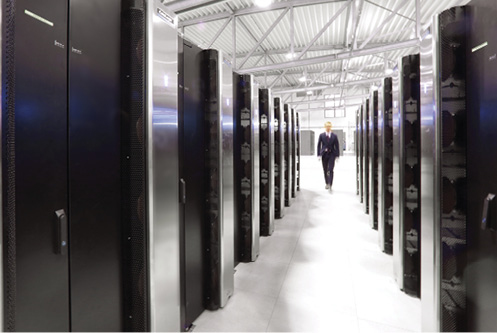 Supercomputer JURECA at the Jülich Supercomputing Centre (JSC). Copyright: Forschungszentrum Jülich / Ralf-Uwe Limbach.
The DEEP and DEEP-ER projects’ novel architecture is based on the Cluster-Booster concept, in which a cluster of high-performance multicore processors executes the complex components of a program, while highly parallelizable program parts are implemented by Booster modules that consist of a large number of Intel® Xeon Phi™ processors. Increased scalability and significantly higher efficiency with lower energy consumption can be reached this way, addressing big data analytics and exascale simulation capabilities.
The Booster module is completely outside the system, which drastically increases the flexibility and performance of the system as a whole. Modular supercomputing is a new paradigm directly reflecting the diversity of execution characteristics, found in modern simulation codes, in the architecture of the supercomputer. Instead of a homogeneous design, different modules with distinct hardware characteristics are exposed via a homogeneous global software layer that enables optimal resource assignment.
“The Cluster-Booster principle will have a decisive influence on the development of future supercomputers,” says Professor Thomas Lippert, JSC director. “It is specially tailored to the demands of exascale computers, which will be up to one thousand times faster than the present fastest computers in the world.”
The prototype at Germany’s JSC will be the first demo in a production environment of the Cluster-Booster concept at that level, and a considerable step toward the implementation of JSC’s modular supercomputing concept, he says.
“Intel’s holistic solution portfolio for high performance computing democratizes access to powerful tools for scientific discovery and commercial innovation,” says Trish Damkroger, vice president of Technical Computing at Intel. “As we look to the challenges of improving performance and system efficiency, advances like JSC’s modular supercomputer concept will help bring ever greater capabilities to more users, to extend what is possible with HPC clusters.” HPC


DE's editors contribute news and new product announcements to Digital Engineering. Press releases may be sent to them via [email protected].
Follow DE
Join over 90,000 engineering professionals who get fresh engineering news as soon as it is published.






About Us · Contact Us · Editorial Team · Advertising · Privacy Policy · Subscriber Services · © 2026 Digital Engineering 24/7 · Peerless Media