Helping design and engineering professionals discover, evaluate and specify technologies and processes that shorten the design cycle and enable success.


Alert!
Digital Engineering ceased publication on July 1, 2026. This website remains available as an archive of engineering content.
For inquiries or information, please email [email protected].


Sponsored
Artificial Intelligence for Design and Engineering Workflows
In this white paper, learn how artificial intelligence and machine learning can improve design and simulation.
Technology Focus: Designing for Optimization & Simulation
Simulation is pervasive, with people from different departments and backgrounds discovering new ways to put it to use, in all of its varied forms.
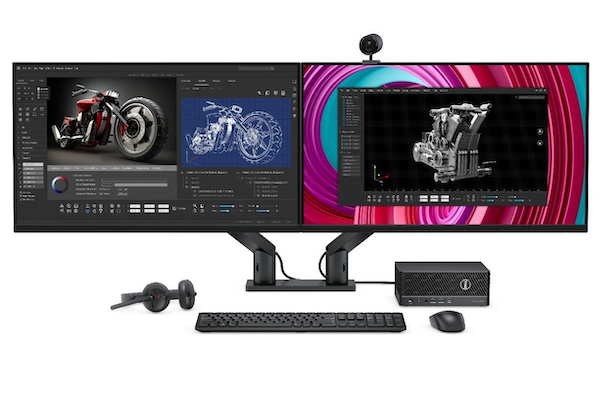
Artificial intelligence (AI) is rapidly being woven into engineering workflows and other types of applications. In order to effectively utilize the technology, organizations will need to be able to corral large amounts of data and run complex algorithms. Professional engineering workstations will play a key role in this process. At the recent Mobile World Congress event in February and NVIDIA GTC conference in March, Dell Technologies announced new professional-grade Precision workstations and AI-based offerings that are designed to help engineering organizations make this transition.
“Every company that wants to remain competitive will have to implement AI in some way, and AI PCs will be central to that,” said Sam Burd, president, Client Solutions Group, Dell Technologies, in a press release. “From running complex AI workloads on workstations to using day-to-day AI-powered applications on laptops, the AI PC will be an important investment that pays dividends in productivity and paves the way to a smarter, more efficient future. Dell’s advantage starts with offering more AI PCs across the commercial portfolio from day one, giving customers the ability to start future proofing for AI today.”
At the Mobile World Congress in Barcelona, Dell announced the latest versions of both its tower and mobile workstations that can run complex AI workloads.
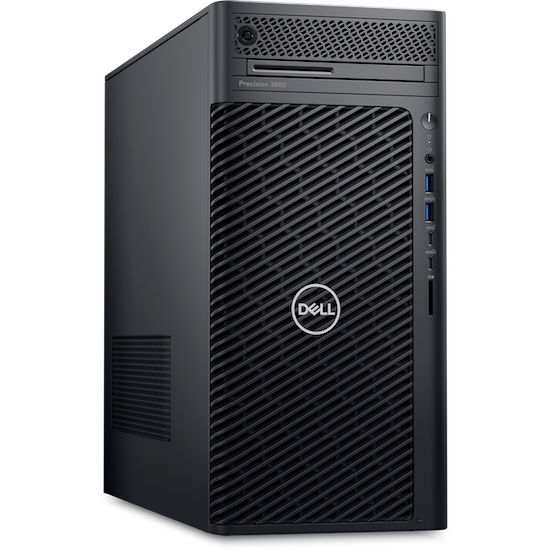
The new workstations include:
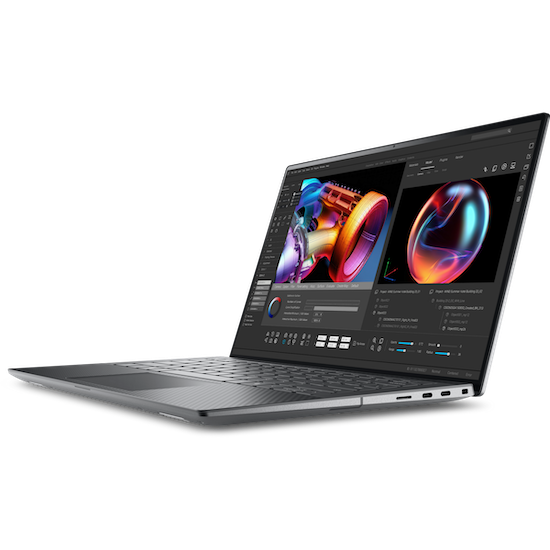
All of the new devices include the Dell Optimizer for Precision AI-based software that enhances and improves application and device performance based on user workflows.
According to a blog written by Charlie Walker, Dell Senior Director and General Manager of the Precision and rugged product lines, the new NVIDIA RTX™ 500 and 1000 Ada Generation laptop GPUs provide the new mobile workstations with powerful AI, ray tracing and graphics capabilities. You can learn more about the new NVIDIA RTX laptop GPUs in this NVIDIA blog.
Both the 3000 and 5000 Series mobile workstations “boast a combined integrated multi-processor package of Central Processing Unit (CPU), Neural Processing Unit (NPU) and Graphics Processing Unit (GPU), designed to enhance the performance of AI features in more than 100 applications, enabling them to operate with optimized speed and power efficiency.”
According to the Dell blog, this combination of processors can reduce power consumption in the laptops and improve performance of media-intensive AI workloads.
A few weeks later at the NVIDIA GTC event, Dell announced that it is expanding its generation AI solutions to include the new Dell AI Factory with NVIDIA.
“Our enterprise customers are looking for an easy way to implement AI solutions – that is exactly what Dell Technologies and NVIDIA are delivering,” said Michael Dell, founder and CEO, Dell Technologies, as part of the announcement. “Through our combined efforts, organizations can seamlessly integrate data with their own use cases and streamline the development of customized GenAI models.”
According to the company, Dell AI Factory with NVIDIA is an “end-to-end AI enterprise solution that integrates Dell’s compute, storage, client device, software and services capabilities with NVIDIA’s AI infrastructure and software suite, all underpinned by a high-speed networking fabric.”
With the new Dell AI solutions, the company claims its clients will be able to more effectively and efficiently integrate AI into a wide variety of workflows.
The Dell AI Factory with NVIDIA supports a variety of AI use cases and applications including model creation and tuning, augmentation and inferencing. The solution can also be enhanced with professional services to help customers with data preparation, implementation and adoption of AI Factory.
In addition, Dell announced Dell Generative AI Solutions with NVIDIA – Retrieval-Augmented Generation (RAG), which leverages new microservices in NVIDIA AI Enterprise to offer what the company describes as a pre-validated, full-stack solution to speed enterprise AI adoption with RAG, and improve GenAI model quality. Dell is also offering a full-stack solution powered by NVIDIA for building custom, domain-specific AI models, and a Dell Data Lakehouse for analyzing data across hybrid and multi cloud environments.
At GTC, Dell also announced it was working with NVIDIA to introduce a rack-scale, high-density, liquid-cooled architecture based on the NVIDIA Grace Blackwell Superchip, and that its Dell PowerEdge XE9680 servers will support new NVIDIA Blackwell GPUs as well as H200 Tensor Core GPUs and NVIDIA Quantum-2 InfiniBand and Spectrum-X Ethernet networking platforms.

Dell sells personal computers (PCs), servers, data storage devices, network switches, software, computer peripherals, HDTVs, cameras, printers, MP3 players, and other electronics.
Artificial Intelligence for Design and Engineering Workflows
In this white paper, learn how artificial intelligence and machine learning can improve design and simulation.

Brian Albright is the editorial director of Digital Engineering.
Contact him at [email protected].






About Us · Contact Us · Editorial Team · Advertising · Privacy Policy · Subscriber Services · © 2026 Digital Engineering 24/7 · Peerless Media