Helping design and engineering professionals discover, evaluate and specify technologies and processes that shorten the design cycle and enable success.


Alert!
Digital Engineering ceased publication on July 1, 2026. This website remains available as an archive of engineering content.
For inquiries or information, please email [email protected].


May 2026 Special Focus: Artificial Intelligence in Design and Simulation
In this Special Focus Issue, learn about the latest developments in the integration of artificial intelligence into engineering workflows.

April 2026 Special Focus Issue: Generative Design
In this Special Focus Issue, Digital Engineering takes a look at how generative design solutions can be used across different types of design problems and with a variety of manufacturing approaches to accelerate design space exploration, and…
Design Simulation Technologies (DST) has released Working Model 2D Version 10. The update introduces an AI assistant that builds simulations from natural language descriptions, a redesigned user interface, and a new COM/Python API that exposes the simulation engine to external automation, the company explains.
Working Model 2D is a 2D kinematic and dynamic simulation tool used by engineers and adopted colleges and universities across six continents. Users build mechanical systems on screen, run physics simulations, and measure forces, velocities, and accelerations on bodies or joints.
Version 10’s AI assistant connects to the simulation engine through the Model Context Protocol (MCP). Users describe a mechanism in plain English—for example, “Build a slider-crank with a 5 cm crank and a 15 cm connecting rod”—and the assistant creates the bodies, joints, and motor and runs the simulation. The assistant can also interpret photographed hand-drawn sketches to generate working models.
“The AI assistant handles the setup work so users can focus on analyzing results and refining designs,” says Alan Wegienka, president of Design Simulation Technologies. Wegienka further explains how the new automation interface makes the simulation engine accessible from C++, C#, Visual Basic, and Python, noting that included Python bindings support parametric studies and automated workflows. Also, built-in script editors for Python and VBScript give syntax highlighting and error reporting inside the application.
Version 10 also adds real-time data exchange with Excel, MATLAB, Python, and user-written DLLs during running simulations. Working Model 2D can function as a plant model for Simulink co-simulation.
Sources: Press materials received from the company and additional information gleaned from the company’s website.

Design Simulation Technologies develops, markets, and supports software products used by students, educators, and professionals to learn and teach physics principles and to use these principles to build virtual models of mechanical designs.
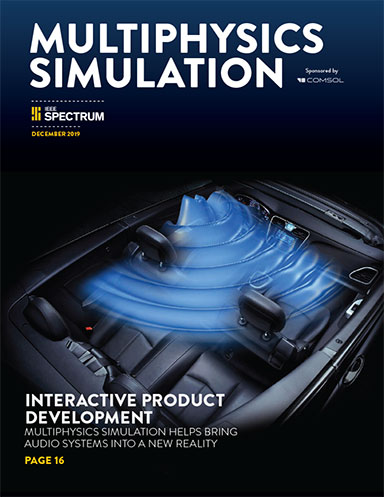
Multiphysics Simulation Illuminates the Future
Multiphysics simulation is used to improve existing technologies, as well as create completely new ones.

DE's editors contribute news and new product announcements to Digital Engineering. Press releases may be sent to them via [email protected].
Follow DE






About Us · Contact Us · Editorial Team · Advertising · Privacy Policy · Subscriber Services · © 2026 Digital Engineering 24/7 · Peerless Media