Helping design and engineering professionals discover, evaluate and specify technologies and processes that shorten the design cycle and enable success.




Digital Engineering April 2026
In the latest issue of Digital Engineering, we take a look at the latest innovations in design for additive manufacturing, including the use of natural language inputs, social media cosplayers, and AI integration. The issue also includes a feature…

January Special Focus Issue: Design for Additive
In this Special Focus Issue of Digital Engineering, learn about the latest advancements in design for additive manufacturing, including new software tools, additive in automotive, custom medical devices, and more.
Nexa3D introduces the NXE 200, a polymer 3D printer that the company says is an affordable entryway into scalable additive manufacturing. The printer uses Lubricant Sublayer Photo-curing (LSPc) technology, a proprietary method that the company says creates parts 6.5x faster than competing technologies while offering exceptional surface finish.
This is the third Nexa3D printer to come to market using LSPc technology. The NXE 400 is a larger industrial printer, and the NXD 200 is for dentistry.
LSPc starts with a 4K UV light array for curing uniformity. A high-contrast mask projects 3D slices to the polymer vat where the photopolymerization process builds the part layer by layer. Nexa3D says their process differs from Digital Light Processing (DLP) 3D printing, by eliminating optical distortions that occur along the edges of the object. The LSPc also uses a self-lubricating membrane to create a no-stick zone between the printed part and the vat. The company says this enables the NXE 200 to run so much faster than competing printers.
The build volume of the NXE 200 is 8.5 L; the build area is 275x155x200 mm. Nexa3D says the printer is supported by a wide range of materials. Other parts of the system include NexaX 2.0, software for intelligent build optimization; and xWash and xCure post-processing technology. The company says all three workflow elements are “fast and easy to use, eliminating wasted time in print preparation and post-processing.”
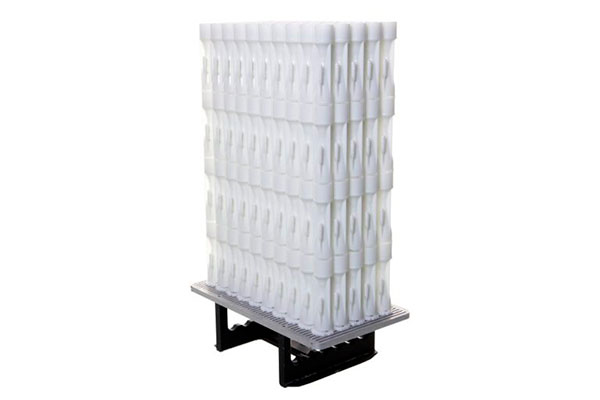
The company says the NXE 200 is built from industrial hardware and designed using modular components for easy service and affordable upgrading.
“Consumers should not have to accept tradeoffs between quality and affordability,” says Michele Marchesan, Nexa3D chief revenue officer, Industrial Products. “The NXE 200 offers extremely high productivity, in addition to superior accuracy, aesthetics and mechanical properties, at the lowest total cost of ownership. Nexa3D intends to reach as many users as possible, and the NXE 200 will make LSPc more widely available.”
The Nexa3D NXE 200 photopolymer printer is now available. The company is providing special pricing through May 2022. The NXE 200 is priced at $49,990 with installation included, and for a limited time, the printer comes bundled with Nexa3D's high-capacity xCure curing unit and NexaX 2.0 software. This offer is good until the end of May.
Sources: Press materials received from the company and additional information gleaned from the company’s website.


DE's editors contribute news and new product announcements to Digital Engineering. Press releases may be sent to them via [email protected].
Follow DE
Join over 90,000 engineering professionals who get fresh engineering news as soon as it is published.






About Us · Contact Us · Editorial Team · Advertising · Privacy Policy · Subscriber Services · © 2026 Digital Engineering 24/7 · Peerless Media