Helping design and engineering professionals discover, evaluate and specify technologies and processes that shorten the design cycle and enable success.


Alert!
Digital Engineering ceased publication on July 1, 2026. This website remains available as an archive of engineering content.
For inquiries or information, please email [email protected].

Digital Engineering April 2026
In the latest issue of Digital Engineering, we take a look at the latest innovations in design for additive manufacturing, including the use of natural language inputs, social media cosplayers, and AI integration. The issue also includes a feature…

January Special Focus Issue: Design for Additive
In this Special Focus Issue of Digital Engineering, learn about the latest advancements in design for additive manufacturing, including new software tools, additive in automotive, custom medical devices, and more.
U.S.-based 3D printer maker Desktop Metal is gearing up to unveil a new technology that is expected to simplify the industrial sheet metal production process, according to Chief Executive Officer Ric Fulop, who told Reuters in a statement.

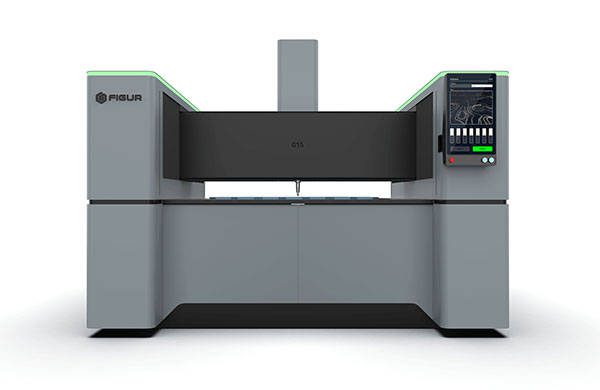
The technology Figur G15 is capable of shaping standard sheet metal on demand directly from a digital design file, eliminating the need of stamping tools, molds, dies or presses and and reducing costs and production lead time, Fulop adds.
Special features include the following:
The Massachusetts-based company has BMW, Toyota Motor and billionaire Elon Musk's rocket company SpaceX among its clientele.
Fulop says he expects first-generation of the new technology to handle volume production of sheet metal parts for aircraft, agriculture and heavy-duty equipment.
In automotive assembly, however, the technology will be able to handle sheet metal shaping and stamping in low- to mid-volume, he notes.
"It could support production of sub-10,000 vehicles a year initially," Fulop says. "I am confident we will dramatically reduce the need for stamping over the next two decades."
For now, the technology is only capable of forming sheet metal parts that fit in its 3D printer envelope of 1.5 meter by 1.2 meter and can process positive and negative forms up to 40 cm in the vertical direction, according to a company statement.
Sources: Press materials received from the company and additional information gleaned from the company’s website.


Desktop Metal was started to address a problem—how to make metal 3D printing accessible for engineering teams. In 2013, CEO Ric Fulop began collaborating with world-leading experts in materials science, engineering, and 3D printing. Their work…

DE's editors contribute news and new product announcements to Digital Engineering. Press releases may be sent to them via [email protected].
Follow DE






About Us · Contact Us · Editorial Team · Advertising · Privacy Policy · Subscriber Services · © 2026 Digital Engineering 24/7 · Peerless Media