Helping design and engineering professionals discover, evaluate and specify technologies and processes that shorten the design cycle and enable success.


Sponsored

 Dear DE Reader:
Sometimes you look at an idea and say “of course.” That was my reaction when details of National Instruments' new ATE Core Configurations first came to my attention. Here's the skinny.
Designing, assembling and deploying automated test equipment (ATE) can be a gnarly endeavor. Whether you're doing it for in-house use or for your clients in industries like aerospace, automotive, consumer electronics, semiconductors and what have you, NI's ATE Core Configurations are intended to maker the process simpler, faster and less expensive. How? By delivering a platform that makes standardization easier.
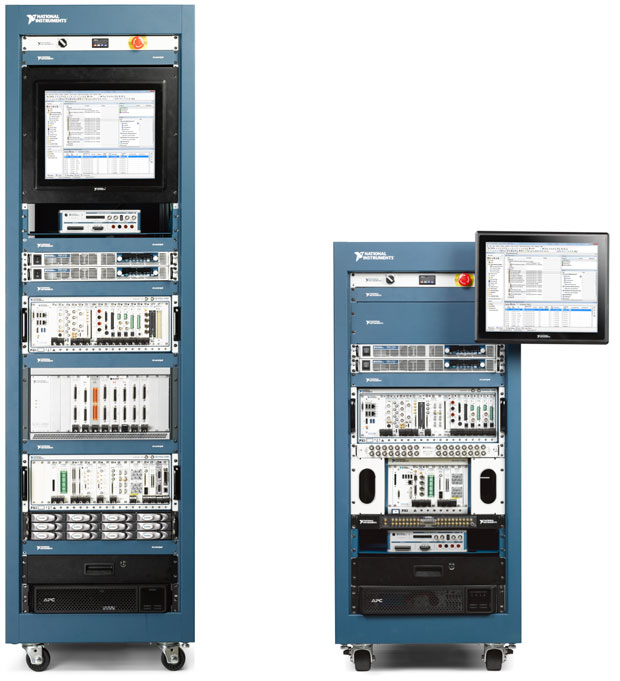
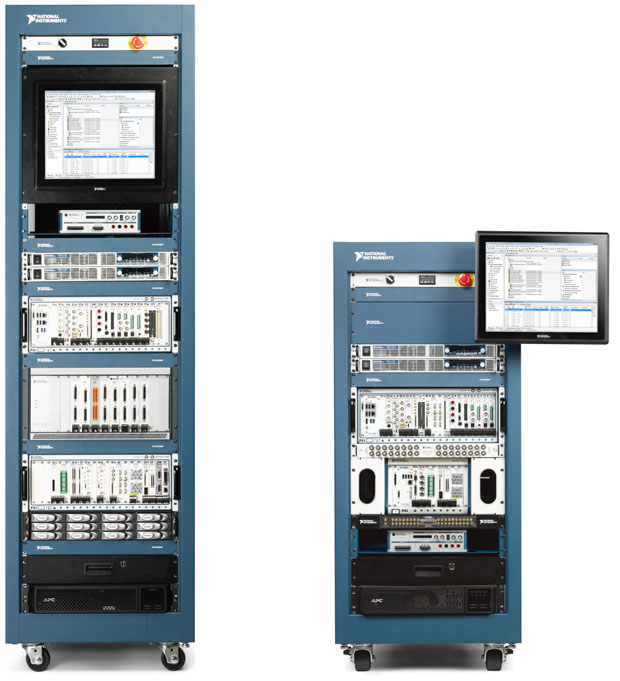 NI's new ATE Core Configurations deliver the mechanical, power and safety infrastructure to help test organizations in various industries accelerate the design and deployment of test systems. Available on 40U and 24U rack-based configurations, these customizable units support hundreds of instrumentation types and global power environments. Image courtesy of National Instruments.
But it's all about design simplification and standardization, so you then customize your ATE Core Configuration. You talk your project through with an NI engineer or an NI Alliance Partner to ensure you choose the components you need for your application. That could be any of NI's 600 PXI instruments or signal conditioning, cooling systems and the right power equipment not only for your application but for wherever in the world your ATE system lands. You can include NI's TestStand test management software and LabVIEW code modules with your ATE Core Configuration system as well.
There seem to be many pluses of this approach. For one, the hassles and risks of integrating components should be reduced. Two, your bill of materials – and hence your interaction with the purchasing department – should be smoother because part numbers will be consolidated and you have far fewer vendors to deal with. And the boss should be pleased because the entire process from start to ship should be quicker.
You can learn more about NI's ATE Core Configurations in today's Editor's Pick of the Week write-up. Hit the link at the end to watch a short intro video. Another link will take you to a deeper dive into the ATE Core Configurations' technical structure and flexibility. So, hit today's Editors Pick of the Week link and see for yourself.
Thanks, Pal. – Lockwood
Anthony J. Lockwood
Editor at Large, DE


Anthony J. Lockwood is Digital Engineering's founding editor. He is now retired. Contact him via [email protected].
Follow DE
Join over 90,000 engineering professionals who get fresh engineering news as soon as it is published.






About Us · Contact Us · Editorial Team · Advertising · Privacy Policy · Subscriber Services · © 2026 Digital Engineering 24/7 · Peerless Media