Helping design and engineering professionals discover, evaluate and specify technologies and processes that shorten the design cycle and enable success.



Digital Engineering April 2026
In the latest issue of Digital Engineering, we take a look at the latest innovations in design for additive manufacturing, including the use of natural language inputs, social media cosplayers, and AI integration. The issue also includes a feature…

January Special Focus Issue: Design for Additive
In this Special Focus Issue of Digital Engineering, learn about the latest advancements in design for additive manufacturing, including new software tools, additive in automotive, custom medical devices, and more.
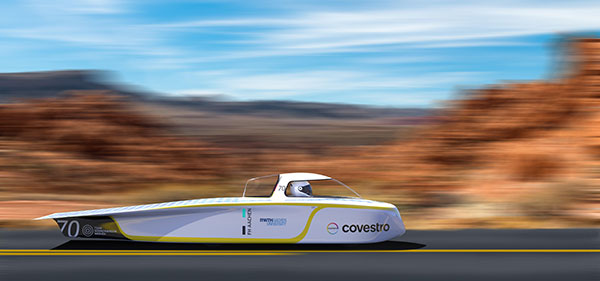
Motion plastics from igus helped 70 students from Germany develop a solar-powered vehicle that traveled nearly 1,900 miles in the Australian desert at the World Solar Challenge.
Team Sonnenwagen Aachen from RWTH Aachen University developed their solar-powered car with wear-resistant, self-lubricating plain bearings from igus. The solar vehicle covered 1,877 miles in just one week in the Australian desert. Team Sonnenwagen finished sixth in the field of 27. Six teams did not finish the race.
The World Solar Challenge travels from Darwin to Adelaide, and the cars are required to be propelled by solar energy. Temperatures average in the 90s during the event. Teams from all over the world developed various vehicle concepts, demonstrating the diversity of sustainable technologies. The biennial competition started in 1987.
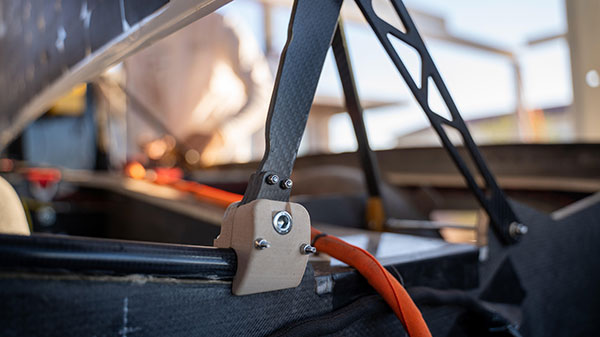
The lightweight iglide plain-bearing technology of igus can be found in countless places in the solar-powered car. Self-adjusting igubal clevis joints made of iglide J were used in the telescopic mechanism for the solar car cover and in the steering wheel. The same material was also found in the form of plain bearings in the suspension of the rear wheels and in the steering gear.
The wear-resistant and self-lubricating endurance material has a low coefficient of friction on a variety of shaft materials, especially in dry operation. The product’s vibration-dampening is advantageous for steering. In the hinges of the cover lock the team used plain bearings made of iglide G. The tribo-polymer is cost-effective and has a high wear resistance.
The cover of the solar car posed a special challenge to the team. The driver must be able to open and close the car independently when entering and exiting, which was one of the rules of the Challenge. It is a difficult task, because the cover is 5 meters long, about 1 meter in width and weighs 25kg (about 55 pounds) with the solar cells.
In the vehicle’s early stages, the opening proved jerky and needed a lot of force. Heavy printed bearings made of standard polymer proved to be the problem. The team gave an urgent order to igus for 3D-printed bearings made from high-performance polymer iglide I3. The laser sintering material is characterized by its low coefficient of friction and, like all iglide materials, is resistant to dust and dirt, making it suited for the desert. Thanks to the use of the 3D printed bearing, the vehicle’s driver could exit and enter swiftly.
Sources: Press materials received from the company and additional information gleaned from the company’s website.


igus® has developed innovative polymer materials to manufacture products that provide maintenance-free solutions and exceed customers’ expectations while delivering fast, accurate service. Günter Blase began igus AG in 1964 within a double…

Engineer’s Guide to Efficient Changeovers
Changeovers are key to any successful packaging operation. Inefficient changeovers slow down the entire production line, and waste both time and money. But there's no single way to go about making changeovers more efficient; it requires a multifaceted approach that analyzes everything from processes and maintenance schedules to the componentry used within the production line. This eBook aims to act as a guide for anyone looking to improve their own changeovers and take their packaging…

DE's editors contribute news and new product announcements to Digital Engineering. Press releases may be sent to them via [email protected].
Follow DE
Join over 90,000 engineering professionals who get fresh engineering news as soon as it is published.






About Us · Contact Us · Editorial Team · Advertising · Privacy Policy · Subscriber Services · © 2026 Digital Engineering 24/7 · Peerless Media