Helping design and engineering professionals discover, evaluate and specify technologies and processes that shorten the design cycle and enable success.


Alert!
Digital Engineering ceased publication on July 1, 2026. This website remains available as an archive of engineering content.
For inquiries or information, please email [email protected].

Digital Engineering April 2026
In the latest issue of Digital Engineering, we take a look at the latest innovations in design for additive manufacturing, including the use of natural language inputs, social media cosplayers, and AI integration. The issue also includes a feature…

January Special Focus Issue: Design for Additive
In this Special Focus Issue of Digital Engineering, learn about the latest advancements in design for additive manufacturing, including new software tools, additive in automotive, custom medical devices, and more.
3D printing is already capable of producing complex parts, but hasn’t really moved forward with creating products with advanced functionality. Printed electronics are becoming a hotter commodity, to the point of being recognized as part of the greater printing community, as can be seen with the attention the technology is receiving at the SGIA Expo. Printed electronics are cool all on their own, but, metaphorically speaking, need a place to live in order to realize their full potential.
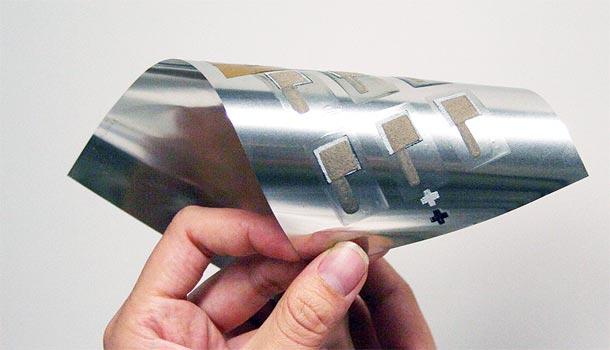
Consider the mix of AM and printed electronics as part of the ongoing digital manufacturing revolution. Printed electronics have the potential to shorten supply chains by employing high tech manufacturing methods in place of manual labor.
By leveraging the two technologies in tandem, it isn’t all that difficult to envision, say, future cell phones being printed out in one factory, rather than separate parts being manufactured at plants around the world before being assembled at yet another factory. Printed batteries could be the last piece of the puzzle that makes this dream of digital manufacturing a reality.
The problems with printed batteries are the same problems shared by most batteries: toxicity and expense. Lithium ion batteries aren’t great for the environment and require rare Earth metals to manufacture. Imprint Energy, a company founded by two University of California graduates, has taken a different path by using zinc technology for batteries.
Brooks Kincaid and Christine Ho decided to take a fresh look at zinc batteries, which are both cheaper to produce and less damaging to the environment than lithium ion batteries. Zinc has largely been ignored by researchers looking for new ways to make batteries because, following traditional thinking, zinc batteries can’t be recharged.
“I had a very negative view of zinc batteries prior to Christine’s work. And so does the rest of the world,” said Jim Evans, a UC Berkeley electrochemist and Ho’s advisor. “The zinc electrodes deteriorate over time. You may start off with nice flat zinc and before too long it develops holes and dendrites and all kinds of nastiness.”
Ho hypothesized that by changing the electrolyte half of the zinc battery equation, she could create batteries that wouldn’t corrode. She replaced the electrolyte with a polymer film that was more conductive and found she had a working battery that could be recharged. Even better, the new battery could be printed as small and thin as a postage stamp.
All of the technologies needed print out cell phones need some honing before that particular fantasy becomes a reality, but consider the possibility. A 3D printer builds the shell for the phone, and then printed electronics are added, including an OLED screen, finishing up with a printed, rechargeable battery. All under one roof.
Below you’ll find a video about printed electronics.
Sources: University of California, Imprint Energy


John Newman is a Digital Engineering contributor who focuses on 3D printing. Contact him via [email protected] and read his posts on Rapid Ready Technology.
Follow DE






About Us · Contact Us · Editorial Team · Advertising · Privacy Policy · Subscriber Services · © 2026 Digital Engineering 24/7 · Peerless Media