Helping design and engineering professionals discover, evaluate and specify technologies and processes that shorten the design cycle and enable success.



Digital Engineering April 2026
In the latest issue of Digital Engineering, we take a look at the latest innovations in design for additive manufacturing, including the use of natural language inputs, social media cosplayers, and AI integration. The issue also includes a feature…

January Special Focus Issue: Design for Additive
In this Special Focus Issue of Digital Engineering, learn about the latest advancements in design for additive manufacturing, including new software tools, additive in automotive, custom medical devices, and more.
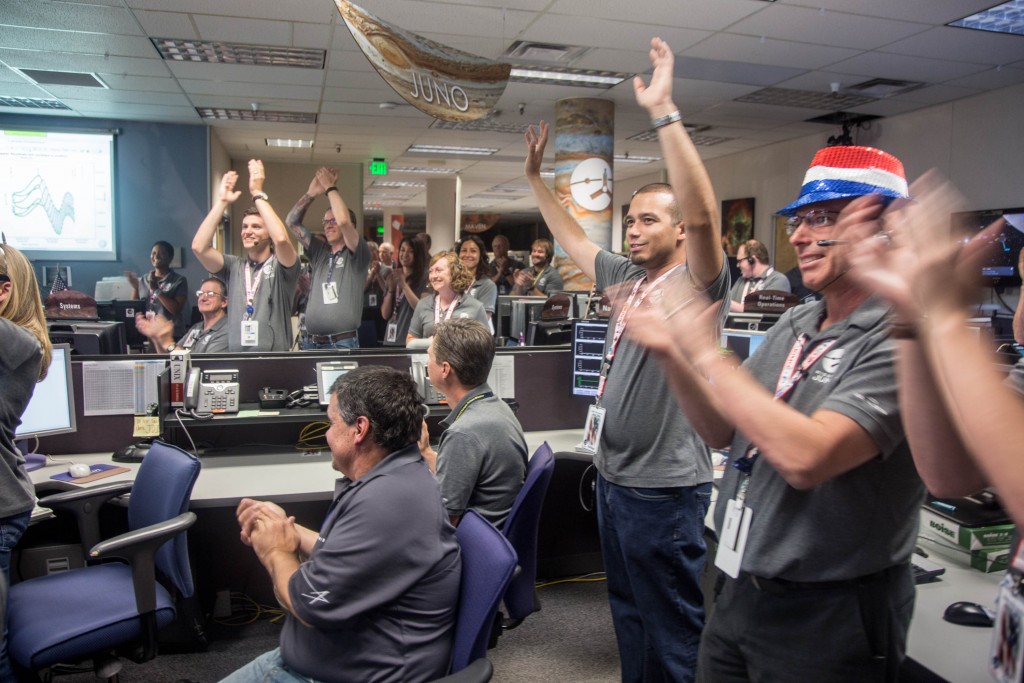 JUNO Jupiter Orbital Insertion. July 4, 2016
When NASA’s Juno spacecraft finally moved into Jupiter’s orbit after five years of traveling across the solar system, staff at Lockheed Martin had extra reason to celebrate. The company constructed Juno at their Littleton, CO, facility and the spacecraft’s flight operations were controlled by a joint team at Lockheed Martin’s Mission Support Area near Denver, and NASA’s Jet Propulsion Laboratory (JPL) in Pasadena, CA. Juno is also both the first solar-powered spacecraft to fly this far, and the first interplanetary spacecraft to include 3D printed parts.
According to Lockheed Martin:
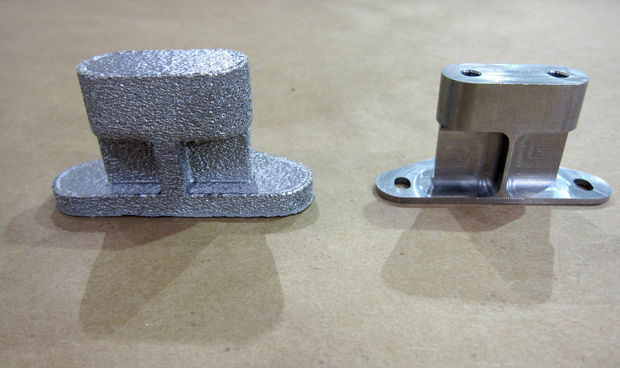
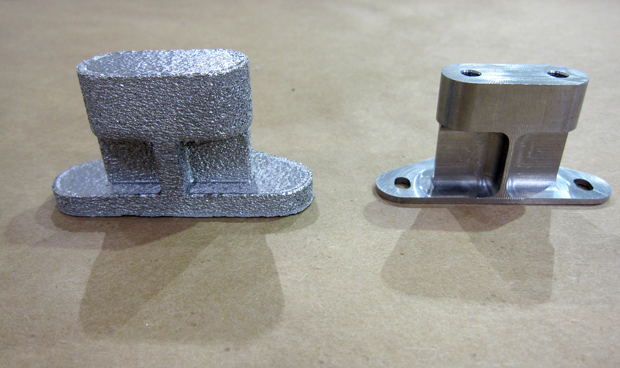
Juno is the first Lockheed Martin spacecraft ever to fly 3-D printed parts — a set of eight titanium waveguide brackets, to be precise. These brackets were used to attach the waveguide, a rectangular pipe used for conducting radio frequency signals between spacecraft components.
Juno was built to withstand massive temperature, pressure and radiation it would be exposed to in Jupiter’s orbit. The brackets were also designed to survive those conditions, and once the craft reached Jupiter they became the most-travelled 3D-printed items in history, having flown 1.7 billion miles.
“Tonight, 540 million miles away, Juno performed a precisely choreographed dance at blazing speeds with the largest, most intense planet in our solar system,” said Guy Beutelschies, director of Interplanetary Missions at Lockheed Martin Space Systems on July 4. “Since launch, Juno has operated exceptionally well, and the flawless orbit insertion is a testament to everyone working on Juno and their focus on getting this amazing spacecraft to its destination. NASA now has a science laboratory orbiting Jupiter.”
Lockheed also used additive manufacturing to create sheer tie fittings for the antenna reflector on the A2100 satellite, which reduced cycle times by 43%. Four printed vents were also used in a high orbital test flight of the Orion spacecraft, which will eventually be used to take astronauts to Mars. Another printed bracket was used on the OSIRIS-Rex spacecraft, which will be launched this fall to collect samples from the asteroid Bennu.
Now that it’s in orbit, Juno will be used to examine Jupiter’s interior, atmosphere, magnetic field, and the planet’s origins. The latter will require scientists to study how much water is on the planet.
Sources: Popular Mechanics, Lockheed Martin


Brian Albright is the editorial director of Digital Engineering.
Contact him at [email protected].

Join over 90,000 engineering professionals who get fresh engineering news as soon as it is published.






About Us · Contact Us · Editorial Team · Advertising · Privacy Policy · Subscriber Services · © 2026 Digital Engineering 24/7 · Peerless Media