Helping design and engineering professionals discover, evaluate and specify technologies and processes that shorten the design cycle and enable success.



Cut Retrieval-Augmented Generation (RAG) Hallucinations by 50%
Most teams hit the same wall with enterprise AI: LLMs that hallucinate, pipelines that don’t scale, and infrastructure that’s harder to design than the models themselves.

What Is Intelligent BOM Management? A Guide to Smarter Product Development
Learn how intelligent Bill of Materials (BOM) management helps teams collaborate, reduce errors, and bring innovative products to market faster with cloud-based PLM tools.
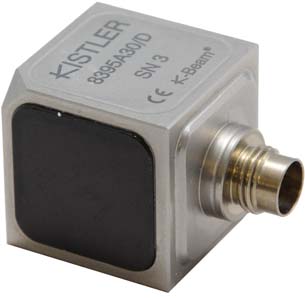 |
Kistler North America has announced the launch of the Type 8395A, a miniature, cube-shaped, high-sensitivity, low-noise triaxial MEMS capacitive accelerometer series, incorporating Kistler’s own K-Beam technology. The Type 8395A is designed to simultaneously measure acceleration and low-frequency vibration in three mutually perpendicular axes (x, y and z) within a variety of automotive, aerospace, OEM, R&D and general laboratory test applications.
The Kistler Type 8395A series is available in six different models, with measurement ranges from ±2 g to ±200 g and a frequency response of 0 to 1000 Hz (5%). The compact design provides a 0.85-in. (21.6 mm) cube footprint and incorporates a MEMS variable capacitance sensing element, consisting of a small inertial mass and flexure element sandwiched between two parallel plates. As the mass deflects under acceleration, the capacitance between the element and plates changes, which is converted to a proportional voltage by the internal analog signal conditioner.
The output signal format of the Type 8395A series is bipolar at 0±4 V and provides a high-sensitivity, low-noise signal, which is compatible with a variety of data acquisition or readout devices. The accelerometer is shock rated to 6,000 g pk. Sensing elements and integral electronics are housed within a lightweight, welded titanium housing with a miniature circular 9-pin connector.
The Kistler Type 8395A triaxial capacitive MEMS accelerometer series offers an operating temperature range of -65°F to 250°F (-55°C to +125°C). It is powered by a single wide range supply between +6 and +50 VDC and has an internal voltage regulator. In the event that external temperature compensation is desired, a temperature output is provided, in addition to the output signals.
For more information, visit Kistler.
Sources: Press materials received from the company and additional information gleaned from the company's website.


DE's editors contribute news and new product announcements to Digital Engineering. Press releases may be sent to them via [email protected].
Follow DE
Join over 90,000 engineering professionals who get fresh engineering news as soon as it is published.






About Us · Contact Us · Editorial Team · Advertising · Privacy Policy · Subscriber Services · © 2026 Digital Engineering 24/7 · Peerless Media