Helping design and engineering professionals discover, evaluate and specify technologies and processes that shorten the design cycle and enable success.


Alert!
Digital Engineering ceased publication on July 1, 2026. This website remains available as an archive of engineering content.
For inquiries or information, please email [email protected].

Digital Engineering April 2026
In the latest issue of Digital Engineering, we take a look at the latest innovations in design for additive manufacturing, including the use of natural language inputs, social media cosplayers, and AI integration. The issue also includes a feature…

January Special Focus Issue: Design for Additive
In this Special Focus Issue of Digital Engineering, learn about the latest advancements in design for additive manufacturing, including new software tools, additive in automotive, custom medical devices, and more.
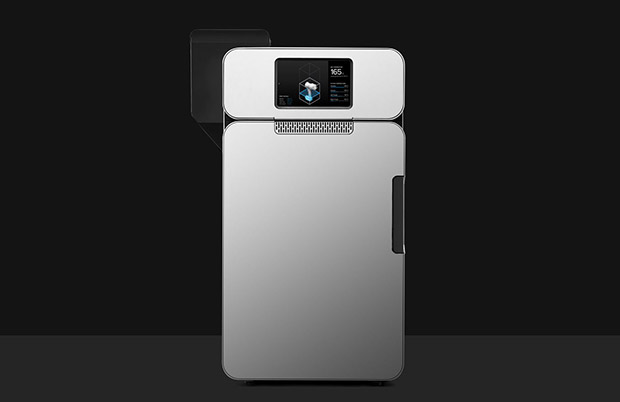
The company says the Fuse 1 brings the industrial power of SLS 3D printing to the benchtop. The Fuse 1 features include a removable build chamber for continuous printing and reduced downtime, and a live video feed for monitoring build progress and performing real-time inspection. Specifications include a 6.5x6.5x12.6-in. (165x165x320mm) build volume, 10 mm/hr. print speed and 100 µm layer thickness. The unit measures approximately 26.6x26.3x41.6-in. (677x668x1059 mm) and weighs 194 lbs. (88 kg).
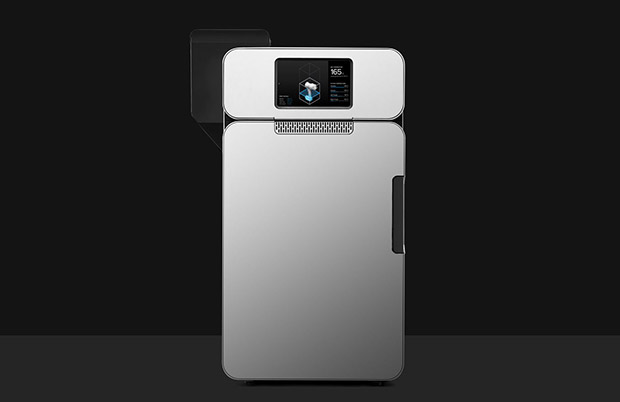 Formlabs says that the new Fuse 1, its first selective laser sintering (SLS) 3D printer, is designed to bring the industrial power of SLS 3D printing to the benchtop. Image courtesy of Formlabs Inc.
Available materials for the Fuse 1 include Nylon PA 12 and PA 11. Fuse 1-sintered parts meet or exceed the material properties published by their industrial counterparts, according to the company. During the Fuse 1 SLS 3D-printing process, parts are suspended in a bed of powder as they print, eliminating the need for part supports. This characteristic also enables the printing of complex parts, and parts can be stacked to maximize production runs. As well, parts can be added to an active build. The company adds that users can print with up to 50% recycled powder, which helps bring the cost per part down.
Formlabs says its new Form Cell solution eliminates repetitive manual processes and brings 3D printing into the lights-out, 24-hour digital factory. A scalable cell of 3D printers designed to parallelize and automate repetitive 3D printing processes, Form Cell consists of a row of the company's Form 2 SLA (stereolithography) 3D printers, a Form Wash cleaning and curing unit and an industrial robotic gantry system mounted overhead.
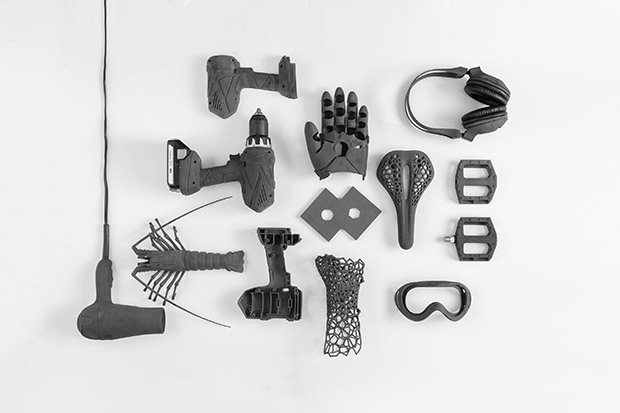 During Fuse 1's 3D-print process, parts are suspended in a bed of powder, which eliminates the need for supports and enables the printing of complex, intricate parts, such as those shown here. Image courtesy of Formlabs Inc.
The Form Cell's software provides functionality for scheduling print jobs as well as printing part and serial numbers. It also detects errors and allows for remote monitoring. Application programming interface (API) endpoints can be used to integrate with industry-standard business systems such as ERP or homegrown systems.
“By enabling teams to easily iterate and also to directly manufacture final products, Fuse 1 and Form Cell open up a wealth of innovation flexibility within the product development cycle, from early prototyping to manufacturing,” said Dávid Lakatos, chief product officer of Formlabs, in a press statement.
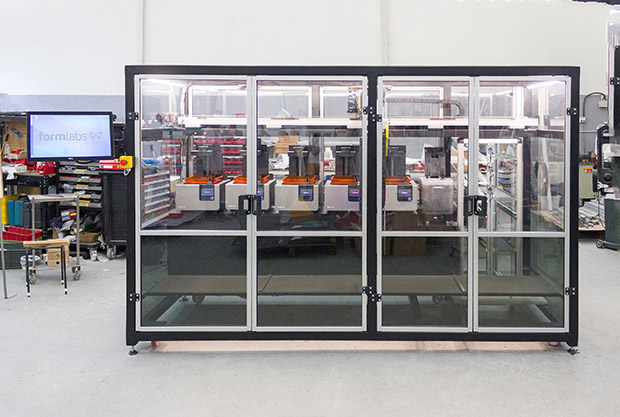 The Form Cell is a scalable 3D printing production solution designed to automate repetitive 3D printing processes. Image courtesy of Formlabs Inc.
The Fuse 1 printer starts at $9,999, and is now available for reservation with a deposit of $1,000. It is estimated to begin shipping in mid-2018. A complete package, priced at $19,999, includes the printer and a post-processing station with material recovery, an extra build piston for continuous usage and initial material load.
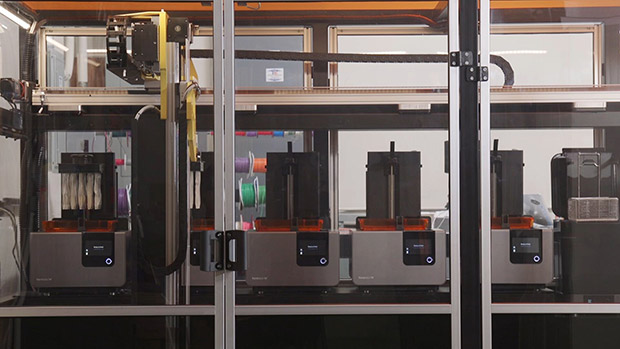 This close-up view of a Form Cell installation shows its row of Formlabs' Form 2 SLA (stereolithography) 3D printers and its robotic gantry system. The system's cleaning unit and curing unit can be seen on the right. Image courtesy of Formlabs Inc.
For more details on the Fuse 1, click here.
For more details on the Form Cell, click here.
Watch a video introduction to the Fuse 1.
Check out the Fuse 1's technical specifications.
Watch a video on the Form Cell.
Read DE contributing editor Beth Stackpole's report on the Fuse 1 and the Form Cell.
See why DE's Editors selected Formlabs' new Fuse 1 and Form Cell as their Pick of the Week.
Sources: Press materials received from the company and additional information gleaned from the company's website.


Anthony J. Lockwood is Digital Engineering's founding editor. He is now retired. Contact him via [email protected].
Follow DE
Join over 90,000 engineering professionals who get fresh engineering news as soon as it is published.






About Us · Contact Us · Editorial Team · Advertising · Privacy Policy · Subscriber Services · © 2026 Digital Engineering 24/7 · Peerless Media