Helping design and engineering professionals discover, evaluate and specify technologies and processes that shorten the design cycle and enable success.


Alert!
Digital Engineering ceased publication on July 1, 2026. This website remains available as an archive of engineering content.
For inquiries or information, please email [email protected].

Digital Engineering April 2026
In the latest issue of Digital Engineering, we take a look at the latest innovations in design for additive manufacturing, including the use of natural language inputs, social media cosplayers, and AI integration. The issue also includes a feature…

January Special Focus Issue: Design for Additive
In this Special Focus Issue of Digital Engineering, learn about the latest advancements in design for additive manufacturing, including new software tools, additive in automotive, custom medical devices, and more.
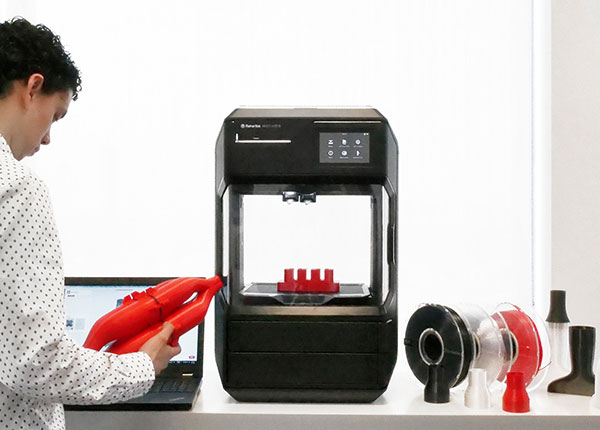
MakerBot has expanded its 3D printing materials offering with polyethylene terephthalate glycol (PETG). It is the first Specialty Material to be released for the MakerBot METHOD 3D Printer. METHOD Specialty Materials are designed to provide advanced material properties for engineers who demand higher performance.
“Our customers have been asking for different materials to use for a wide range of applications that require high strength and durability,” said Nadav Goshen, CEO, MakerBot. “PETG is one of the most widely used polymers today. Because of its advanced properties and versatility, we view PETG as an excellent material to be used on the manufacturing line and for short-run production runs.”
Engineers and designers use 3D printable parts made of PETG to withstand industrial applications, including functional prototypes, jigs and fixtures, and end-use parts. The industrial-grade material has a heat deflection temperature of up to 70°C and strong layer adhesion designed to reduce shrinkage and warping during printing, according to MakerBot. PETG is resistant to moisture and many chemicals, including some alkali and acidic substances. It can be used with METHOD’s water-soluble PVA for complex parts and effortless support removal.
The company says PETG has greater strength and flexibility qualities than other materials, such as PLA and ABS, and is odorless when printing. Further, the material prints with a glossy finish and has a good degree of ductility.
METHOD Specialty Materials are intended for users looking for advanced material properties. They provide basic print performance and can require additional workflow steps to print successfully. PETG requires the application of an adhesion stick to the build plate prior to printing.
MakerBot also has a line of Precision Materials that are the primary materials developed for METHOD and cover the majority of use cases for prototyping, jigs and fixtures, and end-use parts. These materials currently include MakerBot Tough, MakerBot PLA, and MakerBot PVA.
PETG is now available to purchase and expected to begin to ship to customers in late June.
Sources: Press materials received from the company and additional information gleaned from the company’s website.


Every day, our customers find simpler, smarter approaches to stubborn design problemsand greater confidence to confront towering human and technological challenges. Less hindered by the usual constraints, they can imagine, design, iterate and…
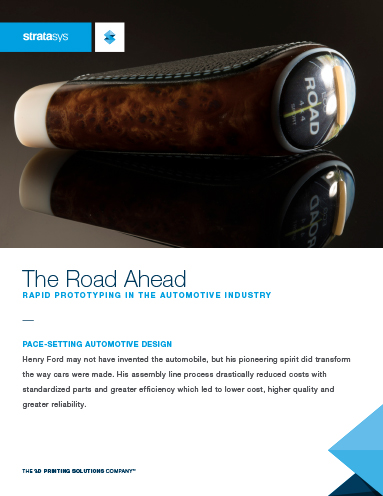
Rapid Prototyping in The Automotive Industry
Henry Ford may not have invented the automobile, but his pioneering spirit did transform the way cars were made. His assembly line process drastically reduced costs with standardized parts and greater efficiency which led to lower cost, higher quality and greater reliability.

DE's editors contribute news and new product announcements to Digital Engineering. Press releases may be sent to them via [email protected].
Follow DE






About Us · Contact Us · Editorial Team · Advertising · Privacy Policy · Subscriber Services · © 2026 Digital Engineering 24/7 · Peerless Media